The son of Iran’s late shah called for strikes on military targets to speed the collapse of the regime.
Reza Pahlavi, whose father was toppled in the 1979 revolution that installed Iran’s clerical rulers, sought Friday to position himself as the leader of the country’s fragmented opposition.
Protesters have chanted his name and turned out when he called them into the streets last week, though analysts say he is likely being invoked more as an expression of antipathy for the regime than out of support for him as a leader.
Pahlavi said that he was “stepping in to lead the movement” and that he had a 100-day plan to stabilize Iran in the event the regime collapsed. He called on the U.S. and other governments to use maximum pressure, including military strikes targeting the Islamic Revolutionary Guard Corps, the government’s elite security force.
“The IRGC has been the main instrument of the regime’s repression at home and terror abroad, so clearly any strike on those entities will facilitate our task, will prevent more loss of lives, and will weaken the regime,” Pahlavi said.
His remarks came as President Trump appeared to step back from military intervention in Iran after he was advised the U.S. didn’t have enough forces in the region to deal a substantial blow to the regime and counter any retaliatory strikes, officials told The Wall Street Journal. The president opted to hold off until more firepower could be brought to bear, the officials said.
The president said Friday he decided not to strike after Iran canceled what he said had been 800 scheduled hangings. Trump had repeatedly warned Iran not to use violence and encouraged Iranians to take to the streets.
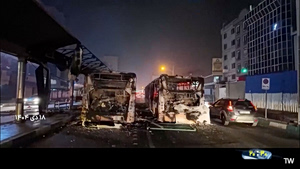
After two weeks of escalating protests that spread across the country, a bloody crackdown by the regime has cast a pall over the population and quieted the unrest. The death toll has risen past 2,600, according to U.S. nonprofit Human Rights Activists in Iran, with more than 19,000 arrests.
While any military action appears on hold, the U.S. announced new sanctions on Friday against Iranian officials it said were responsible for the bloodshed, including Ali Larijani, the head of Iran’s national security council and a close counterpart to Supreme Leader Ali Khamenei.
The protests began in the capital late last month, triggered by a plunge in the country’s currency and economic pain. They quickly spread across the nation and morphed into mass antigovernment rallies, with Pahlavi emerging as a symbol of resistance. Protesters in Tehran were seen on videos chanting “Long live the shah” and “Pahlavi will return.”
In early January, Pahlavi called on Iranians to take to the streets at 8 p.m. on Jan. 8. As large crowds massed across the country, the regime shut off the internet nationwide and launched what is shaping up to be its deadliest crackdown on political opponents in decades. The scale of the killings is still unclear, with the nation still under a near-total communications blackout.
Pahlavi said Friday that the regime is weaker than ever and called on the international community to act decisively by cutting off its finances, dismantling its illicit oil shipment network, expelling Iranian diplomats and deploying Starlink satellite internet tools to break the information blockade. He said he was ready to step in as soon as the regime fell.
“I will return to Iran. I am uniquely positioned to ensure a stable transition,” Pahlavi said. “That’s not my opinion, that’s the verdict delivered loudly and clearly by the people in the face of bullets.”
Before the current protests, Pahlavi, 65, was seen as an unlikely leader. His father was despised for his autocratic rule, political repression and what critics saw as his subservience to the U.S. Analysts say his newfound popularity reflects the depth of Iranians’ discontent with the government, but that few would support a return to the monarchy.
Pahlavi promised to lead a transition to democracy, pledging free and fair elections. He said he was confident that he would have support from Trump, who had earlier cast doubt on his ability to lead, and said he hoped the U.S. would act swiftly against the regime.