 Μake us preferred on Google
 Sudan’s civil war is taking a jarring turn in Darfur, where an Arab-led militia is now using state-of-the-art drones and execution squads to dominate the region’s Black population.
Humanitarian groups say the violence has been escalating since the militia seized control of El Fasher, the largest city in the region. Videos shared online by the Sudan Doctors Network and other local rights groups appear to show militia members shooting unarmed civilians at point-blank range in the city on the fringes of the Sahara. In the streets, dead bodies are scattered alongside burned-out vehicles. At the only functioning hospital, the World Health Organization reported that the rebels killed all 460 people inside the main ward, including patients, caregivers and health workers.
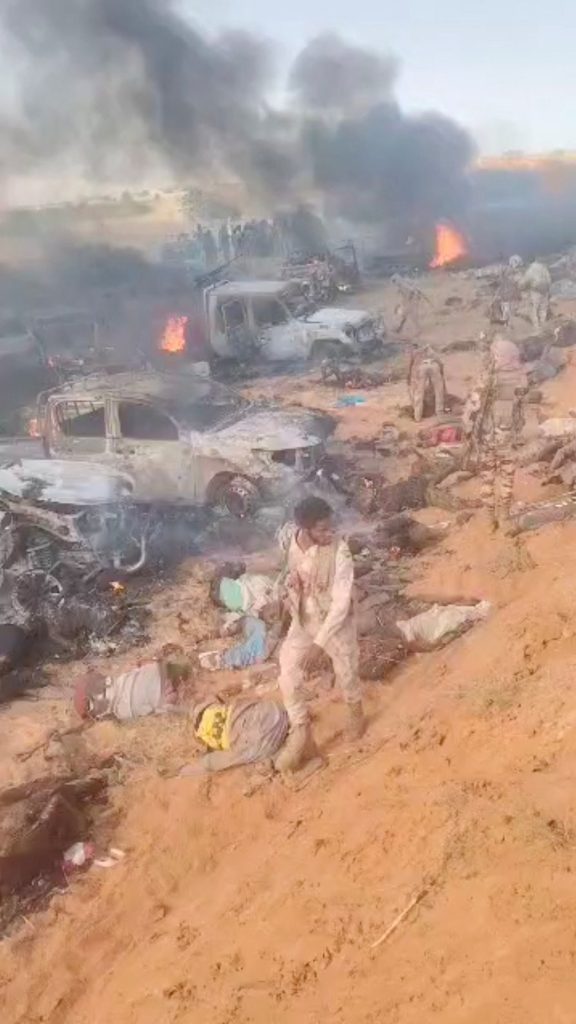
SENSITIVE MATERIAL. THIS IMAGE MAY OFFEND OR DISTURB Rapid Support Forces (RSF) paramilitary members walk amid the bodies of unarmed people and burning vehicles, during an attack, near al-Fashir, Sudan, in this still image from undated video, released October 27, 2025 and obtained by REUTERS THIS IMAGE HAS BEEN SUPPLIED BY A THIRD PARTY. MANDATORY CREDIT. NO RESALES. NO ARCHIVES. VERIFICIATION: Berm, ditch, and terrain layout matched satellite imagery Armed men are confirmed to be RSF by the uniforms and patches Date could not be independently verified Satellite imagery from October 27 shows a scorch mark and burned cars in the location of the videos that wasn’t there on October 26 imagery
Rights researchers already are warning that the killings have the potential to surpass the genocide that played out in Rwanda just over 30 years ago. The group behind the violence, the Rapid Support Forces, led by Lt. Gen. Mohamed Hamdan Dagalo , has previously been accused by the U.S. of pursuing a genocide of Darfur’s Black population. Two decades ago, its predecessor was involved in the killing of more than 200,000 people in Darfur.
This time, the killings are the work of a closely-drilled and well-armed rebel force that already has established a parallel government to run Darfur, an expanse of western Sudan roughly the size of Spain. RSF fighters are armed with bomb-carrying Wing Loong II and FeiHong-95 drones, made in China, and supplied by the United Arab Emirates to help expand its own interests in the region. Diplomats and U.S. officials also say the wealthy Gulf state is also supplying howitzers, heavy machine guns, and mortars, with U.S. intelligence agencies adding that the U.A.E. has been accelerating the flow of materiel to the RSF in recent months and enabling it to launch fresh offensives.
“We categorically reject any claims of providing any form of support to either warring party since the onset of the civil war,” a U. A.E official said.
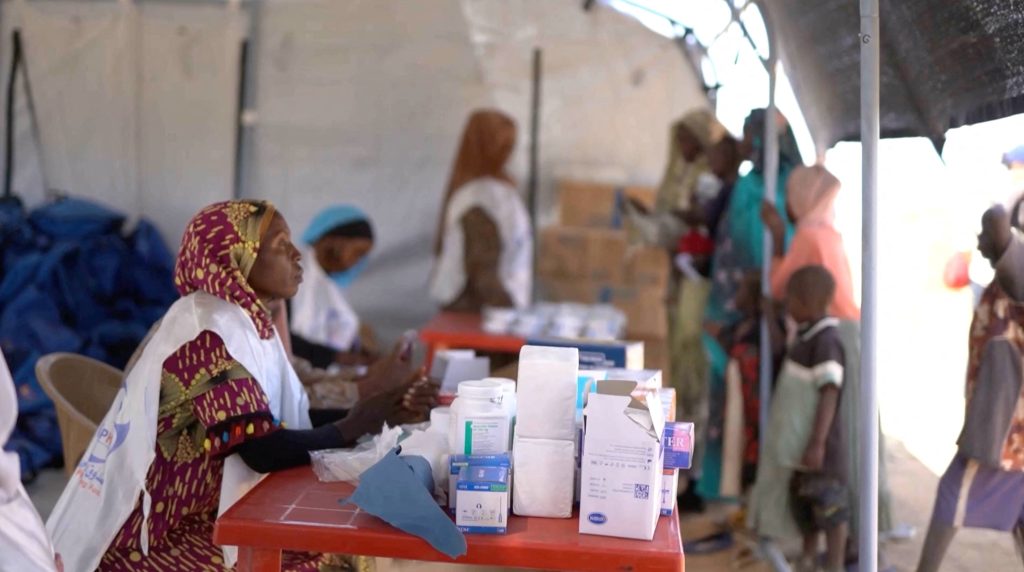
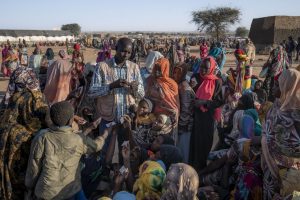
A medic waits in a makeshift clinic as displaced Sudanese gather after fleeing Al-Fashir city in Darfur, in Tawila, Sudan, October 29, 2025, in this still image taken from a Reuters’ video. REUTERS/Mohamed Jamal
The latest surge in violence began immediately after the RSF overran an airfield that some isolated regular army troops had turned into a fortified base for their final stand in El Fasher.
The consequences are proving catastrophic for the indigenous Black population.
Kalashnikov-toting fighters dressed in the rebel’s sand-colored fatigues have been conducting door-to-door searches, picking out non-Arab men and boys before executing them, according to interviews with multiple humanitarian officials. Witnesses and residents say militia members swept through the city, raping Black women, detaining aid workers and forcing the last remaining residents to leave.
Nathaniel Raymond, executive director of Yale University’s Humanitarian Research Lab, said the extremes of violence are “only comparable to Rwanda-style killing,” referring to the 1994 genocide where nearly one million people were killed in a three-month rampage.
“In my entire career, I have never seen a level of violence against an area like we are seeing now,” Raymond, who has been documenting war crimes across the world for the past 25 years, told an online briefing this week. “These people have an air force—no one can hide because they can see them from the air.”
In the outskirts of El Fasher, rebels hurl racial insults at fleeing women and children. Black women with long hair are systematically separated and raped, according to interviews with multiple aid workers and victims.
Awil Mohamad, 60-years-old, grabbed her two small grandchildren and fled her home in El Fasher embarking on a 40-mile journey to the town of Tawila, to escape the shelling by paramilitary fighters last week. In the horrific escape, she was separated from other family members, including her 30-year-old daughter and mother of the children.
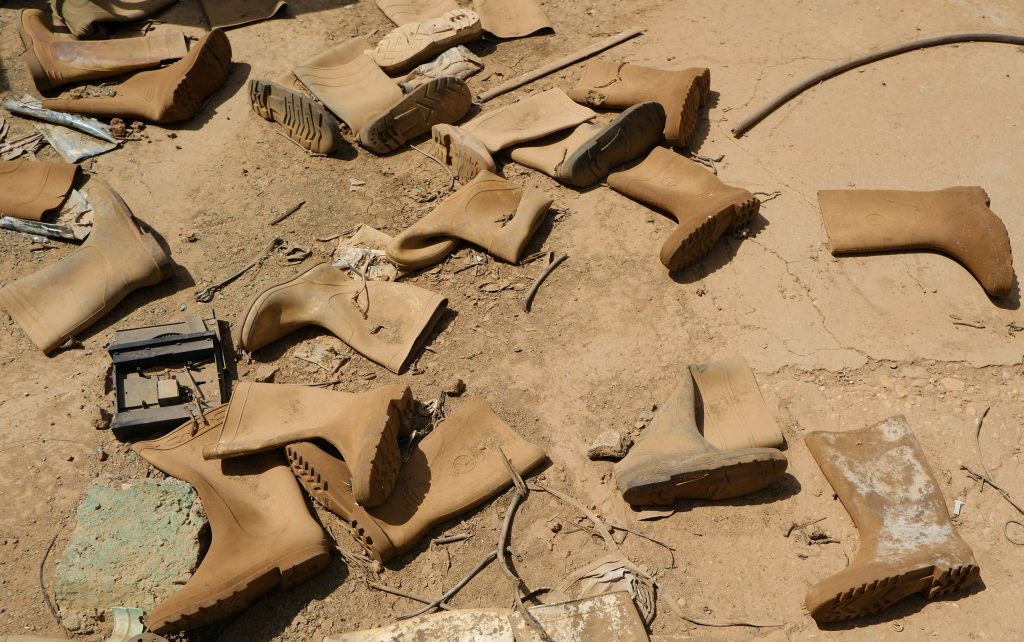
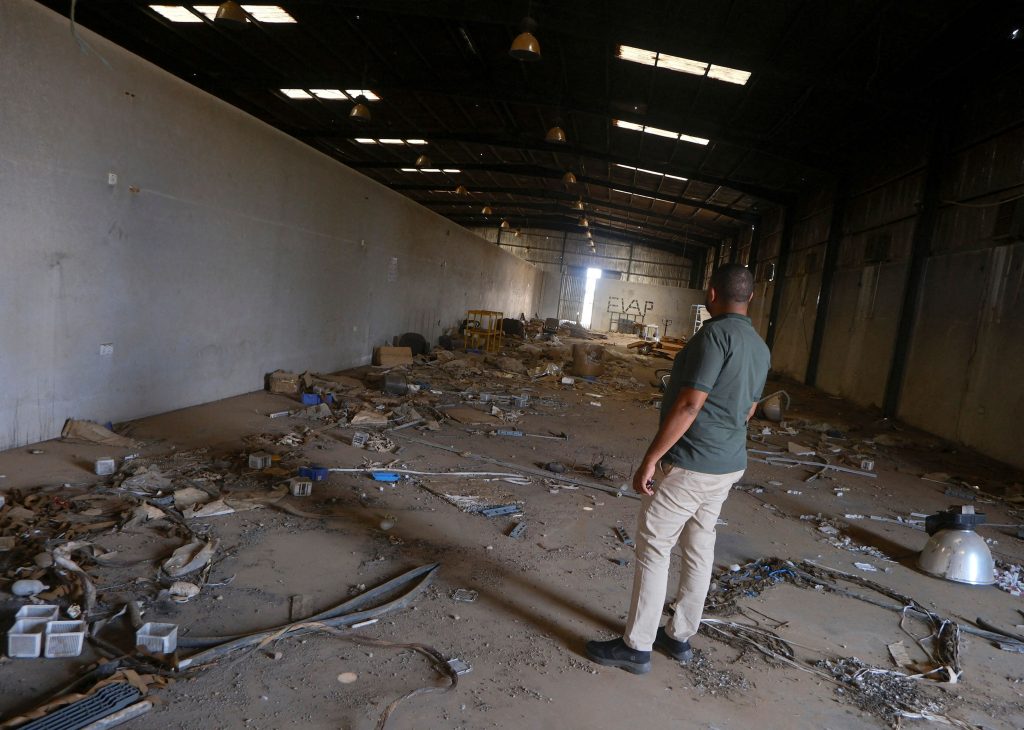
Safety shoes are scattered in a destroyed factory in Omdurman, Sudan October 14, 2025. REUTERS/El Tayeb Siddig
“I haven’t heard from any of my family members, I pray they are safe,” she said by phone. “We hid in separate trenches and sometimes in damaged buildings during the attacks.”
From her hiding place, Mohamad described how she watched fighters rounding up dozens of men and boys before shooting them.
Mohamad has joined half a million other people—largely Black Sudanese—uprooted from El Fasher and struggling to survive in a settlement where food and drinking water are scarce.
The war began more than two years ago, sparked by a power struggle between two of Sudan’s most powerful ethnic-Arabs, the de facto president, Lt. Gen. Abdel Fattah al-Burhan, and Dagalo, who was then his deputy. Since then the conflict between the two has killed as many as 150,000 people and left one of Africa’s largest countries on the verge of splintering, with the rebels controlling most of Darfur while the army commands the capital, Khartoum, and ports along the 500-mile Red Sea coast.
A factory owner looks at the rubble of his factory in Khartoum North (Bahri), Sudan October 15, 2025. REUTERS/El Tayeb Siddig
El Fasher is a pivotal theater in the war, controlling access to the broader Darfur region.
Dagalo’s RSF began the siege of the city in April, shortly after they were routed from Khartoum by al-Burhan’s forces. They constructed a 35-mile earthen berm around the city in an attempt to encircle its one million residents. Weakened from malnourishment and daily shelling, more than 70% of the city’s population fled their homes to escape the siege, according to U.N. estimates.
Unlike the violence during the genocide in Rwanda, most of casualties in Darfur will likely result from malnutrition, disease, exposure, and shock in a region already in the grip of famine, said Eric Reeves, a fellow with the Nairobi-based Rift Valley Institute who has studied Sudan’s politics since the 1990s.
It nonetheless appears to serve the RSF’s aims.
“The fierce ethnic animus of the RSF toward non-Arab civilians is equal to that of the Hutus toward the Tutsis in Rwanda,” he said. “The obscene violence is clearly comparable.”
Why you people don’t talk about Sudan ??? #sudan#SaveMuslimsOfSaudan pic.twitter.com/u3jY8c9Cdq
— Palestine Daily News ✌️🇵🇸✌️ (@Palestinedaily1) November 2, 2025
The United Nations and other agencies have documented the killings. In total, more than 2,000 people have been killed in the city since the RSF overran government defenses on Sunday, according to the Sudan Doctors Network. In one of the deadliest attacks, RSF fighters broke through the perimeter of Saudi Maternity Hospital, and killed 460 people before kidnapping six health workers.
“The WHO is appalled and deeply shocked by reports of the tragic killing,” said Director-General Tedros Adhanom Ghebreyesus . “All attacks on healthcare must stop immediately and unconditionally.”
Black communities in Darfur have long been angry about years of marginalization by the Arab-dominated governments in Khartoum, resulting in a series of rebellions. During the current conflict, many commanders of Darfur-based armed groups allied with Sudan’s military. When the RSF was ejected out of Khartoum in March, its fighters turned their focus on the last remaining city of El Fasher which was still under the control of the army.
Drones, now widely used in the war in Ukraine and other flashpoints, have become an important part of the RSF’s armory.
It has used them to destroy power plants, plunging most parts of the country into rolling blackouts. Newly acquired arms have helped the rebels capture a string of towns in the Kordofan region, and sporadic strikes have prevented the reopening of Khartoum airport.
I don’t understand how people can watch what Islamists are doing in Sudan and stay silent.
Beheadings, execution squads, torture, people buried alive — entire families slaughtered.
They even post videos smiling with bodies behind them.
— Eyal Yakoby (@EYakoby) October 31, 2025
The militia also used drones in a series of strikes in El Fasher, with the deadliest recorded on Oct. 11, when 60 people were killed at a refuge shelter, according to Sudan Doctors Network. Residential homes and other shelters were also targeted for drone strikes, according to survivors and aid officials.
The fighting appears set to continue.
Dagalo has pledged to investigate allegations of human rights abuses, but insisted in a video released Wednesday that his troops would continue “cleaning the city of any remnants of the army until the restoration of stability.”
Sudan’s military has condemned the atrocities, accusing the RSF of massacring civilians. This week, al-Burhan told national TV that the military had withdrawn from the city to spare citizens but vowed to keep fighting the militias.
Write to Nicholas Bariyo at nicholas.bariyo@wsj.com