
 Μake us preferred on Google
 U.S. lawmakers are demanding a forceful response from the Trump administration after Sudan’s paramilitary Rapid Support Forces (RSF) seized the army’s last stronghold in Darfur, amid reports of mass killings, hospital raids, and famine in the war-torn country.
Republican Senator Jim Risch, the ranking member of the Senate Foreign Relations Committee, urged the U.S. to designate the RSF as a foreign terrorist organization, describing “unspeakable atrocities” in Darfur’s El-Fasher as “the RSF’s plan all along.”
🚨HUMAN SECURITY EMERGENCY🚨
Day 2: RSF continues mass killings in El Fasher: @HRL_YaleSPH finds evidence of mass killings at RSF-controlled former Children’s Hospital, Saudi Hospital and along the berm.#KeepEyesOnSudan
🛰️@AirbusSpace @Maxarhttps://t.co/1HApllgNL5 pic.twitter.com/g9KmBLhjH0— Humanitarian Research Lab (HRL) at YSPH (@HRL_YaleSPH) October 29, 2025
Democratic Senator Jeanne Shaheen signaled she would likely support such a move, while sharply criticizing the United Arab Emirates, which Sudan’s army accuses of supplying the RSF. “The UAE has been an irresponsible player who has contributed to one of the worst humanitarian crises on the planet,” she said.
The UAE, denying any involvement, said in a statement that “there is no substantiated evidence” it provided support to either side and reiterated its backing for a ceasefire and accountability efforts.
Fall of Al-Fashir: A Symbolic and Strategic Collapse
The RSF announced on Sunday it had captured the army headquarters in al-Fashir, North Darfur, ending an 18-month siege. Videos posted by the group showed fighters celebrating outside signs for the Sudanese army’s Sixth Infantry base. Reuters verified the location but not the date.
The fall of al-Fashir, home to about 250,000 civilians, marks the collapse of the army’s last bastion in Darfur and the consolidation of RSF control over western Sudan — effectively entrenching the country’s de facto partition between RSF-controlled west and army-held east.
Residents and escapees described horrific scenes. As reported in Reuters, civilians fleeing the city were beaten and shot, according to survivor Ikram Abdelhameed, whose account was corroborated by aid officials, satellite images, and unverified social media footage. “They lined the men up and shot them in the street,” she said.
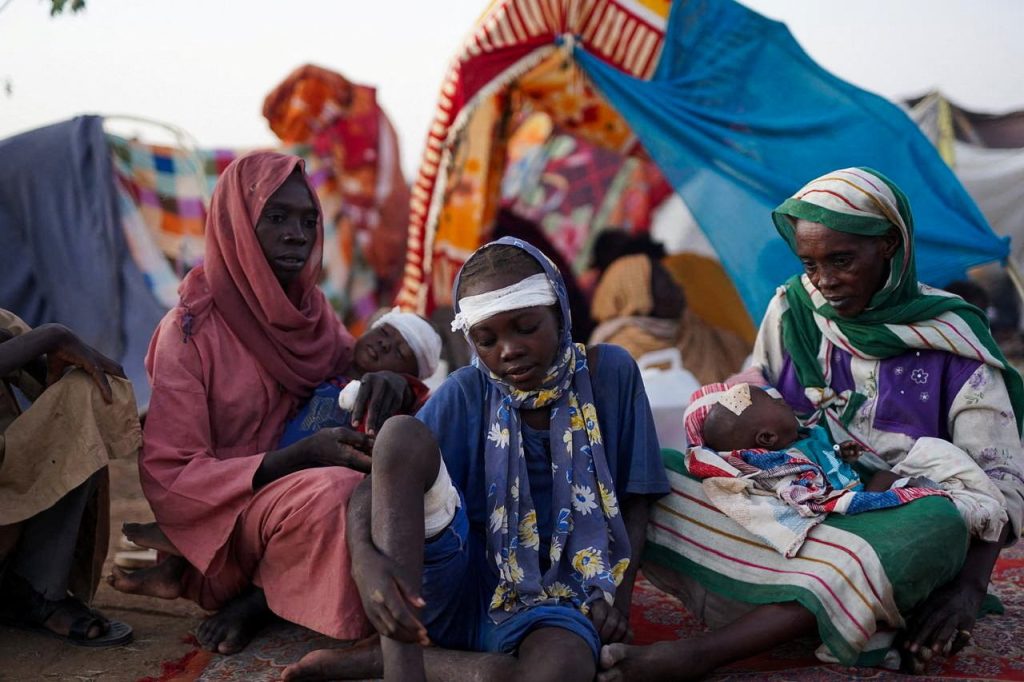
The grandmother of Ikram Abdelhameed looks on next to her family while sitting at a camp for displaced people who fled from al-Fashir to Tawila, North Darfur, Sudan, October 27, 2025. REUTERS/Mohammed Jamal
Satellite images analyzed by the Yale Humanitarian Research Lab showed clusters of body-sized objects surrounded by reddish stains consistent with blood. The U.N. humanitarian team in Sudan said it was “horrified by credible reports of summary executions, attacks on civilians along escape routes, and house-to-house raids.”
‘Hundreds Feared Dead’ in Hospital Raid
The World Health Organization confirmed that the last functioning hospital in al-Fashir, the Saudi Hospital, was raided this week, with hundreds feared dead. Darfur’s governor Minni Minawi said on X that 460 people were killed in the attack.
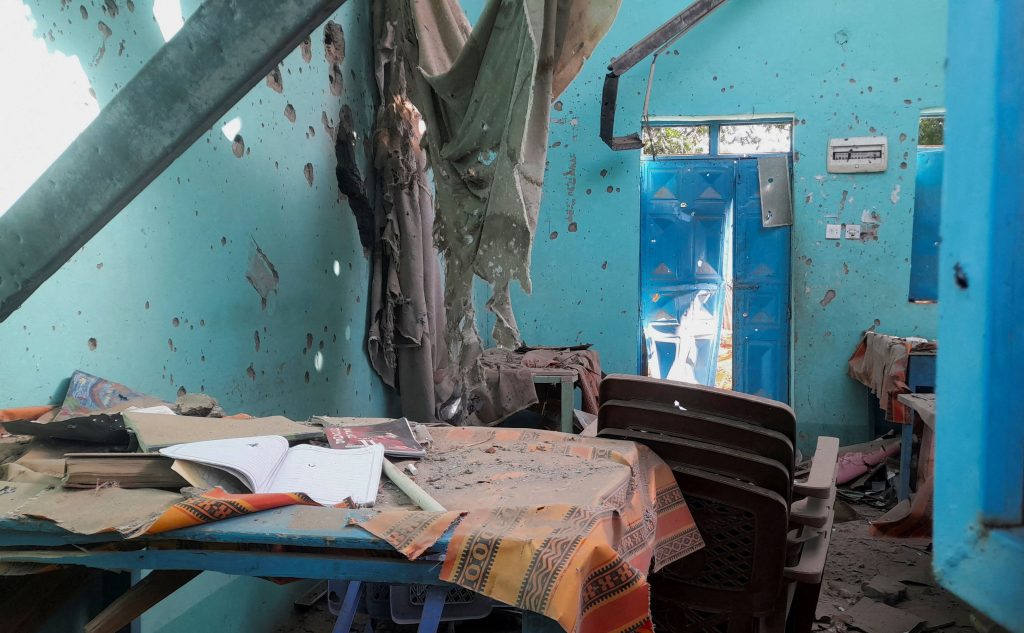
A desk bearing signs of shelling in a school where displaced people are sheltering, in El Fasher, Sudan, October 7, 2025. REUTERS/Mohyaldeen M Abdallah
Doctors’ groups reported that RSF fighters abducted medical personnel, including four doctors, a nurse, and a pharmacist. Satellite imagery from October 28 showed objects consistent with human remains around the hospital.
The RSF denied attacking hospitals, calling the reports “disinformation,” and claimed that all medical facilities in the city had been abandoned.
Humanitarian Crisis Deepens
The International Organization for Migration said more than 36,000 people fled al-Fashir since Sunday, while millions remain displaced nationwide. Aid groups report acute hunger and malnutrition, with 75% of children among recent arrivals in Tawila suffering from malnutrition, according to Médecins Sans Frontières.
The International Federation of Red Cross and Red Crescent Societies said five volunteers were killed on October 27 while distributing food in Bara, a city the RSF captured earlier this week. Three others remain missing.
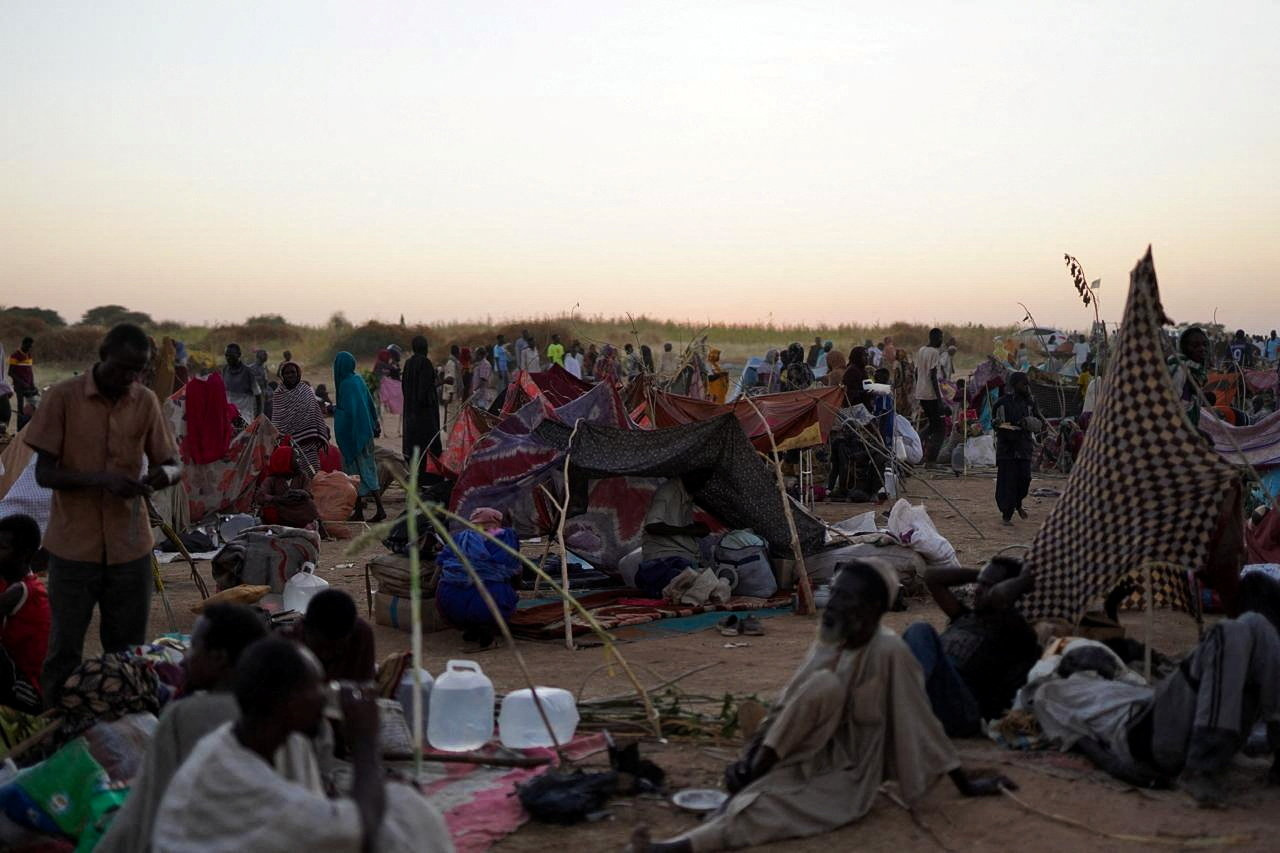
Civilians who escaped al-Fashir described dehydration, injuries, and trauma. Many were directed by RSF fighters to nearby towns, where makeshift displacement camps are being established.
International Reactions and Warnings
As reported in Reuters, at the ASEAN Summit in Kuala Lumpur, U.N. Secretary-General António Guterres warned that foreign interference was undermining peace efforts in Sudan and called for an end to external arms supplies. “The international community must call on countries to stop supplying weapons to parties involved in the conflict,” he said.
The U.S. State Department did not immediately comment on whether it would pursue the terrorist designation for the RSF. Earlier this year, the Biden administration determined that RSF members had committed genocide and imposed sanctions on its leader, Mohamed Hamdan Dagalo, known as Hemedti.
Meanwhile, the United States has hosted Emirati, Egyptian, and Saudi officials in Washington to discuss a potential peace plan. Sudan’s army-led Sovereign Council denied that it had engaged in indirect talks with the RSF.
A Country on the Brink
Analysts warn that the RSF’s complete control of Darfur could harden the geographical split of Sudan and embolden the paramilitary to expand eastward. RSF leaders have declared that “the liberation of al-Fashir is the liberation of all Sudan,” while the army’s Abdel Fattah al-Burhan acknowledged that his forces retreated “given the destruction and intentional killings of civilians.”
As famine spreads and mass atrocities mount, Sudan’s war — now in its third year — is being described by aid agencies as the world’s worst humanitarian crisis, with tens of thousands killed and 13 million people displaced.