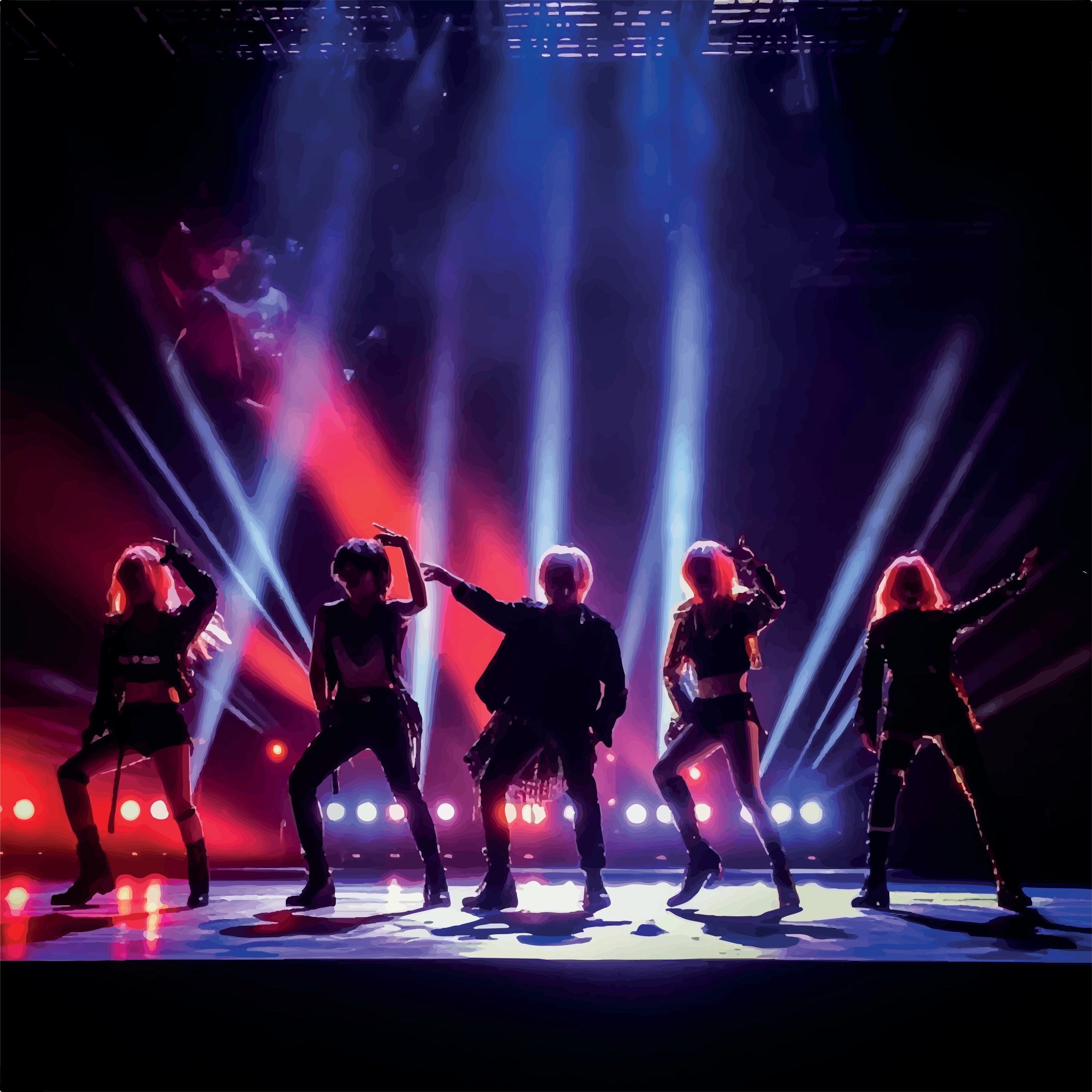


SEOUL—After nearly a decade in a K-pop boy band, Kevin Woo returned home to the U.S. four years ago, looking to expand his musical career outside South Korea. His monthly Spotify listeners, until recently, stood at about 10,000.
Now, it’s around 20 million.
The reason? Netflix’s No. 1 movie globally, “KPop Demon Hunters,” an animated film with girl-group protagonists and boy-band baddies. Two of the film’s tracks have sat atop the U.S. Spotify’s most-streamed songs—feats never before achieved by BTS, Blackpink or any other K-pop group, real or imagined.
That’s delivered a harsh reality to a genre seeking reinvention: Fictional bands have gotten popular faster in the U.S. than humans ever did. The triumph comes as the broader music industry grapples with unconventional entrants , like bogus hits created by AI claiming to be authentic.
Woo provides the singing voice for Mystery, one of the five members of the film’s soul-stealing Saja Boys. On a recent day, he was relaxing with a friend at a hotel pool in the Los Angeles area when a Saja Boys song started playing.
Some children began dancing, prompting Woo’s friend to ask: “Do you want to meet the actual Saja Boy?” They shrieked and asked for an autograph, which Woo obliged. He signed his own name next to Mystery Saja.
“It feels very surreal because I play a fictional character,” said Woo, 33. “They don’t recognize me as Kevin Woo or a K-pop artist.”
“KPop Demon Hunters,” produced by Sony Pictures Animation, is an American production shot in English, with a creative team and cast stocked with South Koreans and Korean diaspora. The film, which debuted June 20, has inspired fan art, handmade plushie dolls and cosplays of the main characters. Real-life K-pop stars, including several members of BTS, have praised the film.
The fictional K-pop idols are appealing to tribal fanbases that often lock in support for a single group and disavow others. In K-pop lingo, a “bias” refers to one’s favorite singer, while “akgae” identifies someone who prefers one member of the group but dislikes everyone else. “Multi-stan” is someone capable of loving more than one group—a stigmatized notion in the K-pop universe.
That has made rooting for the Saja Boys and the film’s girl-group trio, HUNTR/X, a relatively guilt-free endeavor, fans say.
Becoming the Switzerland of K-pop wasn’t luck. The film aimed to be an amalgamism of K-pop aesthetics and sounds, with hopes of honoring “all the fans,” said Ian Eisendrath, the movie’s executive music producer.
“I challenge people to not love this music,” Eisendrath said.
Seven of the film’s songs rank among Spotify’s 15 most-streamed tunes on the U.S. daily charts. The two most popular hits, HUNTR/X’s “Golden” and the Saja Boys’ “Your Idol,” are also roaring up the Billboard Hot 100, placing No. 6 and No. 16 respectively. The film’s companion album has achieved the biggest streaming week for a movie soundtrack since 2021’s “Encanto.”
The catchy tunes have created many converts like Vasileios Tsagkaropoulos, a 45-year-old dad who had never listened to K-pop. On a co-worker’s suggestion, he found himself on his sofa watching “KPop Demon Hunters,” his two young daughters on each arm.
Near the end, Tsagkaropoulos began to tear up. His 6-year-old glanced over as he let out a quiet whimper. He’s watched the movie twice more, the soundtrack blares in their car and he’s a proud owner of a purple HUNTR/X T-shirt. He said K-pop previously seemed like “a flashy product.”
“It feels different now,” Tsagkaropoulos said, “because it’s something I shared with my daughters.”
The film’s chart success carries some caveats. Several individual K-pop singers—as opposed to groups—have vaulted atop the daily Spotify charts in the U.S., the world’s most-lucrative music market. BTS and Blackpink, who typically sing in Korean, have hit No. 1 on Spotify globally. BTS, whose members concluded mandatory military service last month, have six chart-toppers on the Billboard Hot 100.
Despite explosive growth over the years, the K-pop industry had become top-heavy and stagnated. Two years ago, the CEO of BTS’s music label put it bluntly: “K-pop is in crisis.”
The success of “KPop Demon Hunters” shows it is possible for fans to connect with nonhuman idols, said Suk-Young Kim, a professor at the University of California, Los Angeles, who has written a book about K-pop. It will likely spawn copycats.
“This is a long-running dream for K-pop companies,” Prof. Kim said. “Here we have idols who never sleep, never get sick, never age.”
But don’t count the humans out, said Benny Char, a K-pop producer and songwriter, who has also worked with an AI singer. “You can’t manufacture the vulnerability, chemistry and unpredictability that real artists bring to the table,” he said.
Woo, the Saja Boy singer, said he doesn’t mind if his work as Mystery overshadows his prior time with the K-pop group, U-KISS, his Broadway performances or his acting roles. “For me, in a sense, it’s like a reinvention of my artistry,” he said.
Sky Blaw, who supports the K-pop boy band Vanner, gives high marks to the film’s authenticity, from the intense bond between the fans and stars to the glossy stage outfits.
But the 27-year-old, who works at an engraving shop in Salem, Ore., was puzzled about one thing: The Saja Boys crashing HUNTR/X’s meet-and-greet with fans.
“That,” Blaw said, “would never happen.”
Write to Timothy W. Martin at Timothy.Martin@wsj.com