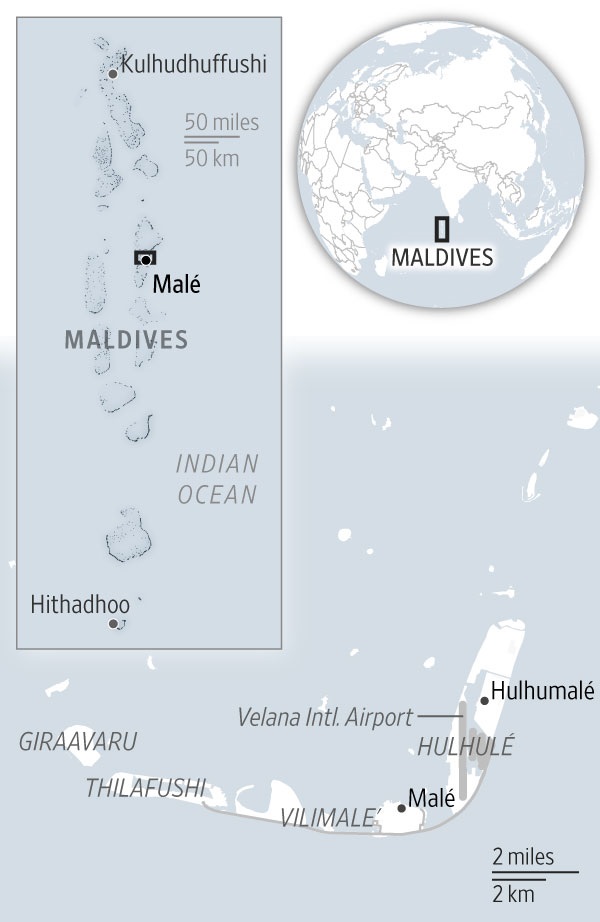
MALÉ, Maldives—The white sand beaches, turquoise waters and secluded luxury resorts of this South Asian archipelago attract millions of tourists each year. But a new trade has quietly emerged behind the postcard-perfect backdrop: a web of companies helping Russia evade sanctions.
Hundreds of millions of dollars in goods that are restricted or destined for sanctioned companies have changed hands at the airport, according to documents reviewed by The Wall Street Journal and interviews with Western officials. Some of these goods serve both civilian and military uses. The airport’s cargo holds are often filled with aircraft parts and electronic components, as well as other restricted goods, according to the documents and officials.
The amount of goods flowing through the Maldives is relatively small when compared with Russia’s biggest channels for sanctions evasion , including China, Turkey and the United Arab Emirates, which together account for about $15 billion in restricted Russian imports annually. But the flow of goods through the Maldives, which hasn’t previously been reported, shows how expansive Russia’s efforts to thwart Western restrictions are, turning even small and unexpected corners of the globe into channels for goods.
Through more than four years of war, Moscow has repeatedly shown that it can find the gaps in sanctions, leaving Western officials playing a game of whack-a-mole as they try to halt the flow of goods that sustains Russia’s war effort and economy.
The documents reviewed by the Journal—air waybills, a cargo manifest, and emails between logistics companies—paint a picture of how the system in the Maldives works.
A commercial flight operated by Russia’s largest airline, Aeroflot, lands each morning at the airport in Malé, where teams of local middlemen working with Russia-linked logistics companies help get the U.S., European and Chinese goods cleared through customs. The goods are then loaded onto the Aeroflot flights, which fly back to Moscow with goods and cargo around two hours later.
Once in Russia, the products are distributed, in some cases, to sanctioned entities, including Russia’s biggest domestic carrier S7 Airlines and its maintenance subsidiaries, which have struggled to get replacement parts for its fleet of aging aircraft.
“This shows there are effective channels that exist far outside of the usual suspects,” said Pavlo Shkurenko , a sanctions research fellow at the Kyiv School of Economics Institute.
The Maldivian government and the Maldives Airports Company, which operates the airport, didn’t respond to requests for comment.
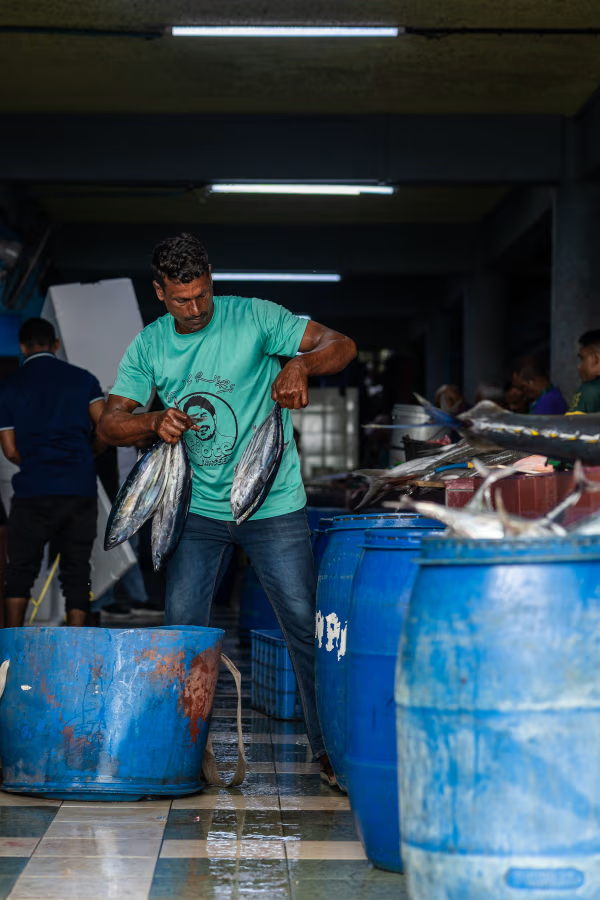
The Maldives archipelago consists of more than a thousand islands, many of which are home to a single hotel. More than two million tourists travel to the islands each year—drawn by the clear waters where they can observe marine life like turtles, manta rays and whale sharks. Malé, on the other hand, feels like a different world. One of the most densely populated cities on the planet, the capital teems with a relentless tide of scooters and motorbikes in its narrow streets.
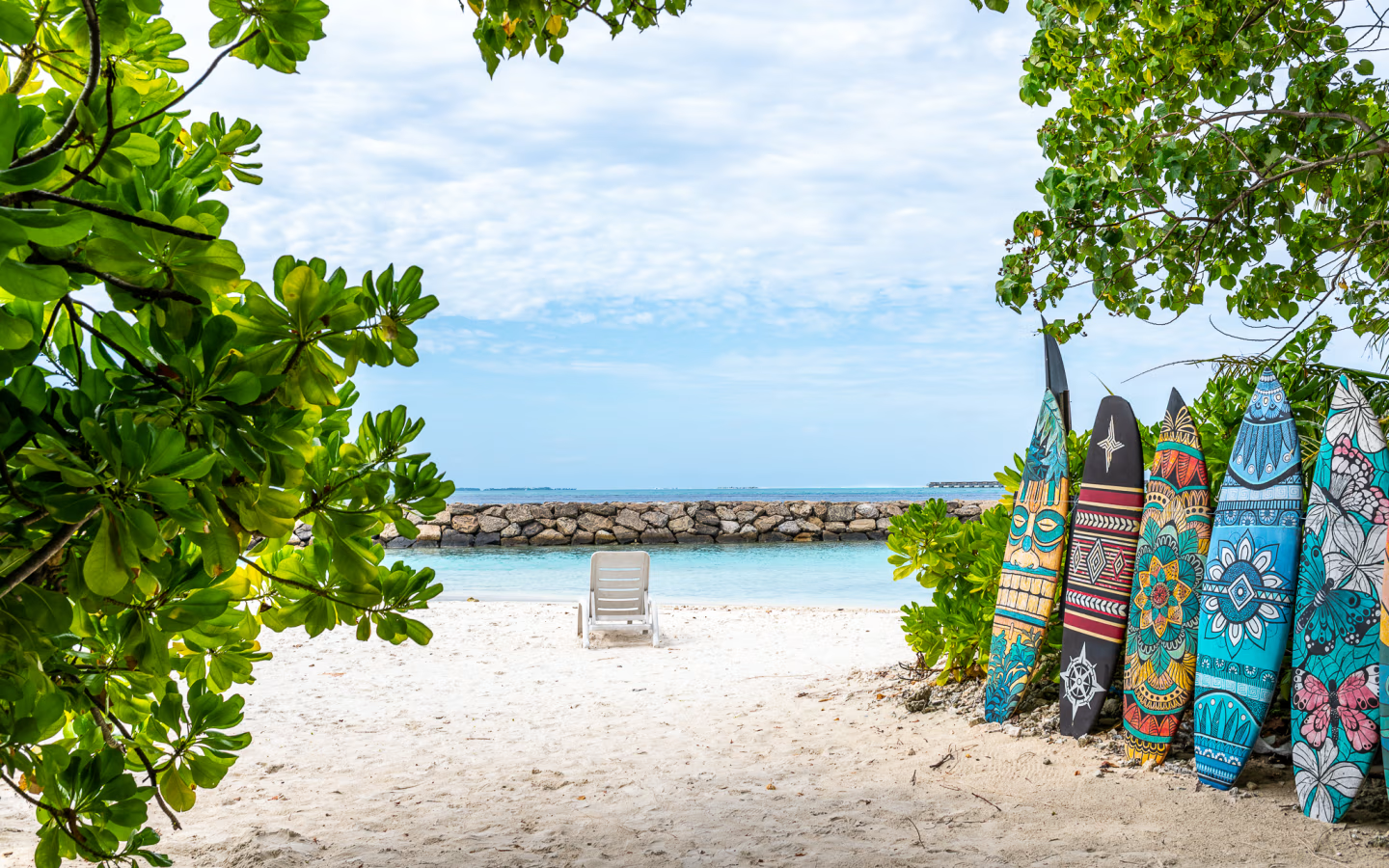
The Maldives’ economy is heavily reliant on tourism. The Maldives’ economy is heavily reliant on tourism. Photography and video by Sophia Nasif for WSJ
Part of Russia’s success in channeling goods through the Maldives stems from its economic ties with the islands. Russians make up the second-largest nationality among tourists in the Maldives, behind Chinese nationals . Diplomatic friction with Russia would pose a threat to the Maldives’ economy, which is still recovering from the downturn in the tourism sector during the pandemic.
Now, the government is making money off a surge in trade, in addition to taxes on the tourism sector. The Maldives Airports Company made a record profit in 2024, becoming the most profitable state-owned company in the country. The company charges handling and commercial fees for cargo and resells fuel at a profit.
Some of the products that flow through Malé to Moscow are designated under sanctions as dual-use, meaning they could be used for military or civilian purposes, such as nourishing the country’s sanctioned airline industry.
Shipments that have transited through Malé include microchips that can be used for both civilian hardware and sophisticated missile guidance systems, optical instruments needed for satellites tracking enemy troop deployments, and high-strength aerospace rivets and bolts that are equally suited for a commercial jetliner as they are for a jet fighter or a long-range rocket.
Customs data from the Maldives shows a paltry amount of exports to Russia between 2022 and 2025—about $2,300 of tuna and $25 in leaflets and brochures. But Russian trade data collected by Import Genius, a U.S.-based research firm, shows that Russian imports from the Maldives, a country with virtually no industry, surged to more than $630 million in 2022—the year the full-scale invasion began—up from less than $7 million in 2021.
Russia imported $160 million in 2024, the last full year of data available from Import Genius. Import Genius Research Director William George said the figures probably understate the true volume of trade between the Maldives and Russia, pointing out that Russian authorities appeared to start censoring parts of the data in 2024 before blocking access entirely in early 2025.
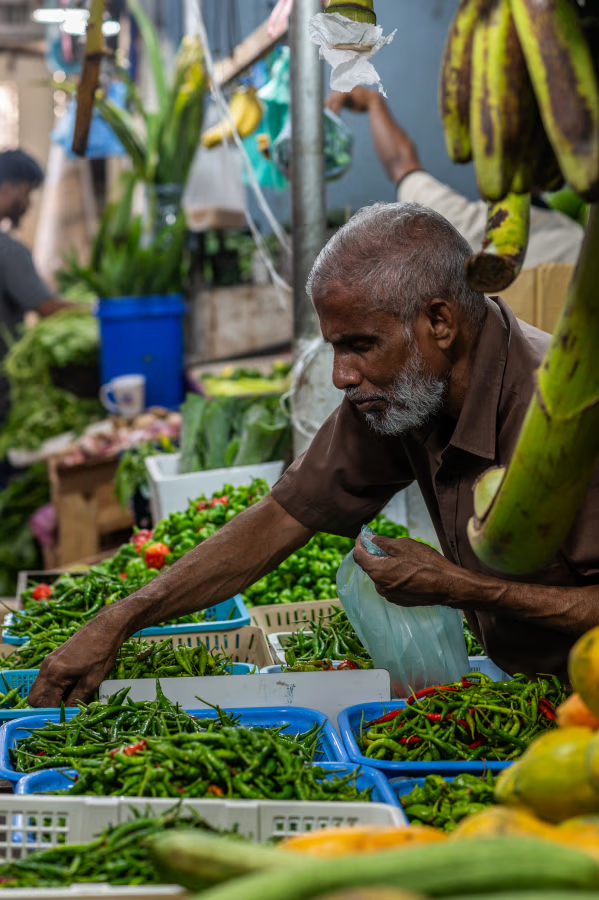
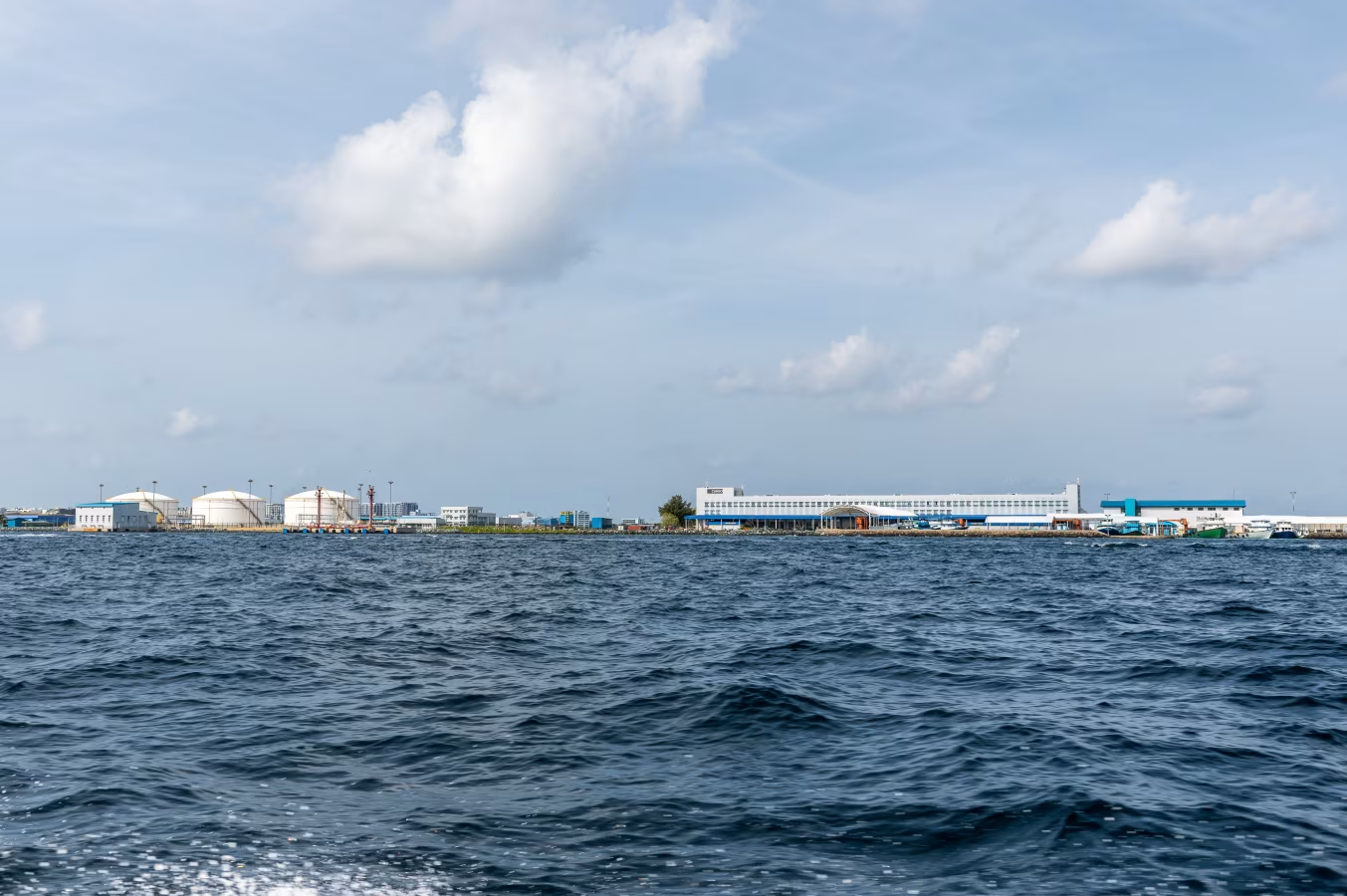
Malé, the capital of the Maldives, is one of the most densely populated cities in the world. Photography and video by Sophia Nasif for WSJ
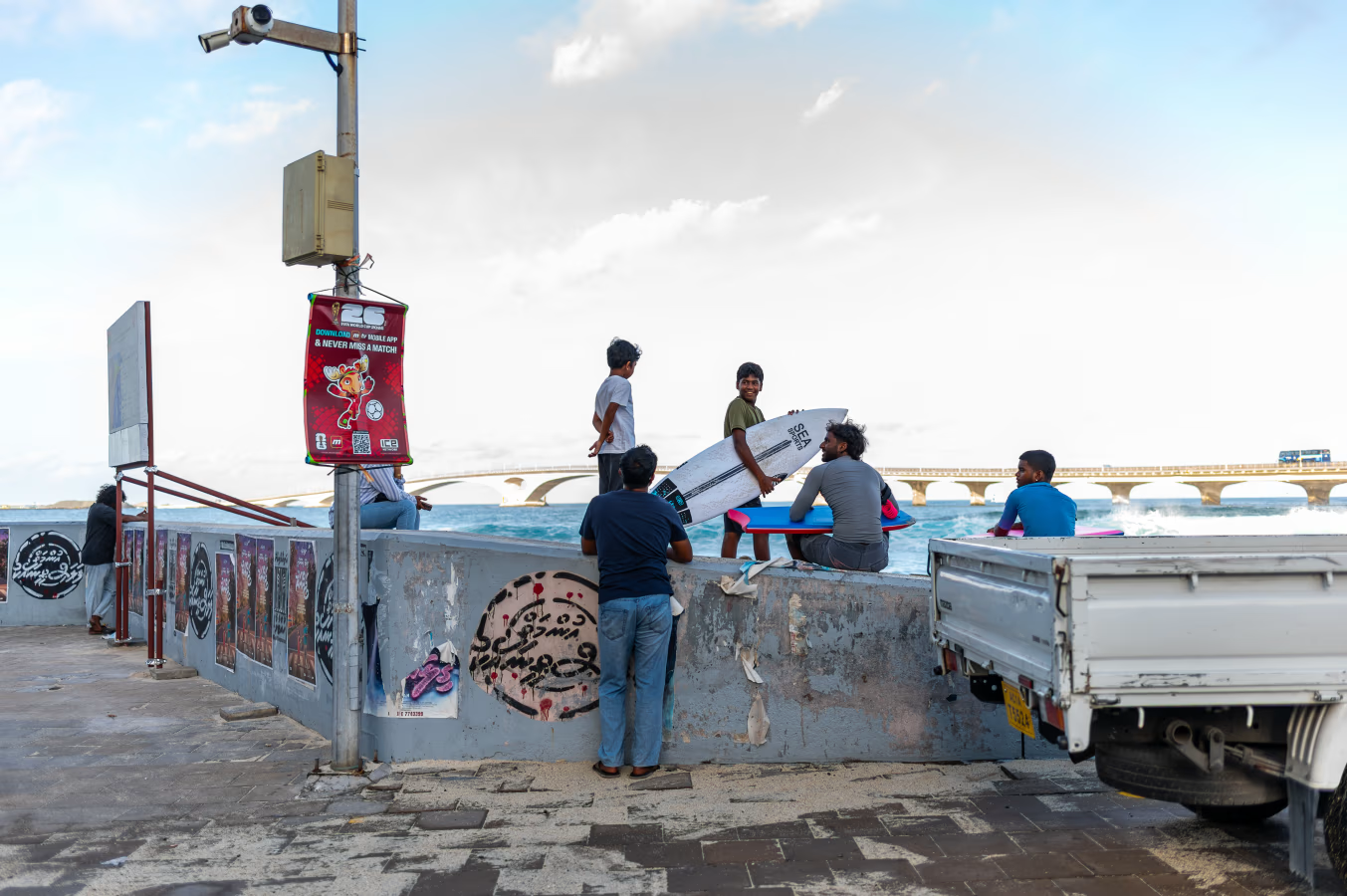
Malé, the capital of the Maldives, is one of the most densely populated cities in the world. Photography and video by Sophia Nasif for WSJ
The U.S. and Europe imposed sweeping sanctions against Moscow following its invasion of Ukraine to degrade Russia’s industrial base and isolate it from global commerce. They have frozen around $300 billion in Russian central-bank assets and disconnected major Russian lenders from the Swift messaging network. A web of export controls has cut off Russia’s access to advanced microchips, aerospace technology and industrial machinery crucial to sustaining its domestic manufacturing and war effort.
Western officials have focused most of their recent efforts on closing loopholes and punishing circumvention. The U.S. and European Union are increasingly targeting third-country intermediaries—including banks and logistics firms in nations that facilitate the covert flow of Western goods or illicit oil revenues back to Moscow.
The Maldivian government is under increasing pressure from the U.S. and Europe to shut down this route, according to the Western officials. The authorities there are aware of the issue and are working to address it, according to a person familiar with the matter.
Part of the problem is that the customs office in the Maldives has limited staff, and goods transiting through the country undergo minimal checks, the person said. Cargo in transit typically doesn’t undergo physical inspections, the person said. Instead, authorities rely on paperwork.
Trade appears to only be growing. In July, Maldives Airports Company said it recorded a historic high in its daily cargo volume transiting through the airport by shipping a record 126 tons of freight in one day. Aeroflot accounted for 12% of outbound freight during the first half of the year, state-run news channel PSM News reported.
An Aeroflot plane taking off on a return flight to Russia. Cargo only goes through minimal customs checks. An address listed for Go Investment, a company involved in the shipments to Russia, led to a small electronics shop. Photography and video by Sophia Nasif for WSJ
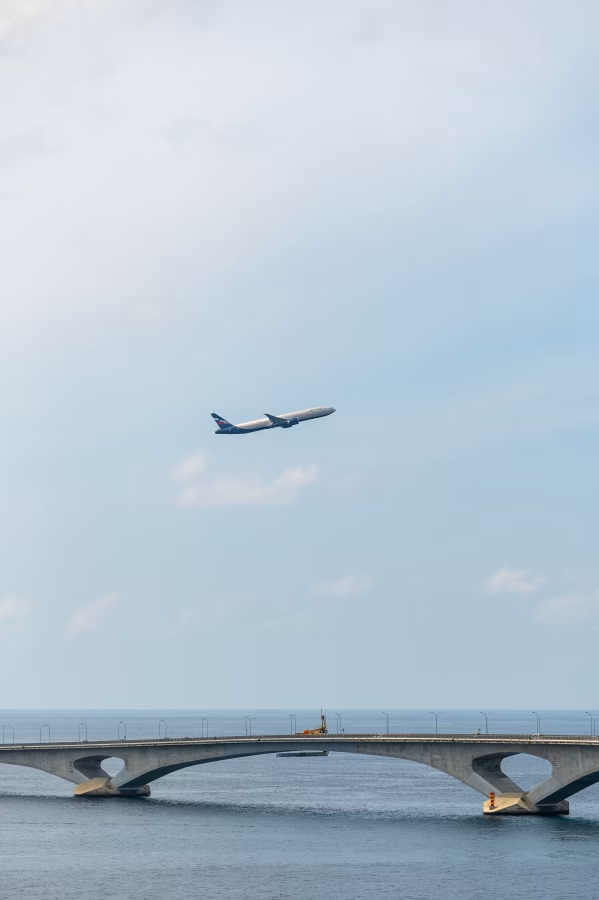
An Aeroflot plane taking off on a return flight to Russia. Cargo only goes through minimal customs checks. An address listed for Go Investment, a company involved in the shipments to Russia, led to a small electronics shop. Photography and video by Sophia Nasif for WSJ
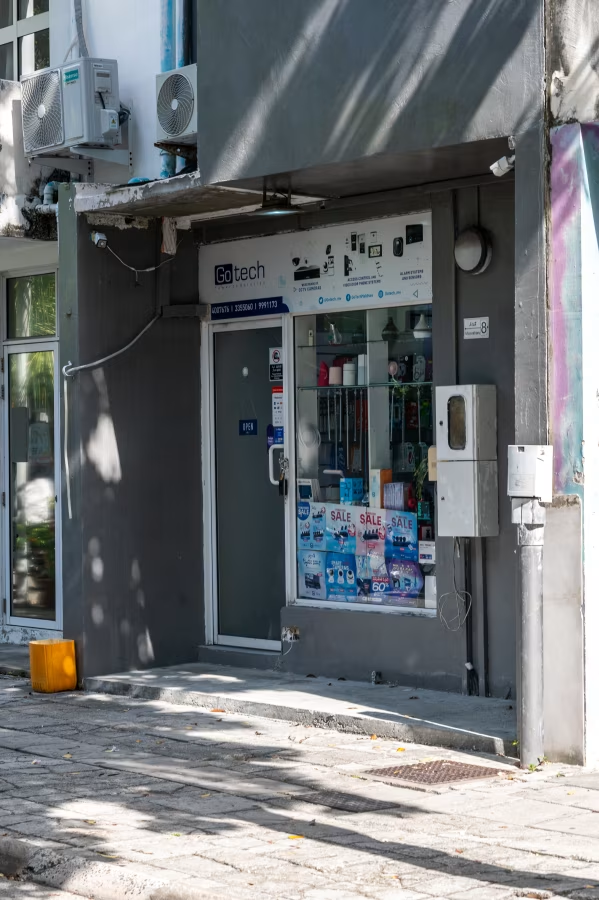
An Aeroflot plane taking off on a return flight to Russia. Cargo only goes through minimal customs checks. An address listed for Go Investment, a company involved in the shipments to Russia, led to a small electronics shop. Photography and video by Sophia Nasif for WSJ
Documents reviewed by the Journal show that when a cargo initially lands, the name of the company exporting the goods appears on the air waybill, along with the supposed buyer. Once in the Maldives, however, a web of obscure local companies, such as Freight Care and Go Investment, help alter shipping documents and move the goods over the tarmac, making sure they never leave the airport and avoid formal entry into the archipelago.
Cargo is never categorized as imports and only goes through minimal customs checks before being shifted between aircrafts, officials said. A new air waybill is issued for the flight between Malé and Moscow’s Sheremetyevo International Airport. The new bill doesn’t list the name of the company that sold the goods, according to the documents and Western officials.
For example, in May 2024, Kraemer Mining, a German company, sold pumps, batteries, v-belts and other equipment worth about €9,000, equivalent to around $10,400, to Peretsvo, a company based in the Central Asian country of Kyrgyzstan. The goods were first sent from Düsseldorf, Germany, to Malé on an Emirates flight. Freight Care, which is listed as the first contact for the goods on the air waybill, arranges the necessary paperwork to help move the goods through the Malé airport, according to Western officials and the company.
A few days later, the goods were loaded onto an Aeroflot flight to Moscow. Aeroflot issued a second air waybill, which doesn’t include any reference to Kraemer Mining or the origin of the goods. The second bill lists a new recipient—Gruppa Kompaniy Tehno, a Russian importer based in Krasnoyarsk, an industrial and economic hub in Siberia. Gruppa Kompaniy Tehno and Kraemer Mining didn’t respond to a request for comment.
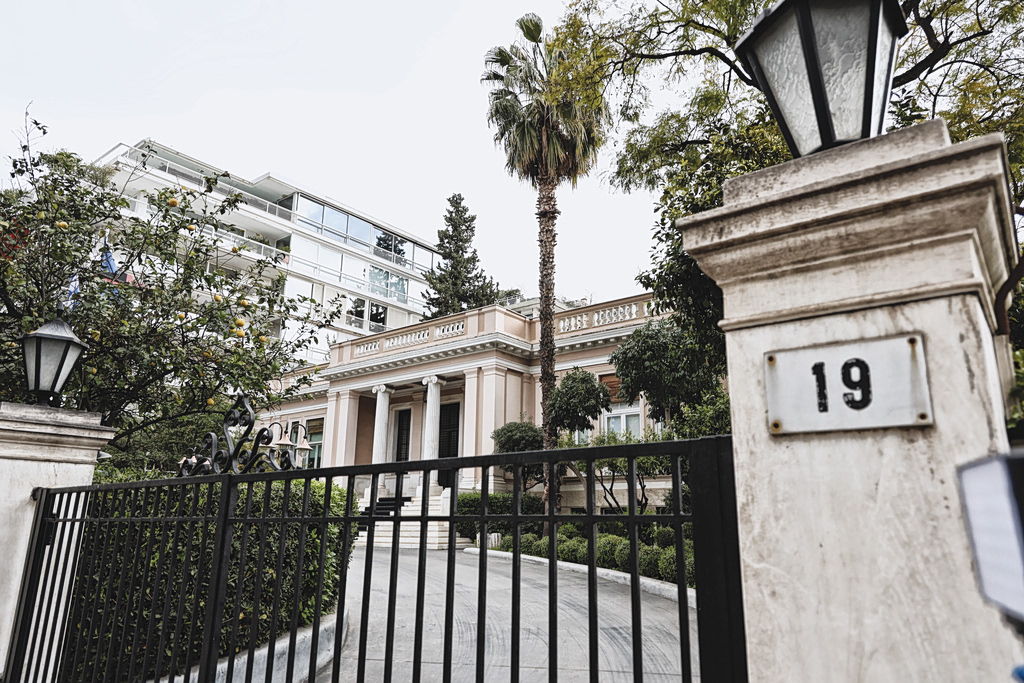
The Journal found two addresses for Freight Care—one on air waybills and another in the country’s official business registry. The addresses were located in neighboring office buildings in Malé, with the Aeroflot office sandwiched between them. Visits to both buildings with listed addresses for Freight Care revealed no trace of the company’s office.
Hussain Waheed, Freight Care’s managing director, said the company handled goods in transit in Malé to Russia, but never knowingly helped ship any goods that could be used to produce weapons. “We do not support any war,” he said.
An address listed for Go Investment in the documents led to a small shop selling electronics. The same address was registered to multiple other companies in the business registry for the Maldives. When contacted, a man who was listed as the managing director or a board member for all of the companies said he couldn’t talk and hung up. He didn’t respond to further messages.
Write to Noemie Bisserbe at noemie.bisserbe@wsj.com and Thomas Grove at thomas.grove@wsj.com