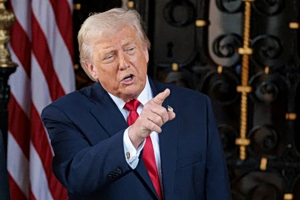
The Trump administration is planning this week to repeal the Obama-era scientific finding that serves as the legal basis for federal greenhouse-gas regulation, according to U.S. officials, in the most far-reaching rollback of U.S. climate policy to date.
The reversal targets the 2009 “endangerment finding,” which concluded that six greenhouse gases pose a threat to public health and welfare. The finding provided the legal underpinning for the Environmental Protection Agency’s climate rules, which limited emissions from power plants and tightened fuel-economy standards for vehicles under the Clean Air Act.
“This amounts to the largest act of deregulation in the history of the United States,” EPA Administrator Lee Zeldin said in an interview.
The final rule, set to be made public later this week, removes the regulatory requirements to measure, report, certify and comply with federal greenhouse-gas emission standards for motor vehicles, and repeals associated compliance programs, credit provisions and reporting obligations for industries, according to administration officials.
It wouldn’t apply to rules governing emissions from power plants and other stationary sources such as oil-and-gas facilities, the officials said. But repealing the finding could open up the door to rolling back regulations that affect those facilities.
The move is likely to be seen as a victory for the fossil-fuel industry, which for years has pushed back against federal climate regulations. Since taking office, President Trump has sought to repeal rules that his allies in the oil-and-gas industry have cited as overly burdensome. Trump has framed fossil fuels as vital to economic and national security, and he has argued that expanded reliance on them will help lower energy prices.
The decision to repeal the endangerment finding might also create fresh uncertainty for companies with global operations, which could find themselves caught between lower environmental standards at home and a higher baseline for emissions rules abroad. A void at the federal level might prompt states to implement their own regulations, and create new legal exposure for companies.
Environmental groups have said they would challenge a rollback in the courts, and it could be years before litigation is resolved. The administration could decline to enforce rules and fines while a legal process unfolds. Several unsuccessful attempts to revise or repeal the “endangerment finding” have been made in recent years—including in the courts.
The Environmental Defense Fund, a nonprofit advocacy group, has said that rolling back the endangerment finding would “eliminate some of our most vital tools to protect people from the pollution that causes climate change.” The group said the administration was trying to steer Americans toward dirtier, more dangerous and more destructive air.
On Inauguration Day last year, Trump signed an executive order directing the EPA to submit an assessment on whether the endangerment finding—which the Obama and Biden administrations used to set greenhouse gas emission limits on vehicles, power plants and large industrial facilities—should be kept in place. The EPA announced a proposal to rescind the finding last July.
Officials said the rollback would equate to more than $1 trillion in regulation cuts, though they didn’t provide details on how they came up with the number. They said that rescinding the finding would result in an average per-vehicle cost savings of more than $2,400. Public health and environmental groups have said federal climate regulations help prevent hundreds of thousands of premature deaths each year.
The rollback of the endangerment finding is one of several energy- and climate-related announcements the administration is planning to make this week as part of a campaign to address high energy costs. Public polling shows that voters view the high cost of living—including electricity prices—as a primary concern heading into this year’s midterm elections.
“More energy drives human flourishing,” Interior Secretary Doug Burgum said in an interview. “Energy abundance is the thing that we have to focus on, not regulating certain forms of energy out.”
Trump is set to hold an event Wednesday at the White House with Zeldin and Energy Secretary Chris Wright to announce a new executive order that directs the Defense Department to enter into agreements to buy electricity from coal-fired power plants. The administration will also award funding to five coal plants in West Virginia, Ohio, North Carolina and Kentucky to recommission and upgrade the facilities. Trump will be awarded the inaugural “Undisputed Champion of Coal” award by the Washington Coal Club, a pro-coal group with ties to the fossil fuel industry, administration officials said.
Conversations are under way between the Defense Department and Energy Department to identify facilities and coal plants, officials said.
Wright said in an interview that Trump’s effort to re-energize the coal industry would allow the U.S. to meet its artificial-intelligence goals, re-industrialize and stop a rise in electricity prices. “Our goal is to drive down the price of energy for Americans,” he said.
In addition, administration officials said the Tennessee Valley Authority is expected to soon vote to keep two coal plants operating after they were previously slated to come offline.
The attorneys general of states led by Democrats including Massachusetts, New York and California in a September comment letter opposed the proposed rescission of the endangerment finding. They said the move would violate settled law, Supreme Court precedent and scientific consensus—and endanger the lives of millions of Americans.
Analysts say that some states might want to step in and enact their own legislation in the absence of a federal standard for regulating emissions. California has previously asserted that if greenhouse gas emissions don’t fall under the federal purview, then it doesn’t need approval from EPA to regulate tailpipe emissions. The state is the largest car market in the U.S.
Some legal experts note that the U.S. auto industry didn’t ask for a reversal of the endangerment finding, and will likely continue to invest in reducing emissions to remain competitive globally and in anticipation of a potential future reversal.
Write to Meridith McGraw at Meridith.McGraw@WSJ.com and Benoît Morenne at benoit.morenne@wsj.com