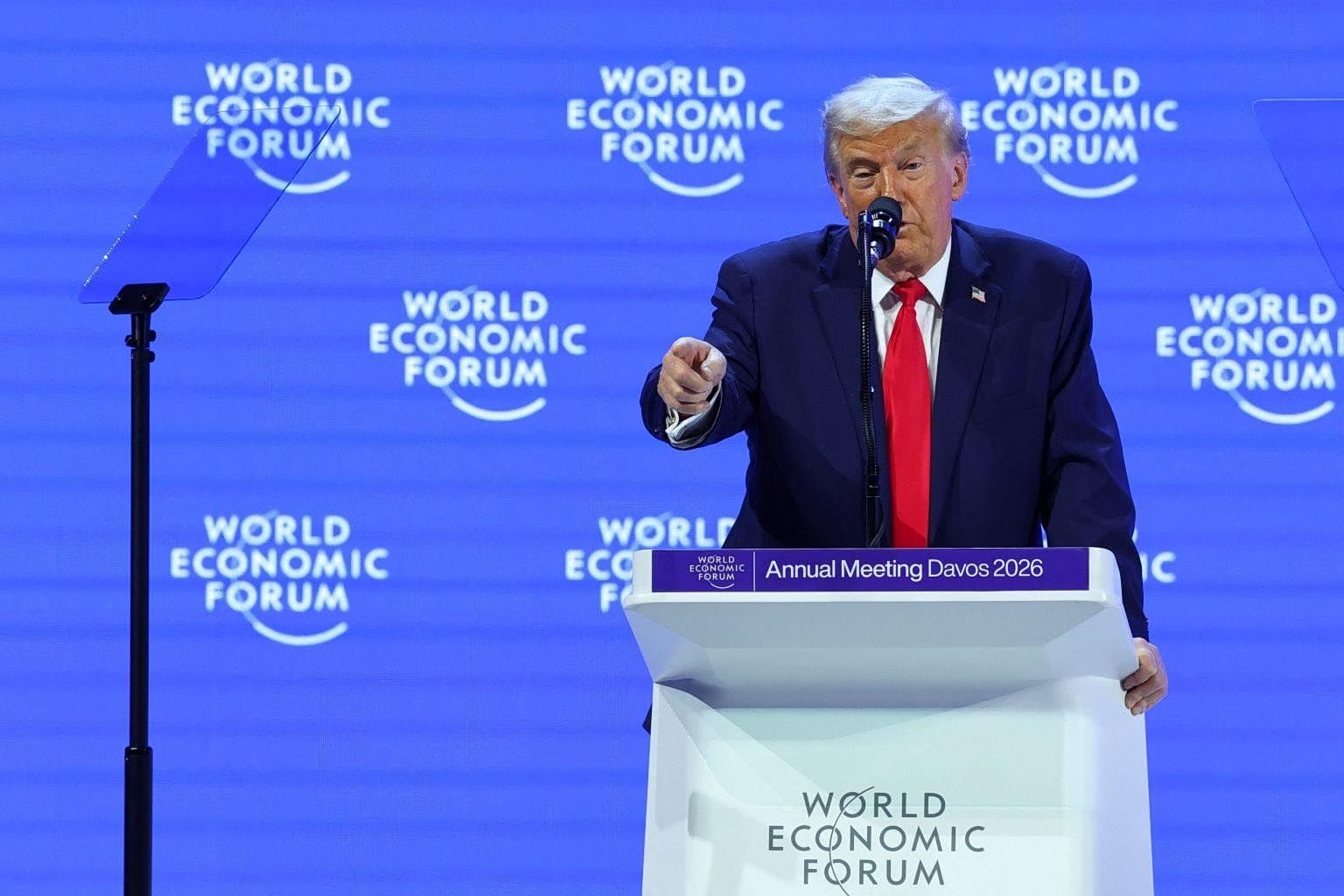
DAVOS, Switzerland—When President Trump arrived in the snow-covered Swiss Alps on Wednesday afternoon, European leaders were panicking that his efforts to acquire Greenland would trigger a trans-Atlantic conflagration. By the time the sun set, Trump had backed down.
The about-face started with an hourlong speech at the World Economic Forum, where the U.S. president said he wouldn’t deploy the military to take control of Greenland. Later, following a meeting with North Atlantic Treaty Organization Secretary-General Mark Rutte , Trump called off promised tariffs on European nations, contending that he had “formed the framework of a future deal” with respect to the largest island in the world.
The contours of the deal framework couldn’t immediately be determined. Speaking to reporters, Trump called the framework “really fantastic,” but offered few details. The White House didn’t respond to a request for comment.
It was a stark shift in tone for Trump, who just days earlier had declined to rule out using the military to secure ownership of Greenland and posted an image online of the territory with an American flag plastered across it.
The pivot was a welcome relief to European leaders, who faced the prospect of economy-rattling tariffs and a standoff with Trump that could have threatened the stability of NATO. Last weekend, Trump said he would hit eight nations with 10% tariffs starting next month if a deal wasn’t reached to acquire Greenland. The tariffs would have increased to 25% in June.
In a Truth Social post Wednesday night, Trump said he would hold off on the tariffs so that his top advisers—Vice President JD Vance , Secretary of State Marco Rubio and Special Envoy Steve Witkoff —could negotiate a deal on Greenland.
Some of Trump’s own advisers had privately harbored concern that the president’s harsh rhetoric had made it harder to strike a deal with Denmark, which controls the territory. And some outside allies of the president were concerned Tuesday after stocks fell sharply following Trump’s Greenland-related tariff threats. Danish officials continued to maintain that Greenland wasn’t for sale in recent days as Trump’s rhetoric escalated.
Trump’s shift came after days of talks with Rutte and European officials on issues related to Greenland.
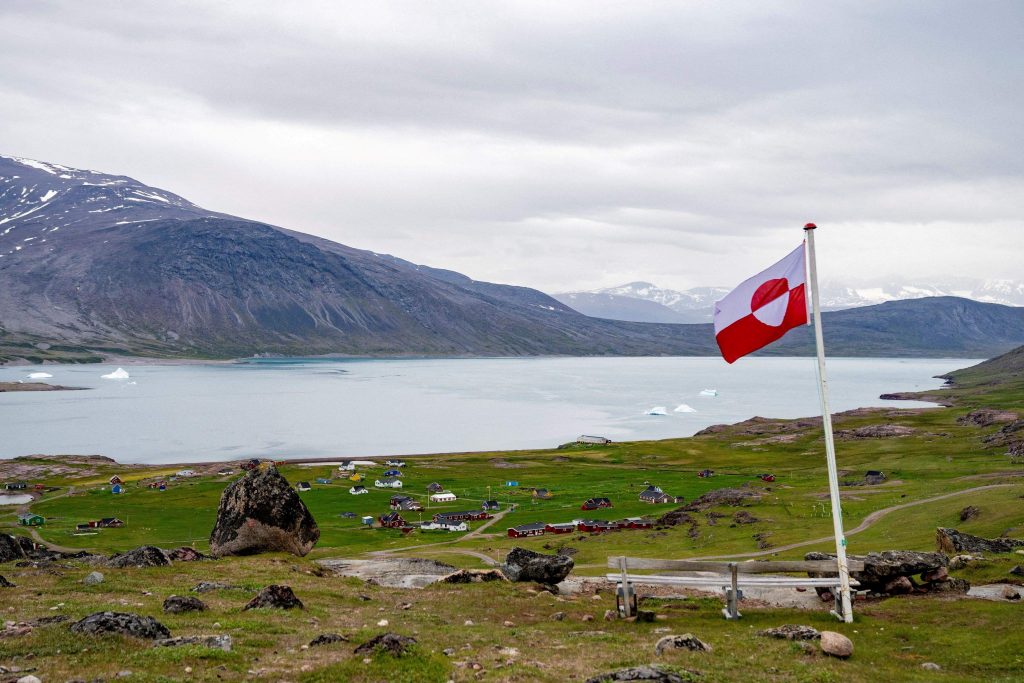
Trump and Rutte on Wednesday “discussed the critical significance of security in the Arctic region” to the U.S. and other NATO members, according to an alliance spokesman. Talks about the proposed framework will focus on how NATO members can work together to ensure Arctic security, the spokesman said. More-specific negotiations between Denmark, Greenland and the U.S. will aim to ensure “that Russia and China never gain a foothold—economically or militarily—in Greenland,” the spokesman said.
Earlier Wednesday, Rutte refused to comment about the talks, saying it would undermine his ability “to basically defuse the tension, to de-escalate,” he told a panel.
Rutte has drawn mockery for his sometimes-fawning approach to Trump. At NATO’s summit in June, he referred to the president as “daddy” and has repeatedly lavished praise on him. But Trump and Rutte have built a strong working relationship, U.S. and European officials said.
In his speech earlier Wednesday, Trump delivered pointed criticisms of longtime U.S. allies as representatives from those countries looked on. He described Europe as unrecognizable from an earlier era and headed in the wrong direction. He rebuked Denmark as ungrateful. He said Switzerland wouldn’t have a country if not for the support of the U.S. And he mocked French President Emmanuel Macron for wearing aviator sunglasses at the event.
But he also sought to de-escalate, calling for immediate negotiations to discuss the U.S. bid to acquire Greenland. “I don’t have to use force,” he said. “I don’t want to use force. I won’t use force.”
Trump suggested that NATO members have an obligation to support the U.S. acquisition of Greenland because of America’s central role in bolstering the trans-Atlantic alliance. “We give so much, and we get so little in return,” he said.
“We want a piece of ice for world protection, and they won’t give it,” Trump said of his desire to acquire Greenland from Denmark. “You can say yes, and we will be very appreciative. Or you can say no, and we will remember.”
Trump was met with a muted response from the room of global elites that packed the main conference hall for his speech, drawing some light applause but also many blank stares and spurts of nervous laughter as he made some of his most-strident claims.
Trump’s pledge not to use force came as a partial relief to European officials, who privately held out hope that the president was more open to a compromise.
Leaders of the European Union’s 27 countries are set to meet in Brussels on Thursday evening for a hastily organized summit. While they no longer need an immediate game plan for a trade war, they now must assess battered trans-Atlantic relations.
Europeans had been seeking ways to bolster Arctic security while showing Trump that they aren’t ceding Greenland. France on Wednesday proposed extending Danish-led multinational military exercises now ongoing in Greenland.
Trump’s advisers said he had been emboldened by the U.S. operation to capture Venezuelan leader Nicolás Maduro. In the aftermath of the raid, Trump has put renewed emphasis on his efforts to exert control over the Western Hemisphere.
Trump’s Greenland ambitions triggered an unprecedented diplomatic crisis for the U.S.’s closest NATO allies, who are already grappling with Russia’s ongoing war in Ukraine and geopolitical competition with China. Some of Washington’s closest historic allies have questioned how much longer they can count on the U.S.
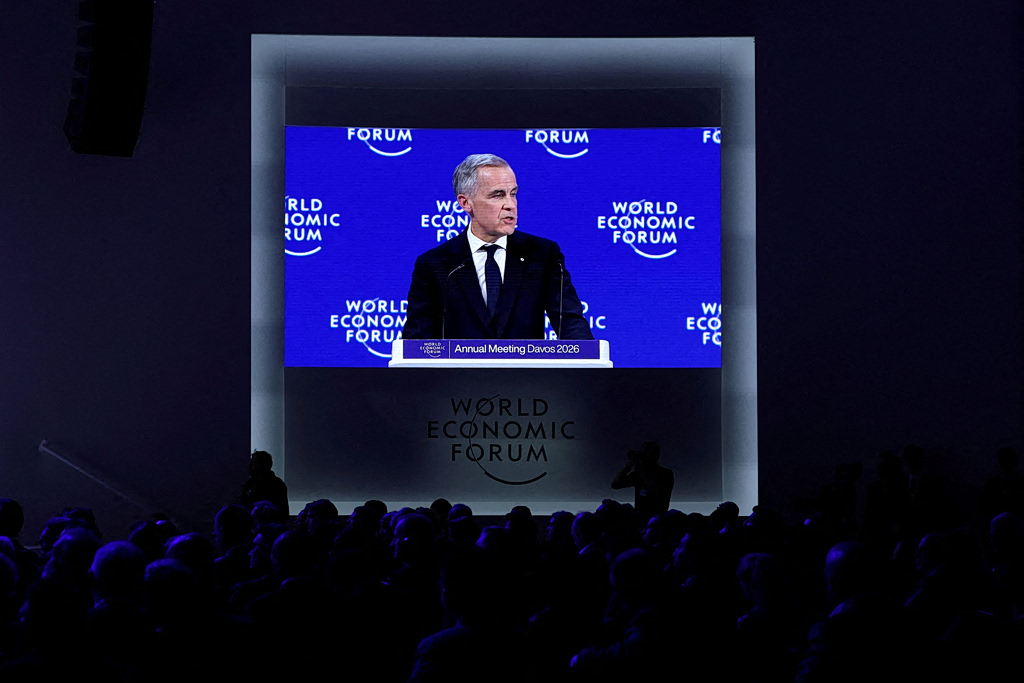
“Every day we’re reminded that we live in an era of great-power rivalry,” Canadian Prime Minister Mark Carney said during a speech at Davos earlier this week. “That the rules-based order is fading. That the strong can do what they can, and the weak must suffer what they must.”
In Davos, those tensions were at times on display behind the scenes.
Christine Lagarde, president of the European Central Bank, walked out of a dinner during a speech by U.S. Commerce Secretary Howard Lutnick, in what some attendees viewed as a sign of mounting tensions in trans-Atlantic relations. Lutnick, addressing an invitation-only dinner of VIP guests, blasted Europe’s energy policies and criticized what he described as the continent’s declining competitiveness on the world stage, according to people who attended.
Some guests at the dinner applauded Lutnick’s remarks highlighting the U.S.’s power in comparison with Europe, and others booed, attendees said. “We have no comment to add,” an ECB spokesperson said by email Wednesday morning. A Commerce Department spokesperson said “during Secretary Lutnick’s three-minute speech, no one left hastily. Only one person booed, and it was Al Gore.” Gore, the former U.S. vice president, responded by saying that he listened to Lutnick’s speech and “didn’t interrupt him in any way.”
Danish and Greenlandic officials have repeatedly insisted that Trump can get everything he wants on Greenland without actually acquiring the island. Denmark has opened the door to new U.S. military bases on the island as well as new investments in extracting critical minerals.