The U.S. and Oman are looking for ways to break Iran’s insistence on charging tolls for ships to pass through the Strait of Hormuz. Their chief lever in indirect talks was a promise to unfreeze some of the $100 billion in Iranian funds held overseas.
So far, Tehran isn’t taking the bait. Its military leaders are responding with a fresh round of threats against ships passing through one of the world’s most trafficked waterways.
U.S. envoys Steve Witkoff and Jared Kushner traveled to Doha this week to talk with Qatari mediators about how to break the impasse and settle the implementation of last month’s initial agreement to open the strait. Both the U.S. and Iranian teams discussed recent fighting in Lebanon with Qatari mediators, a conflict that has added another wrinkle to the process, people familiar with the discussions said.
The U.S. diplomats offered a trade-off to Iran, the people said: Relinquish its claim to control the strait and renounce toll payments in exchange for billions of dollars of unfrozen funds.
Under last month’s pact with the U.S., Iran was set to get access to part of the $100 billion of its funds frozen abroad. Iran’s economy is badly in need of a fresh injection of foreign currency amid rampant inflation driven by years of sanctions.
Talks had initially been progressing toward the release of $6 billion held in Qatar but Iran’s decision to block the strait has set back the release, the people said.
On Thursday, Iran signaled the reward wasn’t enough to change its position. Upon returning from Doha, Iran’s negotiator, Deputy Foreign Minister Kazem Gharibabadi , insisted Hormuz is “under Iran’s command,” not the U.S.’s.
Tehran’s military doubled down later in the day, warning that any ship not passing through an Iran-approved route would face an “immediate and powerful” response.
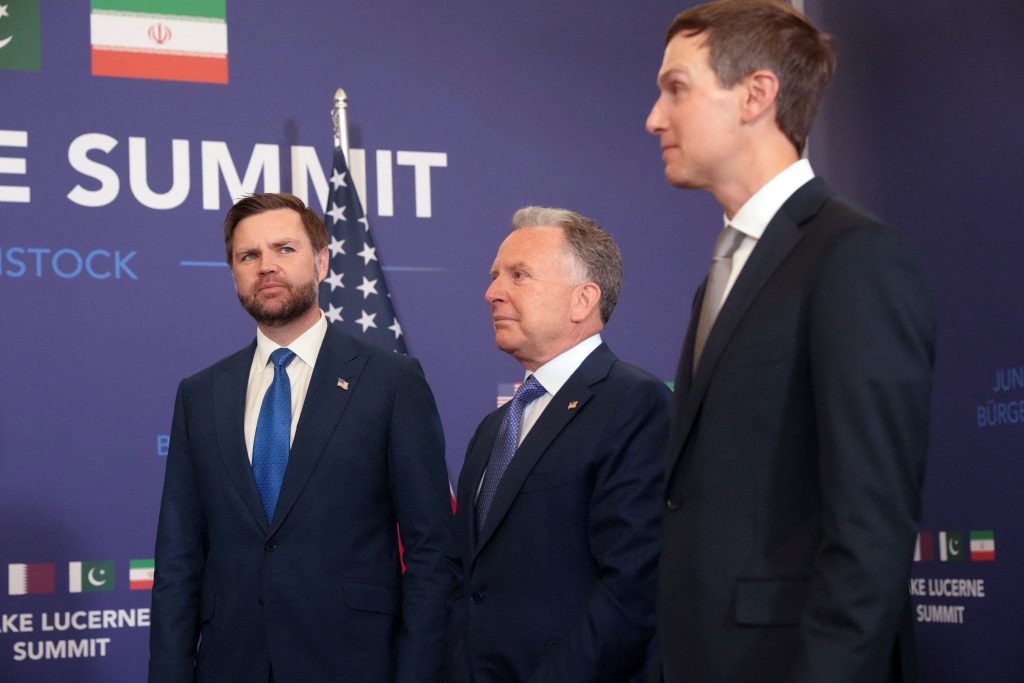
U.S. Vice President JD Vance waits, alongside U.S. President Donald Trump’s special envoy Steve Witkoff and Trump’s son-in-law Jared Kushner, to meet with Pakistan’s Prime Minister Shehbaz Sharif for high-level talks aimed at advancing a deal to end the Middle East conflict, at the Buergenstock Resort Lake Lucerne, near Stansstad, Switzerland, June 21, 2026. REUTERS/Nathan Howard/Pool
Ultimately, Iran wants to charge fees for every vessel crossing the strait in exchange for services such as security, and hopes to get the bulk of the annual $40 billion a year they could generate. The demand has been rejected by the U.S. and its Gulf neighbors.
Instead, negotiators are looking at an alternative proposal from Oman—which has rights to the southern part of the strait. Under that plan, maritime services would be paid through a fund financed by voluntary donations, say officials familiar with the talks.
Oman has held discussions with oil and shipping companies to see if they would be ready to contribute to the fund, they said. But Iran has objected to the formula so far because no fees would be paid, they said.
Gulf nations are doubtful it would work because Iran lacks sufficient equipment to properly manage the waterway, the officials said.
“Iran is trying to open the strait on its own terms and does not want to relinquish what leverage it has gained,” said Sanam Vakil, director of the Middle East and North Africa program at Chatham House, a London think tank.
But “Tehran can disrupt the strait more easily than it can sustainably administer it,” he said.
U.S. negotiators received the proposal but had concerns with it, which they intend to raise with Oman, said a person familiar with Washington’s view. Another person said the plan could still be seen as a form of toll booth benefiting Iran.
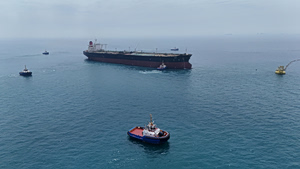
The deadlock has heavily disrupted traffic in the waterway. Last week, Iran resumed its attacks on shipping after Oman organized its alternative transit route without seeking Tehran’s permission, triggering another wave of U.S. counterstrikes before both sides agreed to stop fighting and restart talks.
Daily traffic through the waterway fell to 43 vessels by Wednesday from 75 a week earlier, according to Kpler. By contrast, more than 100 ships a day used to pass through the strait before the war, the commodities-data provider said.