When the war with Russia eventually ends, Ukraine will be left with a military larger and with more recent experience than any of its European backers’.
Whether it can outlast Russia’s long-term designs in the event of any peace deal is a question for the entire continent, which now sees Ukraine as a bulwark against Moscow’s ambitions.
Finding the money and personnel to maintain 800,000 troops and piles of equipment while devising new capabilities will be among the Ukrainian government’s hardest tasks in the immediate aftermath of the war. European Union leaders recently said they would lend Ukraine 90 billion euros, around $105 billion, fending off a looming cash crunch in Kyiv and helping the Ukrainian army keep fighting as Russian leader Vladimir Putin and Ukrainian President Volodymyr Zelensky compete for President Trump’s ear.
If a peace deal can be agreed on, soldiers conscripted to fight on the front lines would likely want to demobilize, while a lack of funds suggests Ukraine would find it hard to pay them anyway. The country will likely rely more on reserve forces and cheaper equipment like drones, many defense analysts say.
Other, longer-term, decisions would have to be made.
Ukraine’s priority should be spending the money it has on expensive air defense and long-range missiles, but it should avoid costly items like jet fighters, some say.
Kyiv also wants to become more self-reliant through domestically produced weapons that will also help rationalize the hodgepodge of donated Western equipment it currently uses.
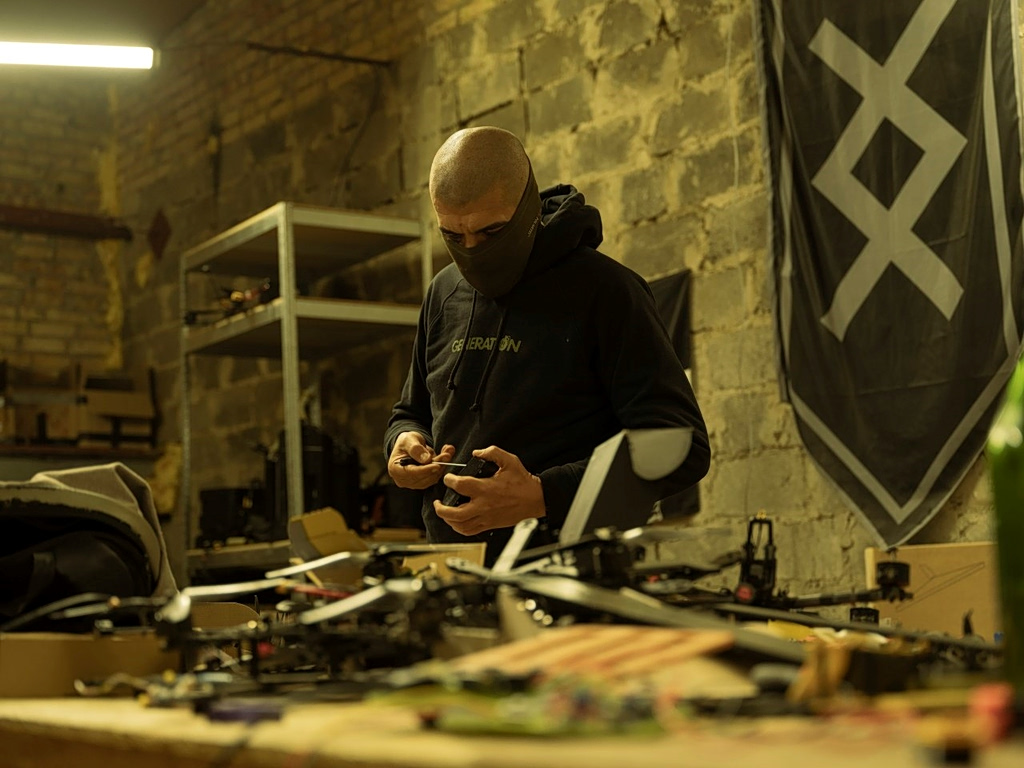
Ukrainian workers make parts for drones. Svet Jacqueline for WSJ
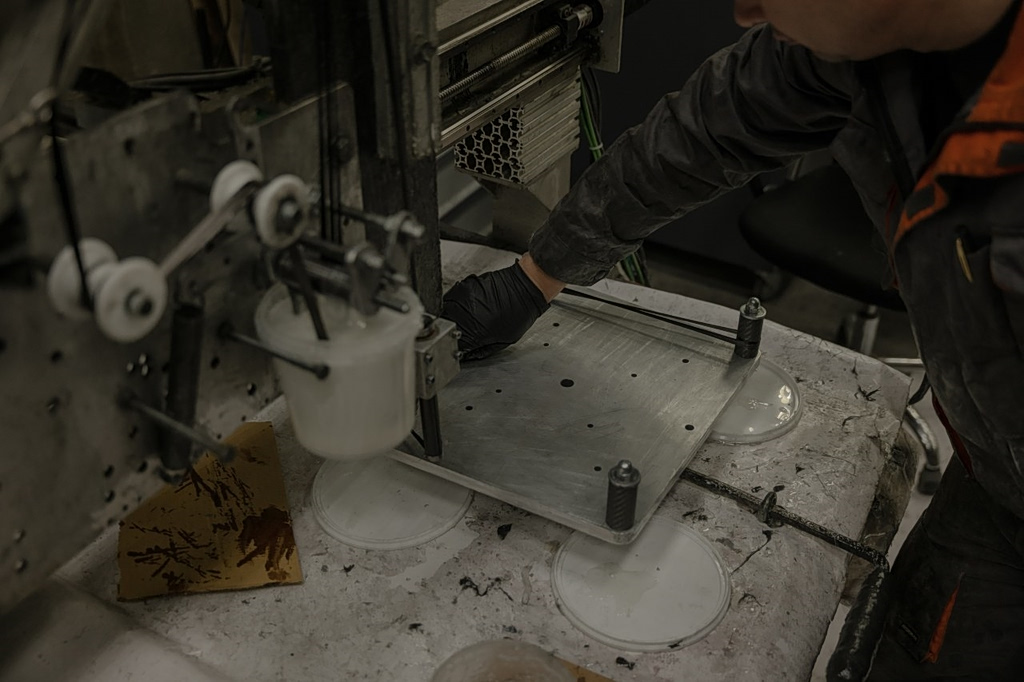
Ukrainian workers make parts for drones. Svet Jacqueline for WSJ
“Ukraine’s military will have to be based around capabilities that are more cost effective, like drones, like mines, and mobilization based on reserves,” said Michael Kofman, a military expert at the Carnegie Endowment for International Peace, a Washington-based think tank.
“Big-ticket elements like aircraft can easily consume much of Ukraine’s defense budget,” he said.
While Ukraine’s military has proven mainly successful at holding the much-better-resourced Russians back, it may not be what Kyiv wants to replicate when war ends.
“A lot of what Ukraine is doing now is not viable long term, it’s what they can build up quickly under the constant pressure of the ongoing conflict,” said Frank Kendall , who served as the U.S. Air Force secretary during the Biden administration.
To build up an air force, for instance, would take a lot of time to train pilots, acquire aircraft and build bases, he said.
Ukraine’s government and military declined to comment for this article.
Zelensky has said Ukraine needs to maintain 800,000 active-forces personnel, rejecting Russian demands that its military be capped at 600,000 as part of peace negotiations. European leaders recently agreed on Zelensky’s figure and said they would pay for it.
But funding a large military is particularly expensive. Ukraine spends around 30% of its GDP on defense, even with allies picking up the tab elsewhere. Russia’s Defense Ministry is responsible for 7.3% of the country’s GDP.
Europe, the U.S. and others have spent around $350 billion on Ukraine’s military and public services, according to the Kiel Institute for the World Economy, a research group in Germany. The U.S. has already stopped its funding and cash-constrained European nations may be less willing to fund Kyiv after the war is over.
At $105 billion, the EU’s new loan would be a short-term boost, the approximate equivalent of Germany’s expected military spending for next year. While wages and other costs are higher in Germany, it has around a quarter of Ukraine’s current personnel.
The U.K., often viewed as Western Europe’s most potent military, has only 147,000 active members and 32,000 reservists. The U.S., the world’s largest economy, has 1.3 million active-duty personnel.
Expensive to maintain, a large force would also take 800,000 people out of Ukraine’s economy with its fast-declining population.
Rather, Ukraine should aim for 300,000 to 500,000 and maintain the rest as reserves, said Mykola Bielieskov, a research fellow at Ukrainian government research body the National Institute for Strategic Studies. Ukraine had fewer than 300,000 personnel just before Russia’s full-scale invasion, and that clearly wasn’t enough to cover one of the largest borders in Europe, he said.
Aside from troop numbers, Ukraine has given few public hints as to how it will shape its postwar military.
In a March publication, the Defense Ministry said it wanted to deploy at least 29 additional radar posts to create a cohesive missile-defense network. The country has a medley of different Soviet and Western systems that have to be integrated into a single system.
Ukrainian officers and outside defense analysts are almost united in saying that air defense and long-range missiles should be Ukraine’s top priorities.
“If I were to single out one area, I would probably focus on air defense, because we can all see what is currently happening with the enemy’s strikes deep inside our country,” said Lt. Col. Serhii Kostyshyn, deputy commander of the 72nd Brigade.
Russia bombards Ukraine almost daily with hundreds of long-range drones and missiles. Air defense at the front line is essential, as Russian drones cause damage and losses to Ukrainian troops and logistics, he said.
The Defense Ministry’s March document says Ukraine would increase its use of unmanned ground vehicles, such as drones to evacuate casualties, to 80% of its “maneuver brigades,” or mechanized infantry.
“Ukraine’s future armed forces should be built on one core principle: It shouldn’t be people fighting, it should be drones,” said Halyna Yanchenko, a Ukrainian lawmaker who heads a parliamentary task force on defense investment.
Andriy Zagorodnyuk, a former defense minister, said the proliferation of drones and missiles means people will be gradually phased out of the battlefield and unmanned vehicles will take over. He said most of the Ukrainian military experts and front-line officers he talks to agree.
In such a world, Ukraine is unlikely to stock up on the sort of expensive tanks and other armored vehicles that Western nations continue to buy, analysts say. Kyiv already appears to have walked back from an earlier plan to manufacture 200 German Panther tanks in Ukraine.
Ukraine has made clear that it wants to be more self-sufficient in weapons, reducing its exposure to the whims of foreign suppliers like the U.S. In October, the government said that over 40% of the weapons used on the front line were Ukrainian-made and set a target of half by the end of this year.
A big debate surrounds jet fighters.
Zelensky recently signed MOUs with Sweden and France to buy up to 250 Gripen and Rafale jet fighters. That would give it a fighter fleet around the size of the U.K. and France’s combined, given that Ukraine already has 66 combat-capable aircraft, including donated F-16s and Soviet-era jets, according to the International Institute for Strategic Studies think tank.
Jet fighters are notoriously expensive both to buy and maintain, costing millions of dollars a year to run, which is why some analysts suggest they might not be the best way for Ukraine to spend its limited funds. Colombia, for instance, recently said that it would be spending the equivalent of $3.6 billion on just 17 Gripens.
Zagorodnyuk, who is also the chairman of the Ukrainian Center for Defence Strategies think tank, said aircraft shouldn’t be discounted, given they are a platform to both launch missiles and defend against them.
“If you don’t have that you are risking that your enemy can occupy the sky and establish windows of air superiority,” he said.
Write to Alistair MacDonald at Alistair.Macdonald@wsj.com