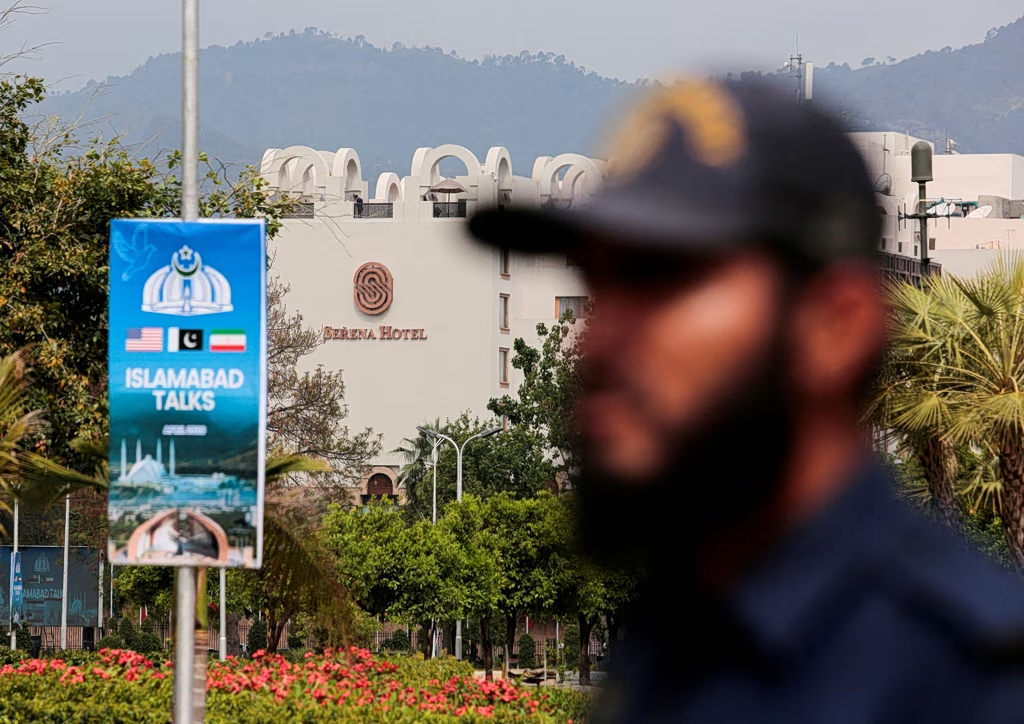
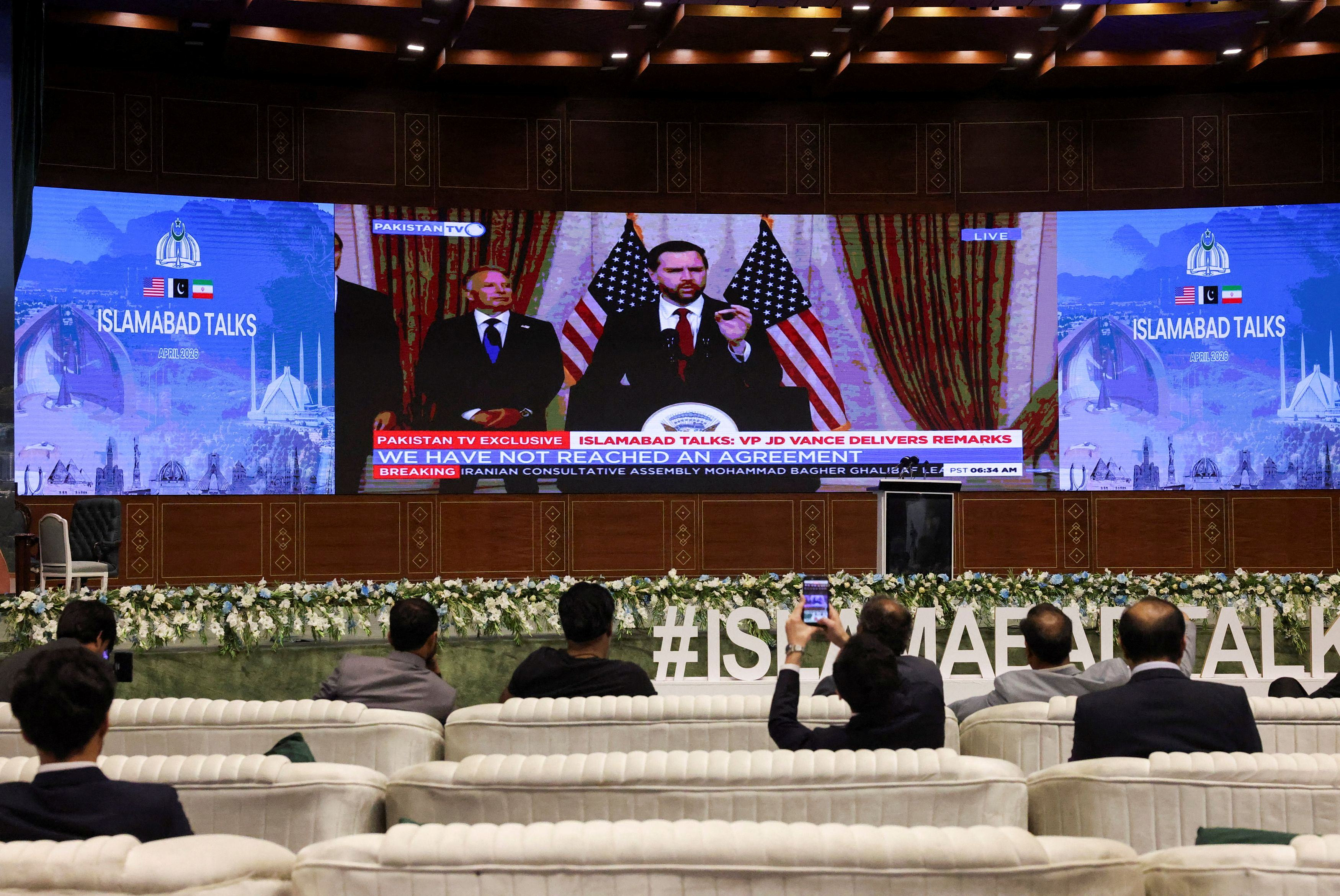
Vice President JD Vance said after marathon peace talks between the U.S. and Iran that the two sides failed to reach agreement because Tehran refused to give up its pursuit of nuclear weapons.
Vance flew back to the U.S. early Sunday after talks in Islamabad, Pakistan, that he said lasted 21 hours. “Unfortunately, we weren’t able to make any headway,” he said, calling on Iran to give “an affirmative commitment that they will not seek a nuclear weapon.”
Iran’s state broadcaster blamed “unreasonable demands” by the U.S. on the nuclear issue and the Strait of Hormuz for the failure of the talks. Tehran said no further talks were planned as of now.
Earlier, President Trump played down the importance of the peace talks, which took place against the backdrop of a fragile cease-fire. “Whether we make a deal or not makes no difference to me,” Trump said. “And the reason is because we’ve won.”
Two U.S. Navy destroyers passed through the Strait of Hormuz on Saturday, the U.S. said, the first transit of American warships through the waterway since the war began. Iran’s Islamic Revolutionary Guard Corps Navy denied that the ships passed through, and said any attempt to transit the waterway would be met with a “firm and forceful response.” Later, Iranian news agencies said Tehran intended to keep hindering passage until it gets an acceptable offer from the U.S.
Here’s what to know.
Trump attended an Ultimate Fighting Championship event in Miami Saturday night and didn’t immediately comment on the breakdown of talks.
Much of the Revolutionary Guard’s fleet of nimble boats designed to control the Strait of Hormuz remains intact, posing a threat even after the U.S. destroyed most of Iran’s navy.