
The U.S. blockade on Iranian ports has gone into effect, adding fresh uncertainty to a fragile cease-fire already weakened by the two countries’ failure to reach a deal in weekend peace talks. Here’s what we know now.
How would a U.S. naval blockade work?
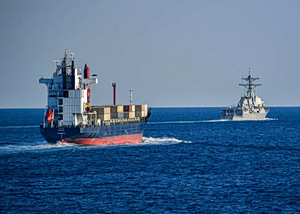
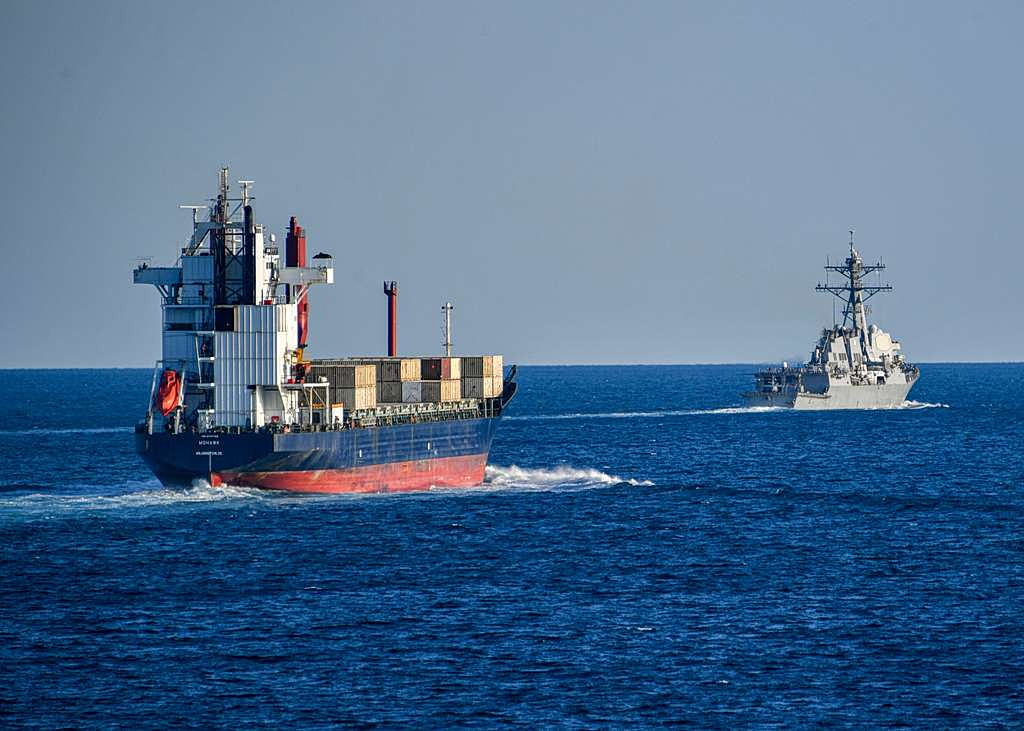
The U.S. military said would enforce a blockade of all maritime traffic entering and exiting all Iranian ports, apparently including those beyond the Strait of Hormuz along the Gulf of Oman. More than 15 U.S. warships are in place to support the operation, according to a senior U.S. official. Vessels traveling to non-Iranian ports wouldn’t be impeded, a military statement said, indicating a narrower action than what President Trump described earlier, in which he threatened to blockade “any and all ships trying to enter or leave the Strait of Hormuz.”
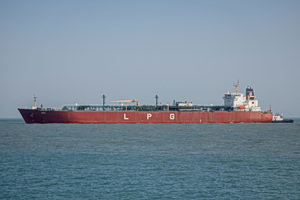
A large U.S. Navy presence outside the Strait of Hormuz will give the U.S. the ability to choke off traffic and interdict oil tankers, analysts say. The aircraft carrier USS Abraham Lincoln in the Arabian Sea could serve as a base of operations for boardings. The U.S. had eight guided-missile destroyers in the region at the start of the conflict, which could be used to block or influence the movement of oil tankers that try to flee the Gulf, along with an amphibious assault ship and other Navy vessels, some of which carry helicopters that could support boarding operations.
Destroyers would also be used to bat down aerial threats should Iran mount attacks on U.S. ships. The U.S. could also enlist the help of the Coast Guard or special-operations forces to carry out tanker seizures. It remains unclear what would happen to the ships that the U.S. military intercepts.

What happened in the peace talks over the weekend?
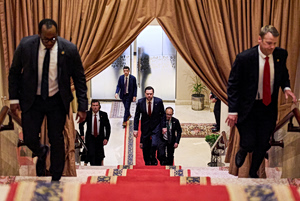
Vice President JD Vance , who led the U.S. delegation during the 21-hour discussions in Pakistan, said the two sides failed to reach an agreement because Tehran refused to give up its pursuit of nuclear weapons. Iranian negotiator Mohammad Bagher Ghalibaf , who is also Iran’s parliamentary speaker, said the U.S. had failed to gain the trust of his delegation.
So are the talks over?
Not necessarily. President Trump remains open to a diplomatic solution, aides said, even as he promised a military blockade of the Strait of Hormuz and threatened again to target Iran’s infrastructure. Reza Amiri Moghadam, a senior member of the Iranian delegation at the talks, called it the beginning of a process. Despite defiant statements from the U.S. and Iran after negotiations ended, the door remains open for further diplomacy and a second round of talks could be held within days, regional officials familiar with the matter said.
What are the sticking points?
The U.S. laid out clear red lines in negotiations with Iran, according to two U.S. officials briefed on the matter, ranging from reopening the Strait of Hormuz—free of tolls—to Iran ending all uranium enrichment and dismantling nuclear-enrichment facilities. Iran’s state broadcaster said talks stalled over disagreements about the strait, a vital waterway that Iran wants to keep controlling, and the country’s nuclear program. Iran has long insisted on its right to enrich uranium for civilian purposes.
Is there still a cease-fire?
The U.S. last week agreed to a two-week cease-fire with Iran to give time for diplomats to work out a lasting deal to halt the war. Since the talks collapsed, no one has announced that the cease-fire is over, but President Trump and his advisers were looking at resuming limited military strikes in Iran—in addition to the U.S. blockade of the Strait of Hormuz —as a way to break a stalemate in peace talks, according to officials and people familiar with the situation.
State media in Iran said the country had deployed navy special forces along its southern coastline, signaling its preparations for a potential land invasion by U.S. forces, after the collapse of the talks.
What is happening in the Strait of Hormuz?
The U.K. Maritime Trade Operations Centre said Sunday that there hasn’t been a meaningful increase in traffic in the Strait of Hormuz since the U.S. and Iran agreed to the cease-fire last week. Just a few traveled through the waterway in the last few days, down from about 138 a day before the war started, according to the UKMTO, which is affiliated with Britain’s Royal Navy.
Iran has been telling ships anchored near the strait to obtain permission from the Islamic Revolutionary Guard Corps Navy before crossing or risk being destroyed. The Revolutionary Guard’s Navy said that any approach by military vessels toward the Strait of Hormuz would be treated as a violation of a cease-fire agreement and met with a “strong and forceful response,” according to a statement cited by Fars news agency, which is affiliated with the Revolutionary Guard.
What about Israel?
Israel wasn’t formally part of the cease-fire negotiations and wasn’t happy that it got word that a deal was finalized at a late stage and it wasn’t consulted, The Wall Street Journal reported last week , although it said it backed the cease-fire with Iran.
The U.S. and Israel have said they don’t consider Israel’s war in Lebanon to be part of the cease-fire. Iran, along with Pakistan as a mediator, has said Lebanon must be part of any cease-fire. Nonetheless, Israel has come under pressure from the Trump administration in recent days to scale back Israeli attacks and launch negotiations with Lebanon amid U.S. concerns that the fighting in Lebanon is threatening the fragile cease-fire. The intensity of Israeli airstrikes in Lebanon has appeared to decrease in recent days but hasn’t stopped.
Does the U.S. still have troops in the Middle East?
Yes. Defense Secretary Pete Hegseth said last week that additional forces sent to the region to fight the war are ready to renew fighting if Iran breaches the cease-fire. Along with jet fighters, refueling tankers and other warplanes at air bases, the U.S. has positioned Navy warships and Marines on amphibious assault ships in the region. The U.S. has kept as many as 40,000 troops in the region in recent years, though it has repositioned some of those troops from Persian Gulf bases close to Iran since the fighting began.