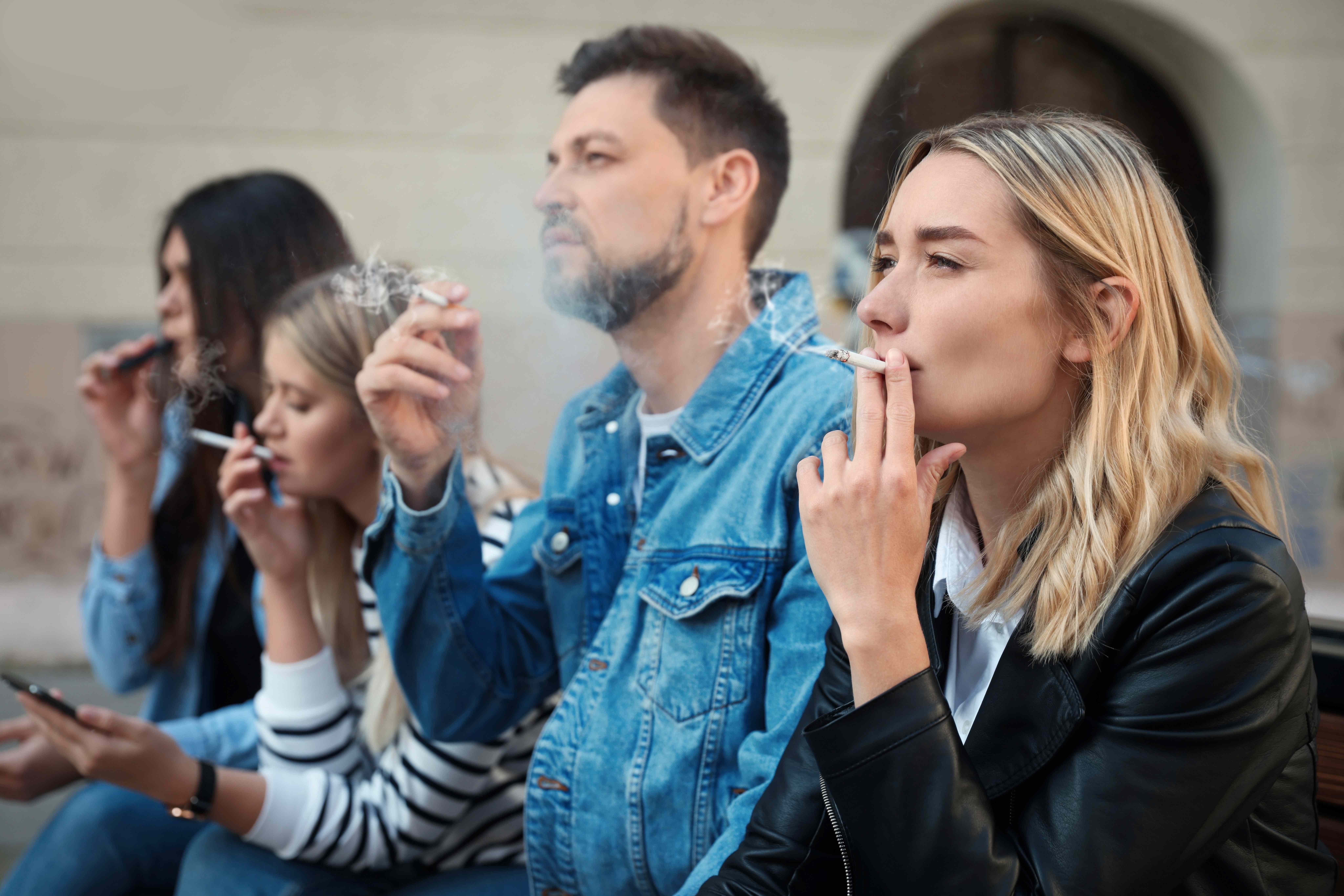
At a holiday party for my graduate students and alumni, I noticed an unusual number of them traipsing out to the stoop to smoke cigarettes. I give these parties every year, and there are always a handful of smokers, bundled up in their coats, huddling against the wind. But this year there was a horde.
These are aspiring writers with Albert Camus and George Orwell and Janet Malcolm on their bookshelves. They grew up on retro images of cool such as a waifish Joan Didion holding a cigarette or the young Patti Smith in a black T-shirt and black jeans smoking next to Robert Mapplethorpe. It may not be surprising, then, that they are drawn to cigarettes.
Overall, nicotine consumption has gone down radically in the past 25 years, but in certain circles cigarettes seem to have regained a kind of cachet. Obviously, everyone knows how dangerous smoking is and that the sensible thing is to avoid it entirely, but nicotine addiction has a stubborn staying power.
For a while it seemed like e-cigarettes might take the place of old-school smoking. That the smell and dirtiness of cigarettes would vanish into a cleaner, sleeker technological future. But there has been a precipitous decline in high-school students vaping over the past five years. “Vapes are not it,” a 16-year-old informed me. His friends who smoke choose cigarettes, which makes sense. What could be unsexier than a vape? It is like watching someone sucking on a USB flash drive.
If you are going to smoke, the corporate, sanitized, metallic version seems like a sad substitute. I have never really understood the allure of a creme brulee Juul even to a 15-year-old. Kids now also put Zyn nicotine pouches in their mouths, in flavors such as wintergreen or cappuccino, which seems equally horrendous.
Some of my daughter’s friends who are just out of college have taken up cigarette smoking as well. One 20-something told me it felt like a lot of people started smoking during the pandemic. With everything going on why not? Another young smoker thinks part of the reason is high levels of anxiety, especially considering “my generation’s thing with fidget toys and needing something to do with our hands.”
Several studies suggest that 20-something smokers were drawn into nicotine addiction through vaping when it was popular. This cohort then abandoned vapes when they became unfashionable and turned to cigarettes. Vaping, then, was a kind of gateway to Marlboro Lights and American Spirits.
Until pretty recently my own friends used to wander out to smoke in the garden or roof decks at parties after a couple of drinks. They often hid this habit from their children, who would be judgmental or alarmed. But almost all of them have stopped. The fun has been sapped out of the ritual. We are too spooked by mortality now. One of those secret occasional smokers says, “Now it just feels stupid and not worth it.”
Of course, there is something vintage in the whole experience of lighting a cigarette, something anti-screen, anti-app. You have to, by definition, put down your phone. It is sensual, immediate, transporting. “I like the ritual of a cigarette and being able to step away from whatever is going on for a moment,” a former student says. “Smoking with someone creates instant intimacy. It’s a good way to meet people. It’s one of the last socially acceptable ways to loiter.”
It seems that in this era of wellness obsession, of kale salads and Pilates, people who are recklessly hedonistic, who choose pleasure over health, still have a certain kind of glamour. The cigarette industry has studiously cultivated this allure for decades, in advertising, movies and now on social media.
Cigarettes today play into a messy party girl aesthetic that is ascendant online. Beyoncé appeared to smoke in a theatrical flourish at a concert in Paris over the summer; trays of cigarettes popped up at Charli XCX’s Italian wedding and a party for Kylie Jenner’s fashion line, Khy. Photos of male actors such as Jeremy Allen White and Timothée Chalemet smoking cigarettes proliferate as well.
Maybe for those under 30, the terribleness of everything also plays a role. They have been training since they were tiny in school shooting drills. A shooter recently opened fire on my daughter’s campus. If calamity can happen at any minute, why not smoke? If the world is burning, why not engage in a little stylish self-destruction? In his loopy 1957 essay on hipsters, Norman Mailer talked about the “psychic havoc” of living under the threat of nuclear annihilation. He called the disregard for consequence during dark times the “adoration of the present.”
I find myself watching all these young smokers with mixed feelings. I want my students and children’s friends to be healthy, but I also understand the gesture, the fashionable nihilism, the hedonism, the why not. We could use a little more adoration of the present. Though I still hope the cigarettes are just a phase.