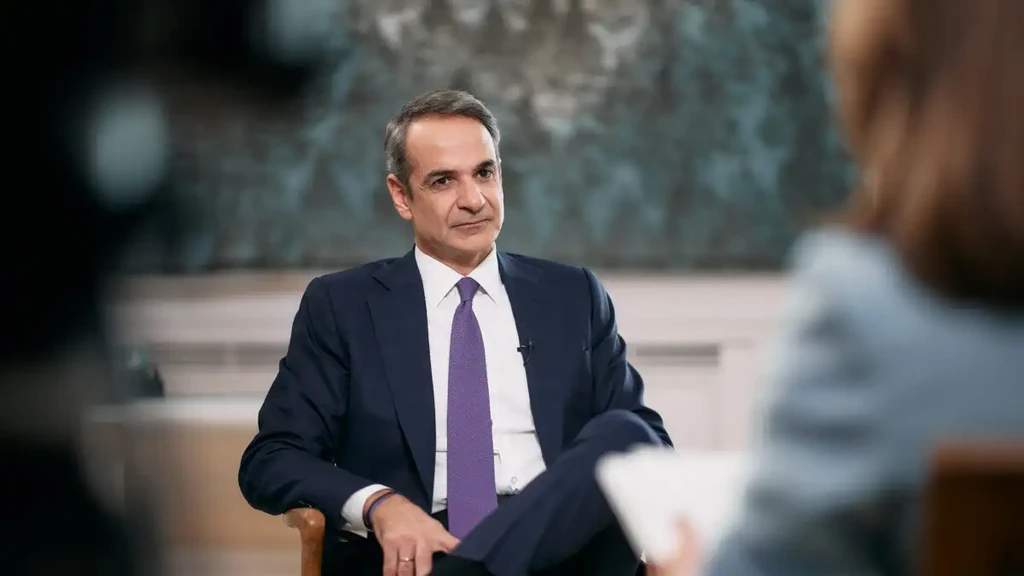

One week before Islamic State-inspired terrorists attacked a Jewish religious celebration in Sydney on Dec. 14, Syrian President Ahmed al-Sharaa addressed a diplomatic conference in Doha, Qatar. Fresh from hobnobbing with President Trump in the White House and dressed in a suit and red tie, the man who had created the Islamist extremist movement’s Syrian franchise told the assembled dignitaries that his homeland would not be a source of problems for anyone—including neighboring Israel.
“We have gone from being a country that exported crises to one that has a hope of delivering stability,” Sharaa said.
The occasional terrorist acts flaring up around the world, often by self-radicalized Islamic State sympathizers such as the father and son who gunned down 15 people at the Hanukkah party in Sydney, overshadow the broader trajectory of political Islam in the Middle East and beyond. In a historic shift away from the lure of global upheaval and toward a more pragmatic coexistence with the rest of the world, including the West, it now largely follows Sharaa’s path.
“Jihadism and radicalism are in demise. And that’s because they have never had a successful model to present to society, not once in the past 100 years,” said Hemin Hawrami, former deputy parliament speaker of Iraq’s autonomous Kurdistan region and a senior leader in its dominant party.
The ideology of modern political Islam, which emerged with the Muslim Brotherhood’s founding in 1928, was influenced by two other 20th-century ideologies, communism and fascism. Like them, it sought a utopian new world—aspiring to overthrow the global order, or at a minimum the contemporary Muslim nation-states, by erasing unnatural borders drawn by Western colonizers.
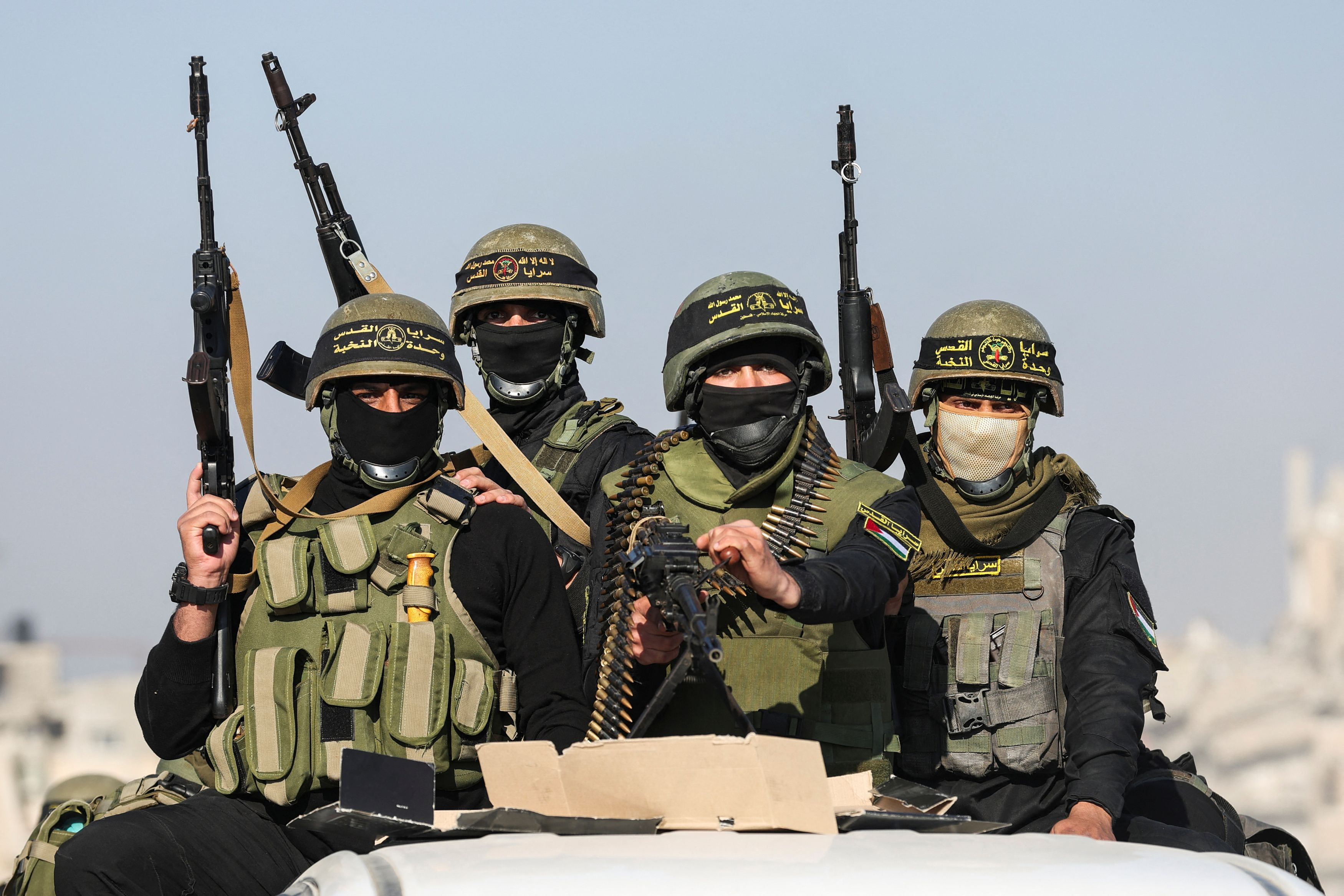
As more and more radical Islamist leaders gained prominence, from Osama bin Laden to Abu Bakr al-Baghdadi, the dream of a pan-Islamic caliphate fueled transnational jihadist networks that stretched from housing projects in the suburbs of Paris to the jungles of southern Philippines. Jihadism’s multi-generational conflict with the West pulled America into lengthy wars in Afghanistan, Iraq and elsewhere.
Now, this wave is receding, maybe permanently. Global jihad is no longer en vogue. While regional insurgencies continue, especially in parts of Africa, the Islamists that have managed to gain power, be it Sharaa’s movement in Syria or the Taliban in Afghanistan, proclaim their desire to go local. Instead of worldwide holy war, they want to focus on national affairs, building friendly relations with all countries, including non-Muslim powers like the U.S., India, China and Russia. To them, the nation-state is something to be developed, not erased.
“There is a retreat from the transnational utopian element, both on the violent level and on the political level, the level of the caliphate,” said Turkish scholar of Islamist politics Mustafa Akyol, a senior fellow at the Cato Institute. “The Taliban and Sharaa in Syria show that ‘jihadist’ movements can be successful as national liberation movements—but only if they go less ideological, and take a more pragmatic route.”
Part of this transformation is the direct result of American-led wars overseas: Many Islamist leaders realized that transnational ambitions carry an unacceptable cost. Another reason is the overall transformation in many Muslim nations, where excesses of radical rule caused widespread revulsion just as a new, more open-minded and globally connected generation grew up.
Cooperation with the West
Take Afghanistan’s Taliban. True, they have re-established a repressive system at home after ousting the U.S.-backed republic in 2021, banning education for girls over the age of 11, excluding women from most professions and enforcing strict observance of conservative rules. But unlike their previous stint in power before 2001, they no longer allow the country to be a springboard for global terrorism and even cooperate with the West against Islamic State.
Sharaa, a former prisoner of U.S. forces in Iraq, had been dispatched to his native Syria in 2011 by Islamic State’s founder, Baghdadi. After initially switching to al Qaeda, Sharaa created a more moderate movement, Hayat Tahrir al Sham, that battled against Islamic State and al Qaeda alike, and led the offensive that toppled Bashar al-Assad’s regime a year ago. While Syria has since experienced deadly violence against Druze and Alawite minorities, Damascus under Sharaa’s rule remains a relatively liberal city where alcohol is available and women don’t have to adhere to strict dress codes.
Ahmet Davutoğlu , a former prime minister of Turkey and a key architect of its policy to support Syrian Islamist rebels a decade ago, drew a parallel between the current evolution of political Islam and the split that pitted Leon Trotsky against Joseph Stalin in 1920s Soviet Union. Overruling Trotsky’s drive for a never-ending worldwide revolution, Stalin normalized the Soviet Union as a nation-state that traded and maintained diplomatic relations with the West. “Today, national projects, including Syria, are more viable, more rational, more wise,” Davutoğlu said. “We need a success story—and a success story cannot be global, it can only come through a national success.”
Nader Nadery, who served as one of the deposed Afghan republic’s senior negotiators with the Taliban, pointed out that Stalin’s Soviet Union, far from abandoning global ambitions, expanded its sphere of influence around the world after the 1920s. The same could happen with the newly “pragmatic” Islamists, he cautioned.
“True, the Taliban have evolved diplomatically and gained patience, learning from the past that they can’t create dramatic events that would summon an international response,” said Nadery, now a fellow at the Hoover Institution at Stanford. “But their global view, that they have an obligation to establish the rule of God in the land of God, that didn’t change. It’s a misrepresentation to portray them as only nationally-focused forever”
While the U.S. has welcomed Syria’s new administration, lifting its bounty on Sharaa and ending sanctions on Damascus, doubts about the extent of the transformation persist in Washington, too. “This isn’t all over. Under the surface, jihadism is still bubbling,” a senior U.S. official warned.
Norway’s Foreign Minister Espen Barth Eide added that the decline of global jihadism over the past decade doesn’t mean that the world has become a safer place. Europe’s bloodiest war in generations, unleashed by Russia in 2022, rages on in Ukraine and threatens to spread after already causing hundreds of thousands of casualties.
“The terrorist threat was serious, and terrible for those who are affected, but it was like a nuisance in an otherwise functioning system,” he said. “The fear of asymmetric security challenges has been replaced by the fear of symmetric, classical war between states. And there is simply no asymmetric danger at the level of the interstate war. Industrial states kill people at a much higher degree of efficiency than even the most well-trained terrorists can.”
Unmet promises
It’s not just the idea of global jihad that became unfashionable over the past decade in the greater Middle East. So, increasingly, did political Islam writ large. The Muslim Brotherhood’s catchy slogan—“Islam is the solution”—once offered an appealing political alternative to people living under the region’s mostly secular authoritarian regimes. Tomorrow appeared to belong to Islamists whenever governments could be chosen at the ballot box.
But the Muslim Brotherhood administration elected in Egypt in 2012, after the Arab Spring, was so inept that it quickly lost popular support, leading to a successful military coup the following year. Tunisia’s more moderate Brotherhood offshoot, Ennahda, also rapidly lost support once in power. Ennahda’s leaders have been in prison in Tunisia since 2023, and the Brotherhood was outlawed in 2025 in Jordan. The once potent organization is increasingly divided and weak. Regional powers with long-running Brotherhood sympathies, such as Turkey and Qatar, are taking their distance, while others, such as Saudi Arabia, have turned outright hostile.
“There are still pockets of political Islam that are thriving and supported at the grassroots level across the region. But national leadership driven by political Islam, as the core of their agenda, that’s something that we now are seeing in the rearview mirror,” said Jonathan Cohen, who served as U.S. ambassador to Egypt and as acting U.S. ambassador to the United Nations in the first Trump administration. “Political Islam has failed to deliver better life for its populations; it has also led to rather catastrophic collateral damage when you see the rise of movements like ISIS.”
Indeed, Islamic State’s rule over large parts of Syria and Iraq in 2014-2019 was so brutal and grim that many initial supporters—including Sharaa—turned against it. In Akyol’s words, this was political Islam’s “Khmer Rouge” moment, “the bottom of the darkness” that spurred a counter-reaction.
The Iranian revolution of 1979 was the time when political Islam first seized power, promising to uplift the oppressed masses worldwide. Instead, Iran’s corrupt Shiite theocracy presided over decades of economic stagnation and political repression, a system that has pushed more and more young Iranians away from religion as such.
Also since 1979, Saudi Arabia—the cradle of Islam—had used oil money to spread its own Sunni ultra-conservative version of the faith around the world. Edil Baisalov, the deputy prime minister of Kyrgyzstan, recalled how Saudi and other Gulf charities flooded his largely secular Central Asian nation with mosques and madrassas in the 1990s and early 2000s, fostering a generation of radicals—hundreds of which ended up amid the ranks of Islamic State and al Qaeda.
This came to an end after Crown Prince Mohammed bin Salman became Saudi Arabia’s de-facto ruler in 2017. He dramatically curbed the powers of the religious establishment, disbanding the Islamic police and ending the funding for ultra-conservative proselytization overseas. Saudi Arabia’s official religious network, which used to promote radicalism, now spreads the message of interfaith dialogue.
“For us, everything has changed after MBS,” Baisalov said. “We have passed the peak. With all the modernization in the Middle East, there is a new age.” Now, when the Kyrgyz go to the monarchies of the Gulf, they encounter modern societies where women work, drive and attend university, he said. So do tens of millions of other Muslims visiting Saudi Arabia on pilgrimage every year.
The war in Gaza, unleashed by Hamas with an attack on southern Israel in 2023 that the Palestinian Islamist movement hoped would spark a regional war leading to the Jewish state’s destruction, also failed to reinvigorate the forces of political Islam.
While Lebanon’s Hezbollah and Iran’s Shiite theocracy eventually entered the conflict, their military and political leadership was decimated, with Israel emerging as the region’s military hegemon even as it lost a great deal of political support around the world. As for Hamas, most of its Gaza leadership is dead, and the coastal enclave has been devastated by Israeli bombing, with tens of thousands of Palestinian casualties.
As long as the fighting in Gaza raged, many people in the Middle East and elsewhere held back from criticizing Hamas because they didn’t want to be seen as abetting Israel, said Hassan Hassan, the Syrian-born founder of New Lines magazine and the author of a book on Islamic State. “But deep down, they know that Hamas has messed up, the same way that ISIS messed up in Syria and Iraq,” he said. “Hamas is no longer appealing: People know that it set back the clock for the Palestinians by many years.”
It’s too early to write off political Islam as long as the reasons that initially fueled its rise remain, cautioned Philip Gordon, who served as national-security adviser to Vice President Kamala Harris and as President Obama’s coordinator for the Middle East. “Unless and until governments in the greater Middle East can deliver consistent prosperity, stability, and dignity for their people—as an alternative to repression—political Islam will survive as an alternative, even if it is not what it once was,” he said.
Communist parallels
In a way, the weakening of political Islam follows a dynamic similar to the fate of the global communist movement. Strong communist parties in Europe lost their luster after the death of Stalin revealed the atrocities of the Soviet system, with further shocks caused by the Soviet suppression of popular protests in Hungary in 1956 and Czechoslovakia in 1968.
This doesn’t mean that terrorism carried out by remnants of Islamic State at the periphery of the Muslim world will disappear completely. The U.S. in recent weeks launched air strikes at suspected Islamic State targets in Nigeria, Somalia and Syria; it’s unclear how much damage to the organization, if any, they caused.
“Islamic State definitely has been reduced in size and strength,” said Colin Clarke, executive director of the Soufan Center, a security and counter-terrorism consultancy. “But just because it no longer controls large swaths of territory in Iraq and Syria doesn’t mean that it doesn’t have the capabilities to inspire or direct people to commit acts of terror in its name.”
For the foreseeable future, however, these attacks won’t be an expression of powerful movements with credible geopolitical aspirations. Here, the parallel with communism holds, too. As that movement waned in the West, radical splinters, such as Italy’s Red Brigades, the Japanese Red Army and Germany’s Red Army Faction, descended into terrorist killings that petered out only decades later.
“In the 1960s and 1970s in Europe, everyone was a revolutionary, it was a natural state of affairs among the young people. And then, after a while, the great revolutionary illusions were gone,” said Olivier Roy, professor at the European University Institute in Florence and a leading scholar of political Islam. “There was then a passage to terrorism, and that comet tail lasted a long time—but the narrative of the far left no longer mobilized an entire generation.”
The same thing is happening with political Islam, he said: “Jihadism was also an almost romantic narrative. It mobilized people, it allowed them to see themselves as heroes, as people who will transform the world, as the saviors and the saints. But it, too, didn’t survive the test of politics, the test of reality.”
Write to Yaroslav Trofimov at yaroslav.trofimov@wsj.com
Corrections & Amplifications undefined An earlier version of this article misspelled the last name of Syria’s President Ahmed al-Sharaa as Sharaaa and the first name of Philip Gordon, national-security adviser to former Vice President Kamala Harris, as Phillip. (Corrected on Jan. 3)