At the TradeWinds Shipowners Forum, on the sidelines of Posidonia 2026, the chairman of Capital Maritime & Trading argued that a transit fee would beat years of war-risk premiums — and spoke about the day after in the markets, the 'dark fleet' and the strength of Greek shipping
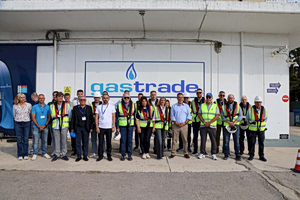
Deal strengthens group's environmental services portfolio as it continues diversification beyond traditional refining and fuels operations
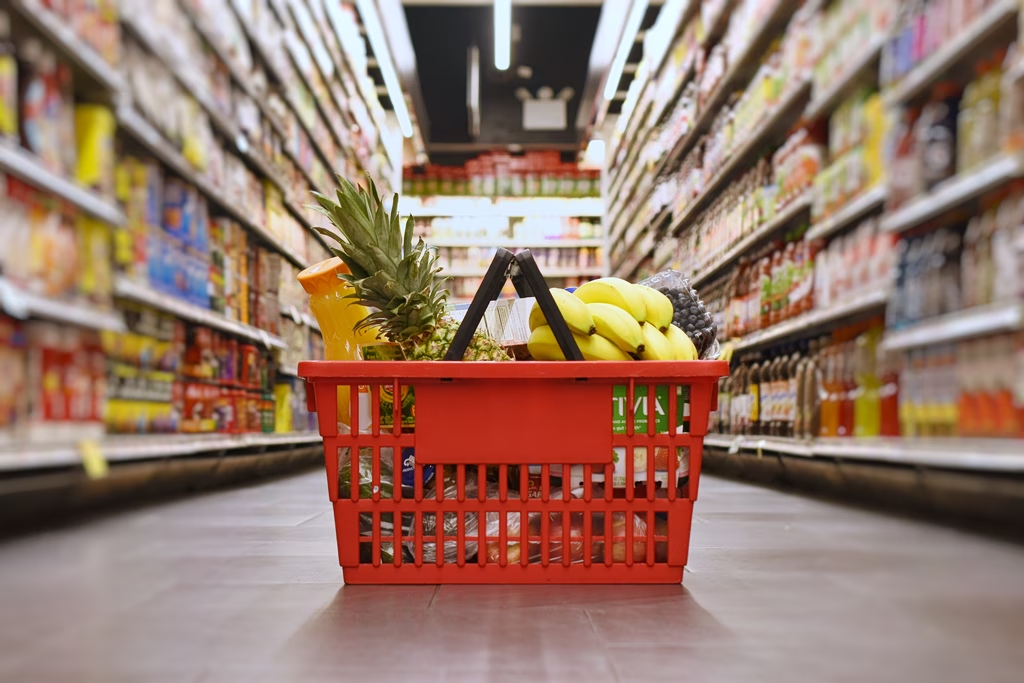
Eurostat data puts Greece well above the eurozone average, with energy costs and services driving prices higher across the bloc ahead of a closely watched ECB decision next week.
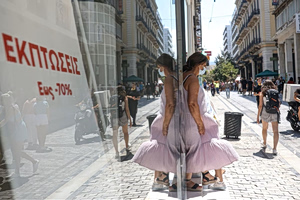
Greek consumers are cutting spending both online and offline, seeking cheaper options and increasingly bypassing digital platforms to save money.
Understanding the new reality—in terms of sanctions, the insurance market, shipbuilding power, and energy flows—is a lot more than an academic exercise for Greek shipping. It is a prerequisite for its survival and competitiveness in a world where the "tolls" are no longer purely economic; they are geopolitical.
Shipping contributes approximately 7-8% to Greek GDP, while foreign exchange inflows from the sector consistently exceed 15 billion euros per annum
Time and again, shipping has proven its ability to navigate even the most troubled waters responsibly. And it will continue to do so
Nuclear propulsion provides continuous power, zero emissions, and an energy density that fundamentally rewrites the economic equation for long-haul voyages
Shipping is entering a new digital era. Artificial intelligence, automation, "smartports", cybersecurity, and new digital applications are already bringing a new global maritime ecosystem into being.
The challenge now is to link these four roles more organically, thereby ensuring that shipping is no longer viewed as an isolated ecosystem, but rather as the very core of the nation's international presence
Ships may be becoming increasingly complex, automated, and energy-efficient, but the long-term safety and sustainability of the energy transition in shipping will ultimately depend on the industry's ability to produce seafarers who can understand, manage, and respond effectively to increasingly complex operational systems under real-world operating conditions.
Piraeus—the city of seamanship and sailors, shipowners and major shipping corporations—has played a decisive role in the exponential growth of the Posidonia International Shipping Exhibition, particularly during the event’s formative decades
The strategic exploration of partnerships, such as the recent addition of Drydocks World, further reinforces this approach, bringing in specialized expertise from the retrofitting and shipbuilding sectors
European Shipowners have repeatedly called for the €9 billion generated by the shipping industry through the EU ETS to be reinvested in producing clean fuels within Europe and making them available across the continent.
The Greece-China partnership lies at the heart of developments.
Greek shipping is being called upon to play a leading role in this transition, leveraging its vast experience and deep expertise. The challenge posed by the green transition isn’t only environmental—it is fundamentally economic, too
Recent years have underscored global shipping’s vulnerability to disruptions. From geopolitical tensions and regional conflicts to trade restrictions, bulk carrier operators face a broad spectrum of challenges.
Greek shipping is suffering as a result of the blockade of the Strait of Hormuz, a critical maritime artery handling 25% of the global trade in seaborne oil and nearly 20% of the world's liquefied natural gas (LNG).
Shipping supports almost every aspect of modern life - from the energy that drives economies and the food that sustains populations, to the materials and products that shape daily life. Its presence is often invisible, yet it is the system that ensures continuity and flow on a global scale
The competition was officially supported by the Cypriot Presidency of the Council of the European Union and the European Commission.