 Μake us preferred on Google
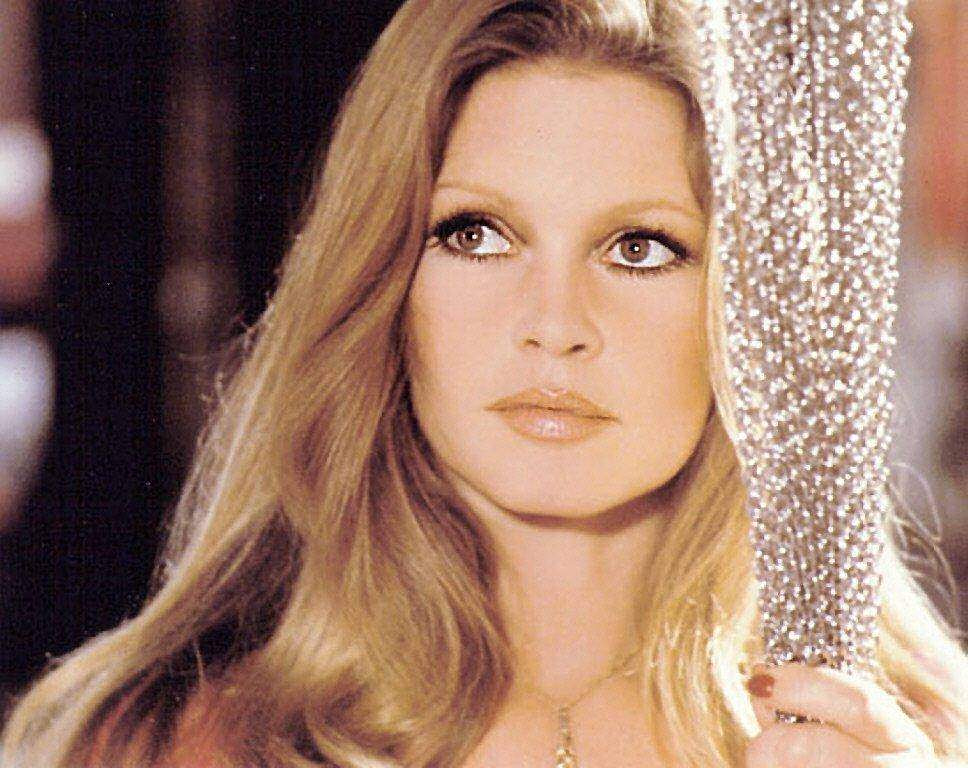
 Brigitte Bardot, the eternal B.B., now exists only among memories and legends. The innocent jeune fille who shifted the axis of pop culture with a single magazine cover quickly became the archetype of the liberated French woman—“the only woman who lives completely freely,” as Simone de Beauvoir once wrote.
Today, the world of cinema and pop culture mourns the loss of one of the most iconic figures of the 20th century. Bardot, the eternal B.B., who forever changed the image of femininity and sexual liberation, passed away at the age of 91 and now resides among memories and myths. Perhaps there will never be a more sensuous presence in global cinema than hers. While today the term “sex symbol” is often overused, B.B. embodied it completely—a totem of female sensuality.
Simone de Beauvoir declared her “the most liberated woman in France.” Charles de Gaulle noted that the star “brings to the country as much foreign currency as the Renault automobile industry.” Photographer Christian Brincourt described her as a “lioness,” saying: “Her pure femininity is the embodiment of modernity. Women’s emancipation, refusing to submit to society’s rules. The French image of femininity, with her seductive décolletage and uniquely pouted lips, a breathtaking beauty.” Serge Gainsbourg wrote a song for her, the famous Initials B.B., in which he described her: “She wears boots to her thighs. And they are like a chalice for her beauty. She wears nothing but a hint of Guerlain perfume in her hair.” Jane Birkin said: “She is the most perfect woman on the planet. Not a single flaw. And God knows how much I searched for flaws. Even her soles are beautiful.” All this, for the ex-wife of her husband, no less.
Perhaps there will never be a more sensuous presence in cinema than Brigitte Bardot. The legendary B.B. quickly became one of the most recognized sex symbols worldwide and a symbol of sexual liberation in the ’60s.
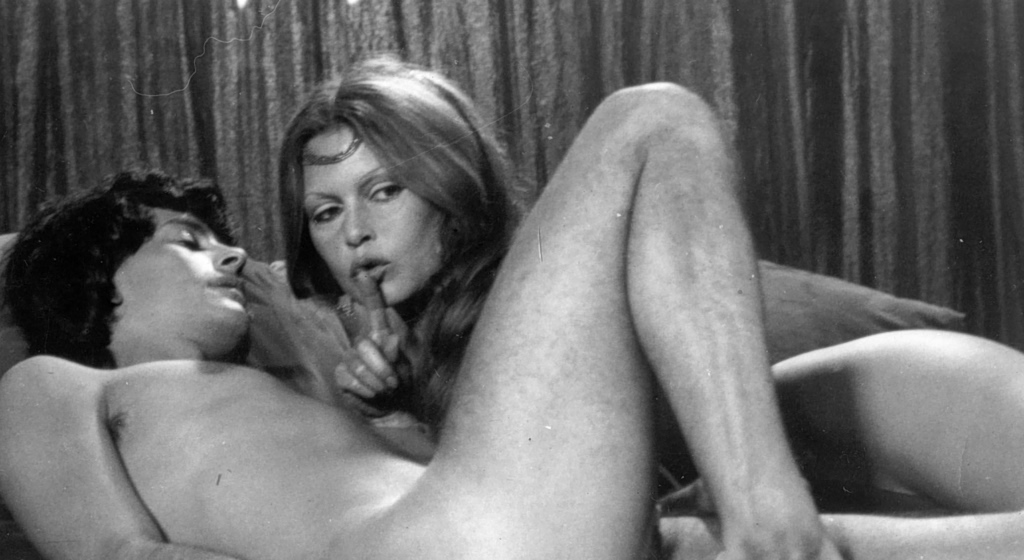
Histoire très bonne et très joyeuse de Colinot Trousse Chemise, L’ Histoire très bonne et très joyeuse de Colinot Trousse-Chemise, L’ Year: 1973 – France Brigitte Bardot Francis Huster France 1973 Director: Nina Companeez
She appeared in 47 films, slept with more than 100 lovers—men and women—married four times, and at age 26 attempted suicide. She would try three more times. Although she retired from show business in 1973, she remains a major pop culture icon.
Let us bid her farewell by looking back on her tumultuous life, from that first magazine cover that launched her career to her withdrawal from the public eye.
Early Years
Brigitte Bardot was born on September 28, 1934, the daughter of a wealthy factory owner. Although she grew up in comfort, her childhood was far from a fairy tale. Her family was conservative and violent. Her father imposed strict rules of behavior, while her mother chose the friends she could spend time with. One day, when she and her sister accidentally broke a vase while playing at home, their father whipped them 20 times as punishment and thereafter forced them to speak to him formally. Bardot later revealed that this traumatic event was the catalyst for her rebellious spirit.
During the German Occupation, young Brigitte spent hours at home listening to music and dancing in her bedroom. Her mother envisioned a career as a ballerina and enrolled her in a dance school. By age 14, she began working part-time as a model for magazines such as Elle, Paris Match, and Le Jardin des Modes. A year later, she landed her first cover for Elle, which led to her first film offer from director Marc Allégret.
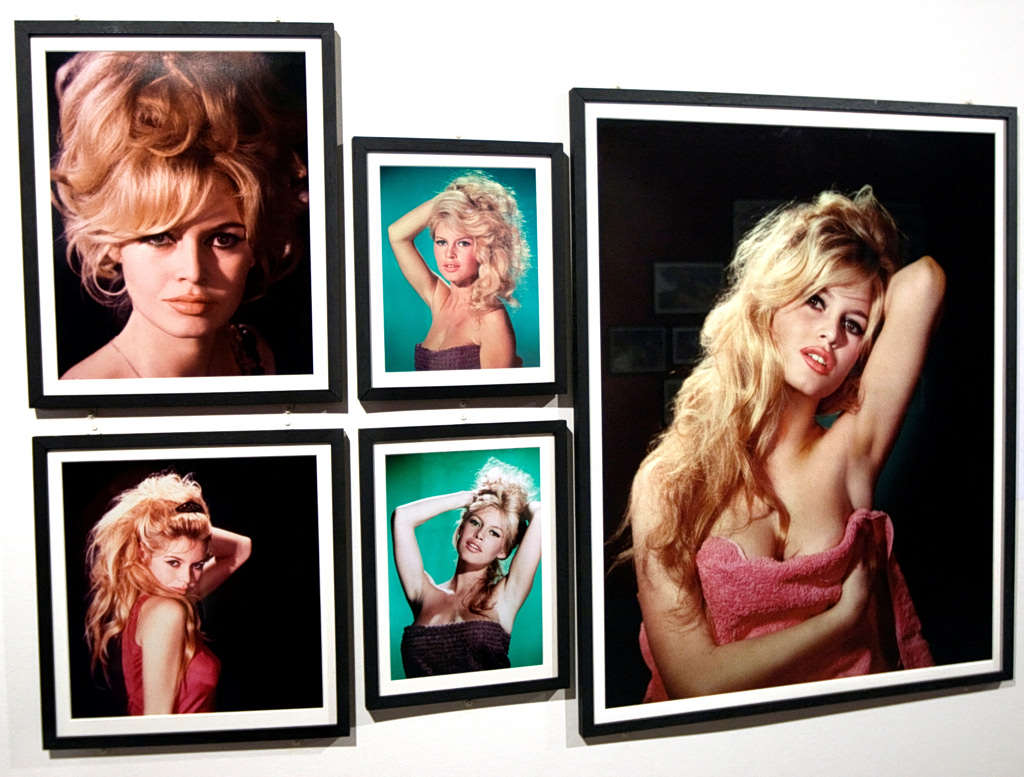
FILE PHOTO: Pictures of former actress Brigitte Bardot are displayed during a media preview of an exhibition in Boulogne-Billancourt, western Paris September 25, 2009. REUTERS/Charles Platiau/File Photo
When she told her parents she would audition, they were adamantly opposed. Her grandfather persuaded them, saying, “If she’s going to become a whore, cinema will not be the reason.”
At the audition, Bardot met 21-year-old Roger Vadim, who later informed her that she had not gotten the role. Nevertheless, they fell in love. Her parents were furious, and one evening her father announced she would leave for England the next day to continue her studies. Upon hearing this, Bardot put her head into a lit oven. Her parents eventually allowed the relationship on the condition that she would marry Vadim when she turned 18.
View this post on Instagram
Brigitte Bardot Conquers French Cinema
At 17, another Elle cover earned her a minor role in Crazy in Love. She then took supporting roles, including a lead in Manina, the Girl in the Bikini. In 1953, she played a small role in a Hollywood production filmed in Paris, Act of Love, starring Kirk Douglas. This exposure brought her media attention, especially after appearing at the Cannes Film Festival in April 1953.
She then appeared in French, Italian, and Hollywood productions. For the Italian film Mio figlio Nerone (1956), the brunette Bardot was asked to appear as a blonde. Instead of wearing a wig, she dyed her hair and liked the result so much that she made it her signature look.
And God Created Woman
Her career ascended with the film that would make her a global star and sex symbol. In 1956, 22-year-old Bardot starred in And God Created Woman, directed by her husband Roger Vadim. Bardot played a mischievous teenager whose beauty and sensuality scandalized the residents of a provincial town.
The film was a worldwide success, catapulting her into global cinema fame. In the U.S., it became the highest-grossing non-English language film at the time—a remarkable achievement. Conservative American circles protested, shouting, “Ban Bardot!”—as if she were a dangerous drug. The scandal only enhanced her fame. This film was Vadim’s farewell gift to Bardot; they separated months later when he discovered her affair with co-star Jean-Louis Trintignant. Despite their divorce, they remained in each other’s lives and collaborated professionally later.
The term “sex symbol” is often overused today, but Bardot exemplified it. Her screen image was synonymous with sexuality, embodying female eroticism. Historians credit her role with inspiring the term “sex kitten,” describing the sexually liberated young woman, which became popular in the 1960s alongside the sexual liberation movement.
Vadim said of the film: “Through Brigitte, I wanted to depict the era’s spirit. Juliet is a girl of her time, shedding guilt, societal taboos, and with a completely liberated sexuality. In pre-war literature and film, she would have been labeled a prostitute. In this film, she is very young, generous, sometimes unbalanced, and ultimately unstoppable, with no other excuse than her generosity.”
The film also made the small fishing village of Saint-Tropez the tourist paradise it is today.
Histoire très bonne et très joyeuse de Colinot Trousse Chemise, L’ Histoire très bonne et très joyeuse de Colinot Trousse-Chemise, L’ Year: 1973 – France Brigitte Bardot Francis Huster France 1973 Director: Nina Companeez
The Making of a Fashion Icon
This was the birth of Brigitte Bardot’s signature brand: long, voluminous blonde hair, crimped and curly. She inspired the famous “choucroute” hairstyle. Smokey eyes with black eyeliner, red or pink lips lined with brown lipstick. Sexy, form-fitting clothes, tailored jackets, skirts, wide belts, ballerina flats, jeans, T-shirts. She popularized plaid after wearing the iconic plaid wedding dress by Jacques Esterel for her marriage to Charrier—a piece later immortalized by Andy Warhol.
View this post on Instagram
The Bardot neckline (an off-the-shoulder look) was named for her. She popularized the bikini in early films like Manina. In 1956, shoe designer Repetto created a pair of ballerinas for her that became iconic. The famous “Bardot pose” emerged in 1960, with her sitting cross-legged wearing black stockings, knees covering her chest—later emulated by models and celebrities including Lindsay Lohan, Elle Macpherson, Gisele Bündchen, and Rihanna.
A Life Full of Love
Rumors said Bardot slept with 100 people, men and women; she estimated around 17 serious relationships. She admitted to infidelity, explaining: “I left when passion faded. I always sought passion, so I was often unfaithful. When passion ended, I packed my bags.”
After divorcing Vadim, she dated Jean-Louis Trintignant for two years, breaking up when he joined the army and she had an affair with musician Gilbert Bécaud. The split shook her emotionally; the press claimed she attempted suicide, which she denied.
Soon after, she began a relationship with actor Jacques Charrier, becoming pregnant before they married on June 18, 1959. Her only child, Nicolas-Jacques Charrier, was born on January 11, 1960.
In the same year, she starred in La Vérité, considered by her her best work. The demanding shoots, her reluctance to care for her baby, betrayal by her secretary, and relentless paparazzi harassment pushed her to her limits. On her 26th birthday, she attempted suicide by overdosing on sleeping pills, falling into a coma and surviving miraculously.
While still married, she had relationships with Glenn Ford and Sami Frey—the latter allegedly causing her 1962 divorce. She gave full custody of Nicolas to his father, later stating she was not born to be a mother, and would have preferred raising a puppy.
View this post on Instagram
From 1963 to 1965, she dated musician Bob Zagury. In 1966, German billionaire Gunter Sachs proposed, sending hundreds of rose petals. They married three weeks later in Las Vegas. In 1967, she appeared at Cannes to a crowd overwhelming her for autographs. This experience marked her final public appearance as an actress.
The same year, while married, she began a famous affair with Serge Gainsbourg, her muse. He wrote dozens of songs for her, including the controversial Je t’aime… moi non plus, later banned by the Vatican. Bardot requested it not be released with her vocals; Gainsbourg agreed. When they split, he dedicated Initials B.B. to her.
View this post on Instagram
She later had high-profile affairs with nightclub owner Luigi “Gigi” Rizzi, John Gilmore, Warren Beatty, and Laurent Vergez. In 1974, Bardot celebrated her 40th birthday with a nude Playboy shoot. In 1975, she dated artist Miroslav Brozek, posing for several of his sculptures.
On the eve of her 49th birthday, she attempted suicide again with an overdose of sleeping pills and red wine, wandering onto a beach unconscious. She survived. A few years later, she was diagnosed with breast cancer but recovered quickly.
In 1992, she married industrialist Bernard d’Ormale, her fourth and final husband, with whom she still lives in Saint-Tropez, where her global career began.
Animal Rights and Controversy
After over 40 films and multiple music albums, Bardot retired, focusing on animal rights activism. In 1977, she led a campaign banning the hunting of baby seals. Since 1986, she has been a vegetarian and founded her own animal protection organization.
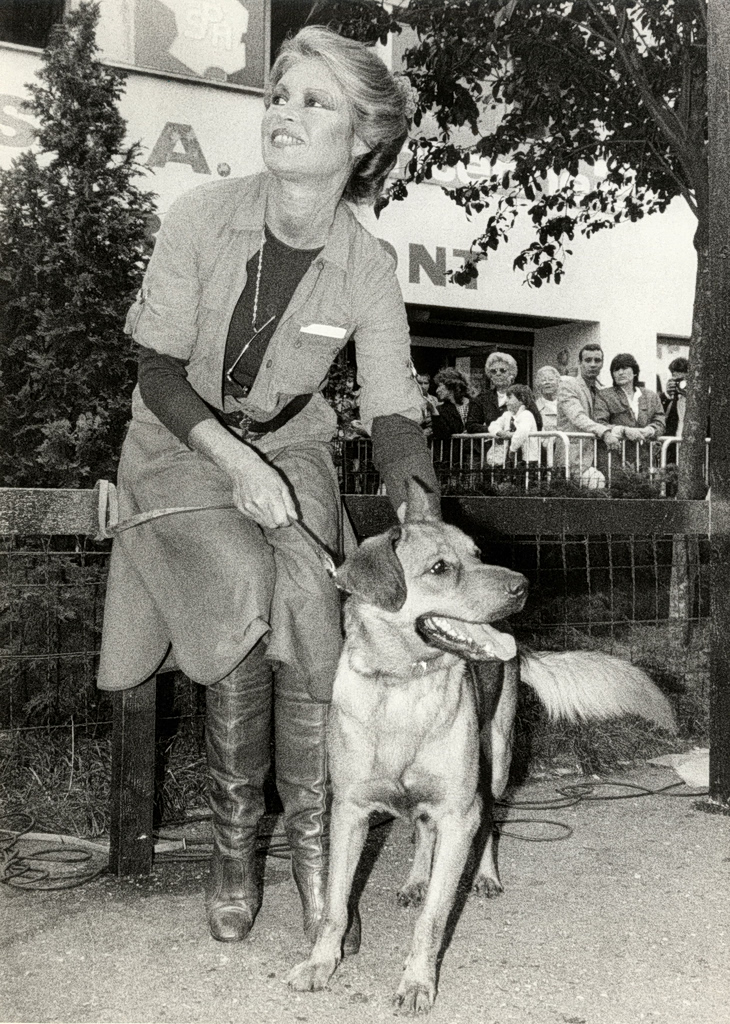
Former French actress Brigitte Bardot pats a stray dog at a shelter for strays in the Paris suburb, France, October 3, 1987. REUTERS/Charles Platiau/File Photo
However, her political views sparked controversy. Bardot has long held far-right, racially charged opinions, even by the standards of her era, openly supporting Charles de Gaulle in the 1960s. Her books express extreme racist views, criticizing homosexuals, racial mixing, immigration, refugees, politically active women, and Islam. In 2008, she was fined for inciting racial and religious hatred after writing to Nicolas Sarkozy, demanding a ban on Muslim ritual slaughter. She was again fined for similar offenses in 2021.
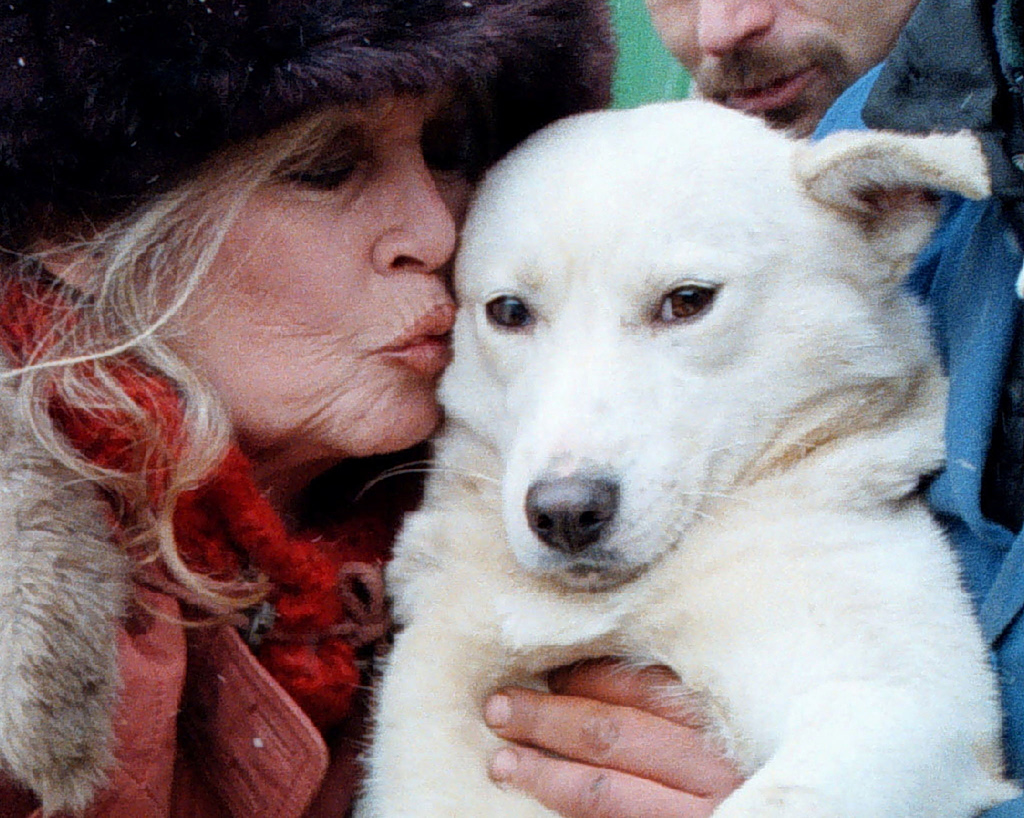
Former French pin-up actress Brigitte Bardot kisses a stray bitch during a visit to the Bucharest dog pound February 5. Bardot is to attend an international congress on the castration of stray dogs in Bucharest. ROMANIA BARDOT/File Photo
Her final husband, Bernard d’Ormale, is a former adviser to Jean-Marie Le Pen, ex-leader of the far-right National Front. Bardot expressed support for Marine Le Pen, calling her “Joan of Arc of Lorraine for the 21st century.”
Final Years
In her later years, Bardot lived in seclusion in Saint-Tropez with her beloved animals. Reports indicate she had to leave her home for urgent medical treatment at Toulon Hospital.
Brigitte Bardot, the legendary B.B., passed away a few days after Christmas, on December 28, 2025, at the age of 91. Countless stars can be called alluring, beautiful, or iconic, but Bardot was far more than that. She was a phenomenon—a storm that changed how the Western world perceived female sexuality. Her image will remain eternal in cinema, fashion, and collective memory. Every move, pose, and role left an indelible mark, reminding us that art, beauty, and freedom are never compromise. Today, we remember her as the legendary symbol of an entire era, living forever through her images, films, and the magic she created.

Bouquets of flowers and pictures of the late French singer, actor and animal rights activist Brigitte Bardot are attached to a fence outside her house, called “La Madrague”, in Saint Tropez, France December 28, 2025. REUTERS/Manon Cruz