Let’s not overcomplicate it: the dress rehearsal for Eurovision’s first semi-final wrapped up last night — and it was the one that truly mattered.
Of the three rehearsals held before each Eurovision live show, this is the crucial one, because it is during this performance that the professional juries cast their votes, accounting for half of the final result.

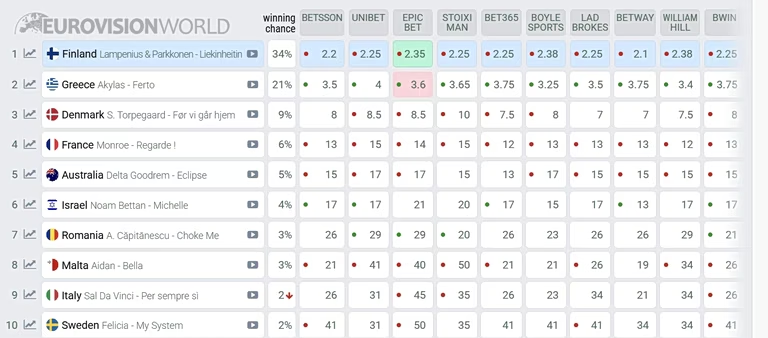
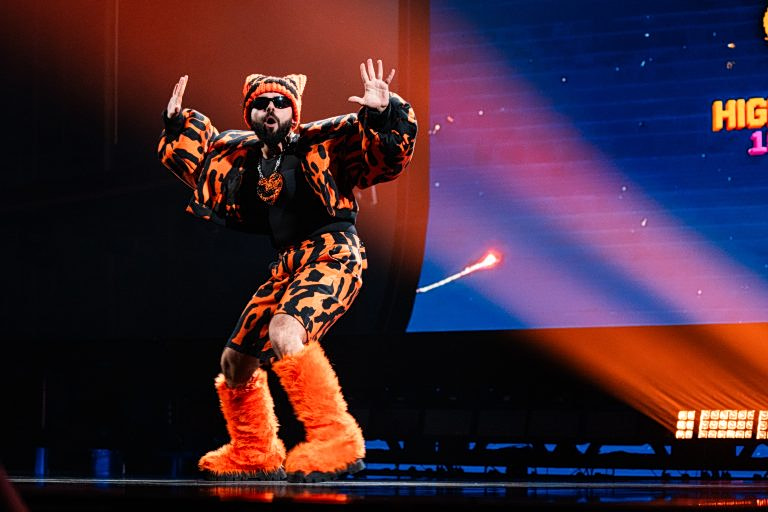
The momentum behind Akylas and his song “Ferto” has become impossible to ignore. According to bookmakers, Greece’s chances of winning the 70th Eurovision Song Contest have risen dramatically, a clear sign that the Greek delegation’s performance sailed through rehearsals with favorable winds behind it.
Greece still sits in second place in the betting odds behind Finland, which has held a narrow lead for some time now. But “Ferto” has surged from a 13% winning probability last week to 21%.
Of course, unless someone was physically present at the rehearsal, no one can claim to know exactly how it played out. Still, videos released by unofficial Eurovision fan organizations — the blogs and websites run by dedicated Eurovision experts and insiders — suggest that Akylas delivered a vocally flawless performance.
And that matters enormously.
Jury panels traditionally place greater emphasis on vocal ability than on spectacle or visual extravagance — precisely the area where Greece already appears to have won the bet.
Or at least that’s the impression created both by the unstoppable momentum of “Ferto” and by the 30-second rehearsal clip released last week by the European Broadcasting Union (EBU).
The good news doesn’t stop there.
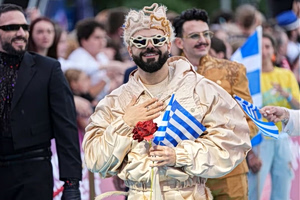
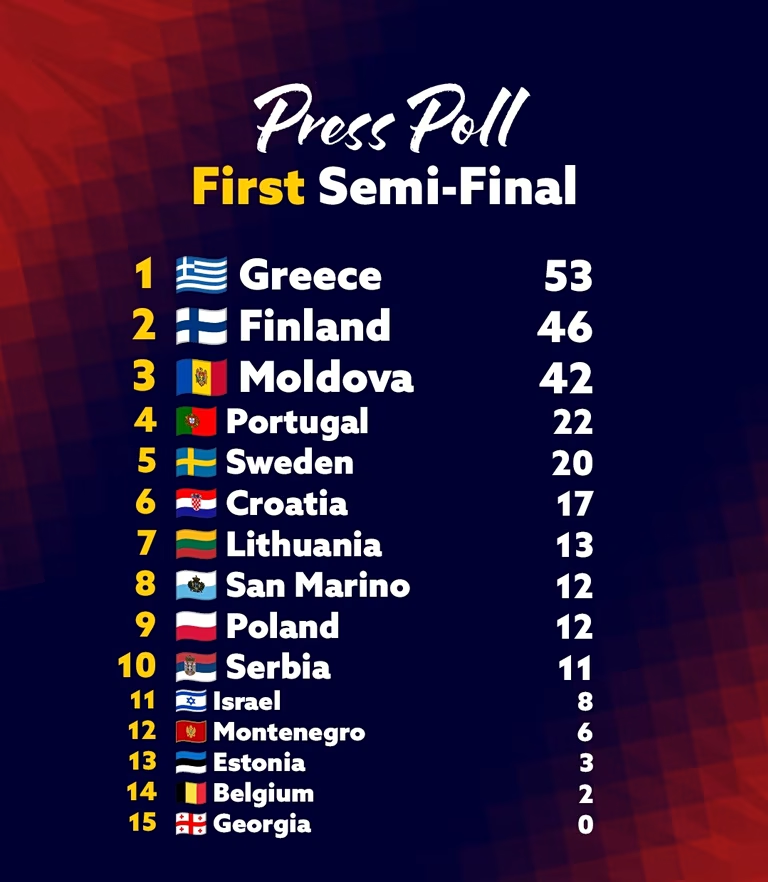
Akylas and “Ferto” also finished first among tonight’s 15 semi-final contenders in the poll conducted among accredited Eurovision journalists. The result only reinforced what many had already begun to suspect: the 27-year-old performer has that elusive quality Eurovision audiences crave — and Vienna’s arena seems ready to greet him tonight like a returning superstar.
So what exactly does Akylas’ rapid charge into tonight’s “mother of all battles” mean for Greece?
It means Greek TV presenters are suddenly scrambling to secure exclusive interviews with Akylas’ former teachers, relatives, wedding sponsors, in-laws, cousins — or at the very least someone from his hometown.
It means the average Greek television host, whose previous connection to Akylas was roughly equivalent to their relationship with good taste, rational thinking, or proper Greek grammar — in other words, somewhere between minimal and nonexistent — is now proudly declaring they recognized the brilliance of “Ferto” from the very first listen.
These are also the days when Dafni Bokota — the most legendary figure in Greece’s Eurovision history and longtime commentator of the contest — will once again grow tired of revisiting the glory years, like Sakis Rouvas shredding T-shirts on stage during Eurovision 2004.

And it is the season when Greece’s remaining eurofans — those who haven’t already boarded planes, ferries, or even electric scooters bound for Vienna — begin dusting off their moth-eaten Eurovision T-shirts buried deep in closets ever since Helena Paparizou’s historic victory with “My Number One” in 2005.
So does all this mean Greece’s victory is inevitable this year? Is the throne of “My Number One” beginning to shake?
No one would dare say so with certainty.
Especially not in a competition as unpredictable and multi-layered as Eurovision.
But let’s be honest: Akylas and “Ferto” are connecting with audiences — and the even better news is that this doesn’t appear to be another case of national delusion or collective hysteria.

For now, Finland seems to be the only country capable of matching Greece head-to-head. Its performance features a live violin on stage — a rare exception to EBU rules, which now largely require prerecorded instrumentation. Finland’s entry is aesthetically and musically very different from “Ferto,” but equally powerful. Notably, Finland will also compete tonight in the first semi-final.
And if you want the opinion of someone who has followed Eurovision since childhood — back when Greek composer Giorgos Theofanous still conducted a live orchestra at the contest sporting his iconic short bob haircut — then France could also emerge as a serious contender for the podium.
To be blunt, France appears to have copied and pasted the operatic formula that brought Austria victory last year with JJ. And considering France hasn’t won Eurovision since 1977, despite coming painfully close several times in recent years, there may finally be a sense that its moment has arrived.
Still, as Dafni Bokota used to say during Eurovision’s innocent early years: “Vote smart.”
Good luck, Greece.