Climate-driven disasters continued to exact a heavy financial toll in 2025, with wildfires, floods and severe storms pushing global insured losses above $100 billion yet again, according to Munich Re. In its latest natural catastrophe report, the world’s largest reinsurer warns that while total global damage was lower than the recent peak years, “non-peak” perils (fires, thunderstorms and flooding) are becoming the dominant and increasingly expensive threat.
Worldwide natural disasters caused an estimated $224 billion in damage in 2025, of which insurers covered $108 billion. Although this represents a drop from 2024’s inflation-adjusted $368 billion in overall losses, insured losses once again crossed the psychologically important $100 billion threshold= a level that has become disturbingly routine in the past decade.
Weather-related disasters accounted for 92% of total losses and 97% of insured losses, underscoring how climate-linked hazards now dominate global risk.
The company’s chief climatologist, Tobias Grimm, highlights that the past twelve years have been the warmest on record, adding that the warning signs from climate change persist and may intensify under current conditions.
Fires and storms eclipse traditional catastrophe drivers
The most striking shift in 2025 was the scale of losses from events that historically sat outside the insurance industry’s classic catastrophe focus on hurricanes and earthquakes.
Wildfires, floods and severe convective storms generated $166 billion in total losses, including $98 billion insured — well above both 10-year and 30-year inflation-adjusted averages. Scientists increasingly link the rising intensity of these hazards to climate change.
The single costliest disaster of the year was the Los Angeles wildfires in January. Fueled by drought and strong seasonal winds, the fires produced $53 billion in total damage, of which roughly $40 billion was insured, making it the most expensive wildfire event ever recorded. It is considered that thirty-one people died as a direct cause of the fires, while some reports claims that over 400 perished due to indirect causes.
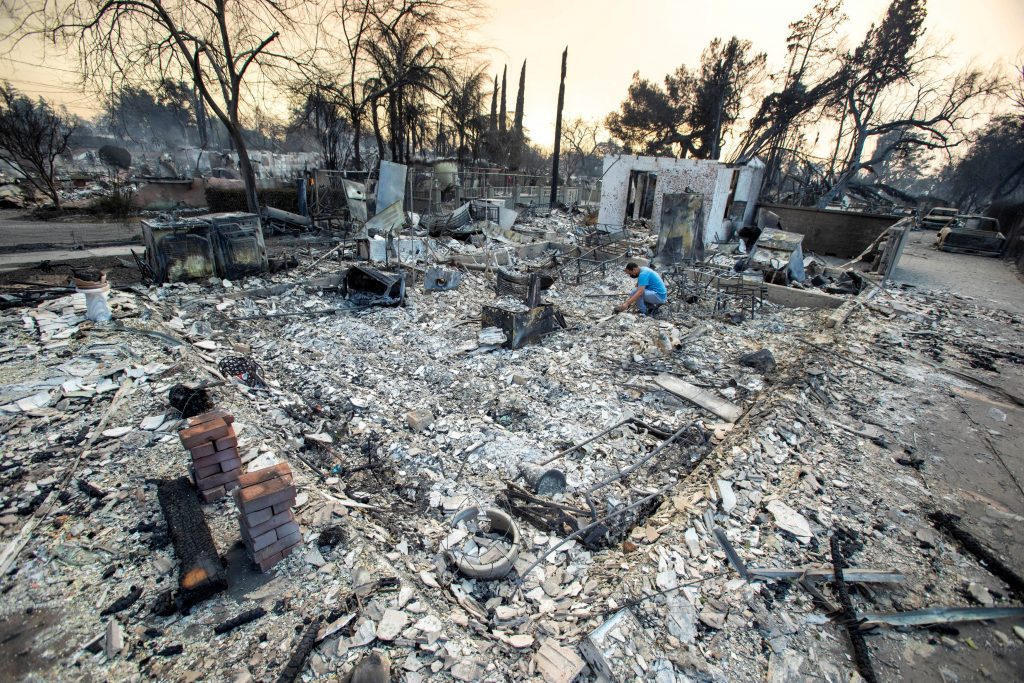
A man looks for belongings in the remains of his home after burned down by wildfires in the Los Angeles area, at the Eaton Fire in Altadena, California, U.S. January 9, 2025. REUTERS/Ringo Chiu
The United States, despite being spared a direct hurricane landfall for the first time in a decade, still topped global loss rankings due to escalating storm and wildfire damage. Severe thunderstorms across central and southern US states in March alone produced $9.4 billion in losses, $7 billion of it insured.
Munich Re notes that 2025 could easily have been far worse. Pure chance prevented a major hurricane strike on the US mainland, keeping global losses below the 10-year inflation-adjusted average of $266 billion. Insured losses, however, almost exactly matched the 10-year average at $107 billion.
Global human toll rises
Natural disasters killed approximately 17,200 people worldwide in 2025 — significantly more than the roughly 11,000 fatalities recorded in 2024, though still below long-term historical averages.
The deadliest event was a powerful earthquake in Myanmar, which caused around 4,500 deaths. While primarily a humanitarian tragedy, it also highlighted stark disparities in insurance coverage: only a small fraction of the estimated $12 billion in damage was insured.
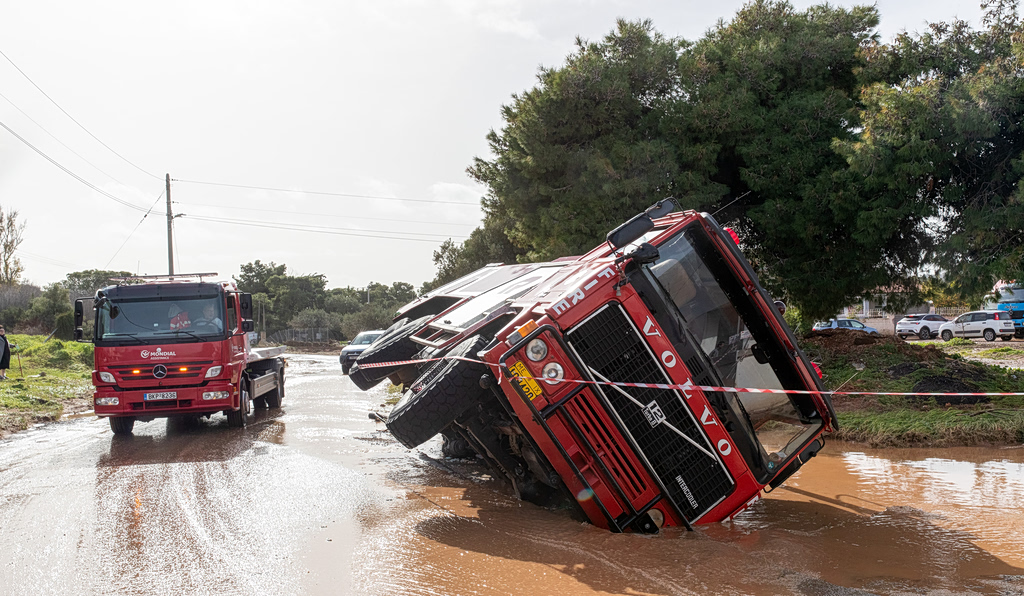
A view of the Vari area in southern Athens covered in thick mud after extreme flooding, with damaged roads, submerged cars, and residential neighborhoods overwhelmed by debris.
Europe: relatively light year, but warning signs multiply
Compared with other regions, Europe experienced a relatively moderate disaster year. Natural catastrophe losses totaled about $11 billion, roughly half of which was insured and well below the continent’s 10-year averages of $35 billion in overall losses and $12 billion insured.
The largest European losses stemmed from a severe cold wave in Türkiye ($2 billion overall) and hailstorms in France, Austria and Germany ($1.2 billion overall).
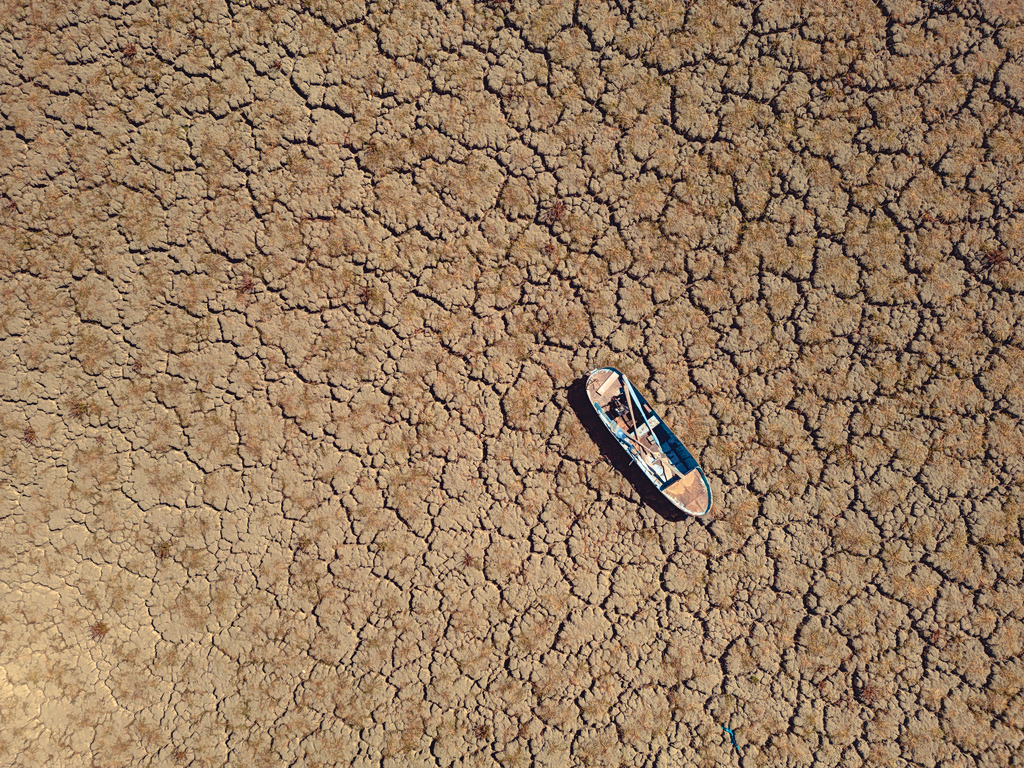
Yet underlying risk trends remain troubling. In Spain, extreme heat and drought culminated in the country’s worst wildfire season in years. According to European forest monitoring data, nearly 400,000 hectares burned in 2025, almost five times the annual average recorded between 2006 and 2024.
Munich Re points to research showing the increase in very large hail events is fastest worldwide in Europe, especially in northern Italy. Hailstones exceeding five centimeters in diameter can cause billion-dollar losses when they strike urban areas, and researchers link the rising frequency of such storms to climate change.
While the Munich Re report does not single out Greece for specific loss figures, Southern Europe’s exposure to escalating wildfire and heat risks places the region squarely within the broader trend: climate-driven extremes are becoming more frequent, more intense and more expensive to insure.
Insurance gap narrows, boosted by LA insurance levels
Roughly half of 2025’s disaster losses were uninsured, an improvement from the typical 60% protection gap seen over the past decade. This narrowing largely reflects the high insurance penetration in the Los Angeles wildfire event. Without that single disaster, the global insurance gap would have returned to its long-term norm.
As board member Thomas Blunck put it, societies must “be realistic” about escalating climate risks and strengthen their financial safety nets.