The Oslo Energy Forum 2026 concluded at the historic Holmenkollen venue under this year’s theme “Energy and Security in Unpredictable Times – A New Global Order?”, bringing together the international community to discuss the challenges and opportunities of the global energy transition.
Former U.S. Ambassador to Greece, Geoffrey R. Pyatt, now Senior Managing Director of Energy and Critical Minerals at McLarty Associates, stood out for his interventions on the strategic importance of critical minerals, transatlantic cooperation, energy security, and the geopolitical dimensions of the current energy crisis.
Reflecting on the longstanding U.S.–Norway energy partnership, Pyatt said:
“Four years ago, when Russia began curtailing gas deliveries to Europe as part of a hybrid strategy for the full scale invasion of Ukraine, it was Norwegian pipeline gas and American LNG that came to the rescue. Later, I had the honor of co-chairing, along with Petroleum and Energy Minister Terje Aasland, the US – Norway Energy and Climate Dialogue, where we deepened cooperation on energy security, critical mineral supply chains, and support for Ukraine. Against this background, I was thrilled to be part of the Oslo Energy Forum this week.”
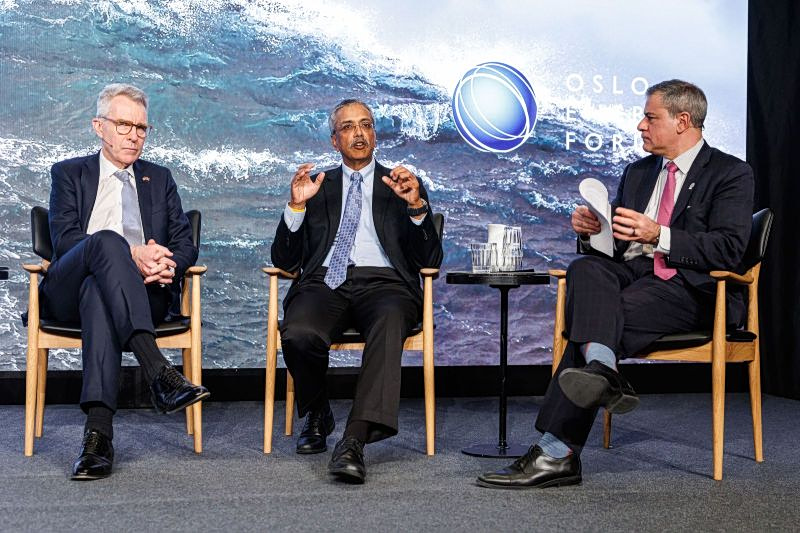
Pyatt participated in the panels “The Role of Critical Minerals and Materials” alongside Landon Derentz, Vice President for Energy and Infrastructure at the Atlantic Council, and Eivind Kallevik, President and CEO of Norsk Hydro, as well as “Challenges for the Energy Industry” with Jason Bordoff, Founding Director of Columbia University’s CGEP (Center on Global Energy Policy), and Vijay Swarup, former Senior Director for Climate Strategy and Technology.
Discussions focused on resilience in critical mineral supply chains, strategic autonomy in materials such as aluminium, and the role of energy policy in industrial resilience. A key takeaway was that moving from ambition to implementation requires alignment of energy policy, industrial strategy, and recycling policies. Aluminium resilience has two dimensions: in the short term, increasing in-region recycling strengthens supply security and reduces energy consumption; in the long term, strategic autonomy depends on competitive and reliable energy supply.
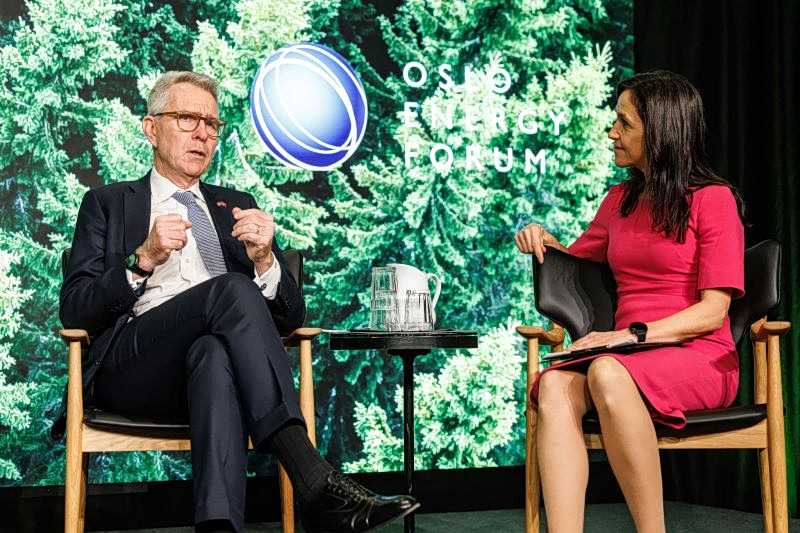
Addressing geopolitical challenges, Pyatt emphasized the importance of continuing support for Ukraine as Russia continues to target energy infrastructure:
“Minister of Foreign Affairs Espen Barth Eide made important remarks on Kremlin attacks on energy infrastructure. It is critical for all of us to sustain support for the energy sector while pushing for the immediate ceasefire urged by Ukraine, the U.S., Norway, and the EU. Kudos to Norway’s MFA for strong leadership in the G7+ energy sector support group and for consistently highlighting the energy dimension of NATO’s response to Russia’s full-scale invasion.”
Drawing on his experience as Assistant Secretary in the U.S. Bureau of Energy Resources, Pyatt analyzed vulnerabilities in supply chains, the role of critical minerals, and the strategic importance of the Arctic and Greenland for Europe and the U.S. His presence highlighted the close U.S.–Norway cooperation in energy and critical minerals, reinforced by the 2023 joint declaration on secure and sustainable supply chains and clean energy technologies. Throughout the forum, discussions showcased the energy transition as both an opportunity and a challenge for Europe and the global community.
Concluding his talk, Pyatt stressed the fact that energy transition and critical mineral security are not just economic issues, but are central to geopolitical stability.
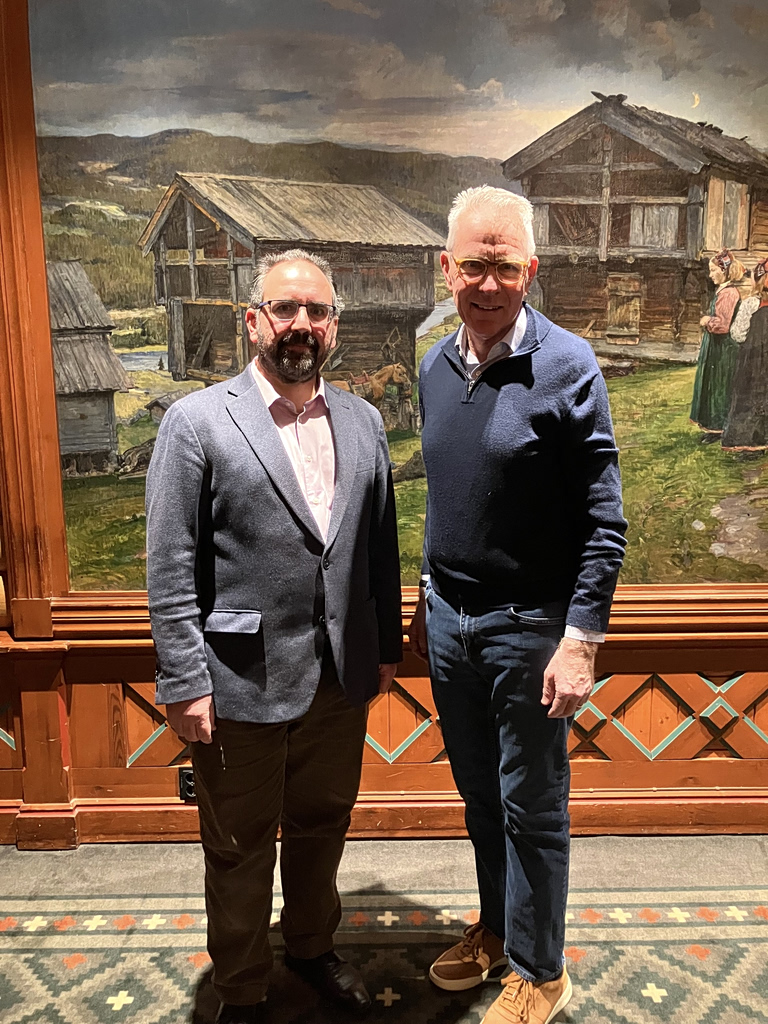
The Oslo Energy Forum 2026 reaffirmed its status as a high-level international event, with participation from Norwegian Prime Minister Jonas Gahr Støre, Foreign Minister Espen Barth Eide, Chief of Defence Eirik Kristoffersen, the head of the Norwegian Oil Fund Nicolai Tangen, former Norwegian Ambassador to Greece Frode Øyvind Andersen, and ambassadors from countries across Latin America, Europe, and Asia. Their presence underscored the forum’s strategic significance for Europe, NATO, and the international energy community.
Pyatt’s interventions, together with the high-level discussions and messages of collaboration, underscored the critical role of critical minerals, strategic autonomy, and U.S.–Norway cooperation in shaping the new global energy order.