The Basil & Elise Goulandris Foundation presents at the Museum of Contemporary Art in Andros a tribute to Germaine Richier (1902-1959), one of the most important figures in 20th century European sculpture, titled “Germaine Richier (1902-1959) – Conversations”, from June 14 until September 27, 2026.
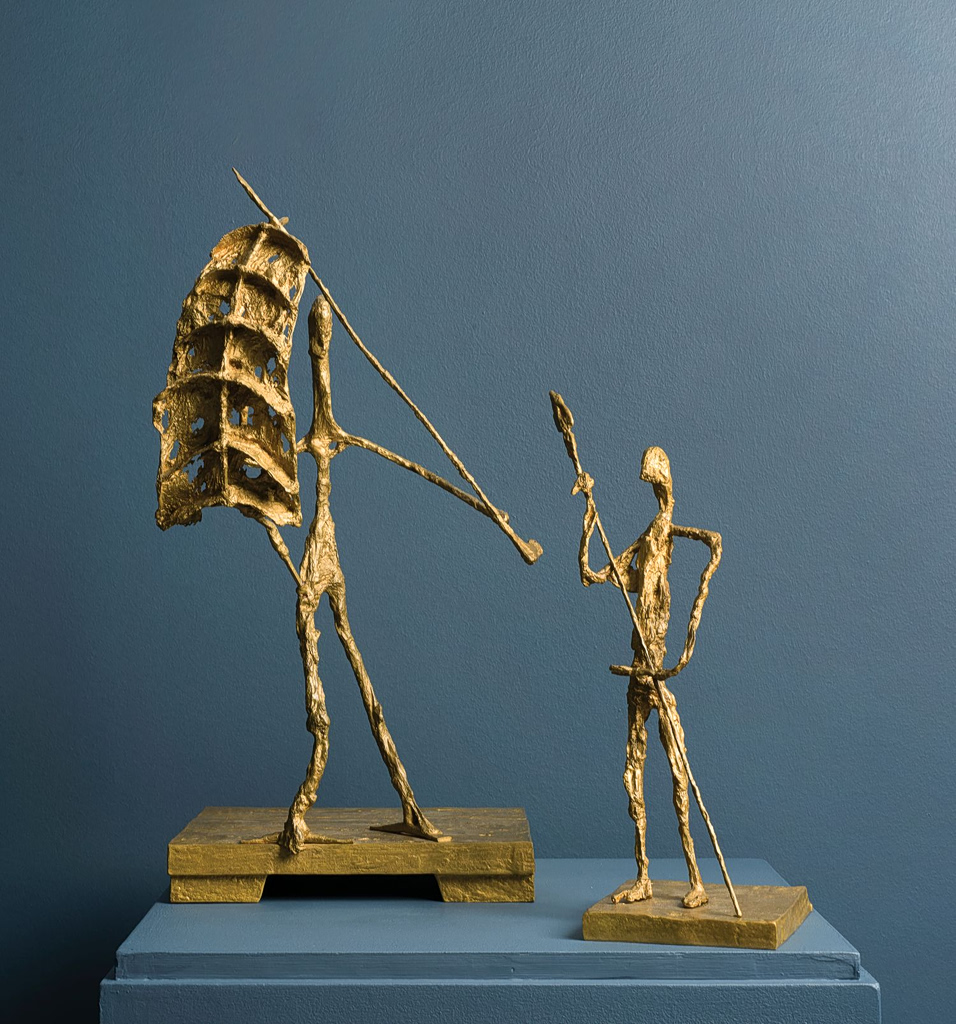
The exhibition retraces the entirety of Richier’s artistic career; despite her premature death at the age of 57, she left behind a remarkably coherent body of work devoted entirely to the exploration of living forms. Richier was awarded the Blumenthal Prize at the age of 34 and was the only female sculptor to participate in the landmark exhibition The New Decade, organised by MoMA in New York in 1955. In 1956, the Musée national d’Art moderne in Paris (National Museum of Modern Art) dedicated a major retrospective exhibition to her—a distinction that, until then, had been granted during an artist’s lifetime only to Henri Matisse.
A student in the studio of Antoine Bourdelle, Richier began her career through the art of portrait busts, which she approached with the rigour of the academic tradition. During the 1940s, however, she broke free from conventional frameworks and developed a highly personal sculptural language where human forms merge with the animal, vegetal and mineral worlds. Her research led her to reassess the very foundations of sculpture, as well as the metaphorical dimension of her works.
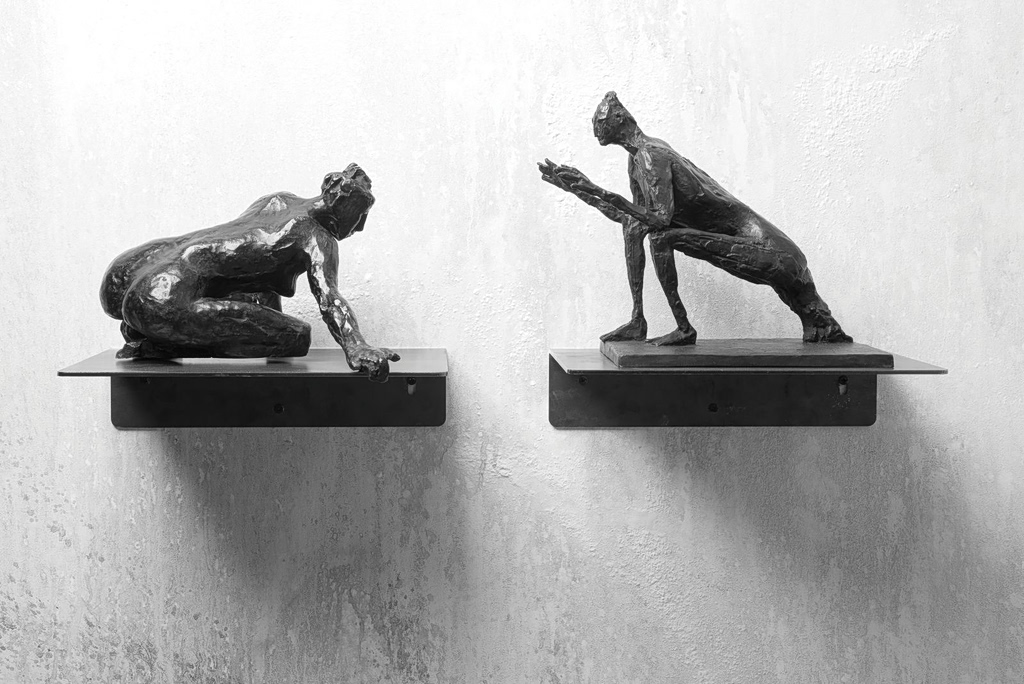
Germaine Richier often referred to her sculptures as her own children, and the “conversations” initiated through her work unfold on two levels: beyond the dialogue she herself maintained with her creations, there are also the imagined relationships the works weave among themselves.
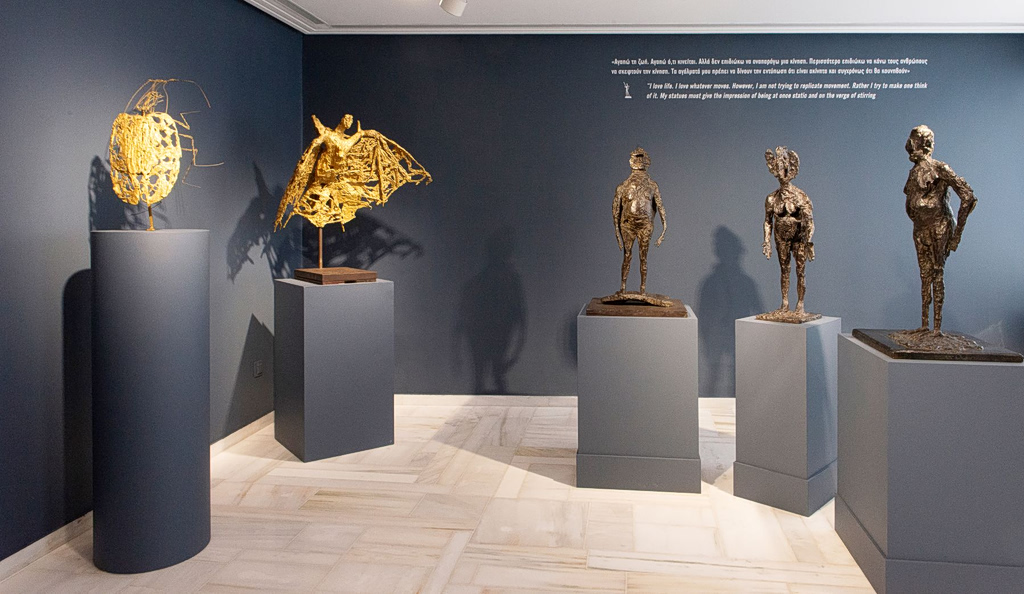
Born and raised in a small village in Provence, Richier retained throughout her life a fascination with animals, insects and found objects, which filled her studio and nourished her imagination. Some of these objects became the starting point for forms that combined natural elements with the human figure.
When, during the 1940s, she chose to pursue a decisively personal artistic path, departing from academic heritage, she simultaneously ruptured and revitalised the art of sculpture. Her works came to embody all the paradoxes of the human condition: marked by wounds and weakened by fissures and internal tensions, her sculptures nevertheless remain profoundly human. They express an inner strength, a survival instinct and a form of hope.
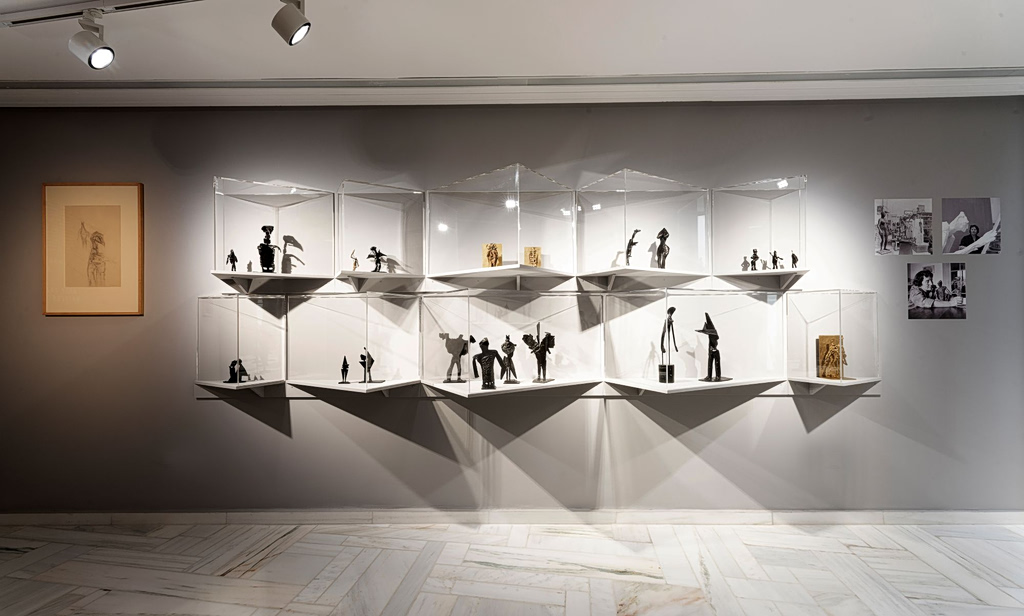
As she gradually deepened her exploration of the relationship between humankind and nature, Richier created hybrid figures drawing equally from the animal kingdom and from collective imagination — mythological as well as popular — while reinterpreting traditional forms of representation. The human figure remains central throughout her artistic practice: from the demanding discipline of portrait busts to the small- and medium-scale silhouettes of the 1950s, where abstraction becomes increasingly pronounced, it is evident that Richier draws from the legacy of Rodin and Bourdelle while at the same time giving powerful expression to her innermost impulses.
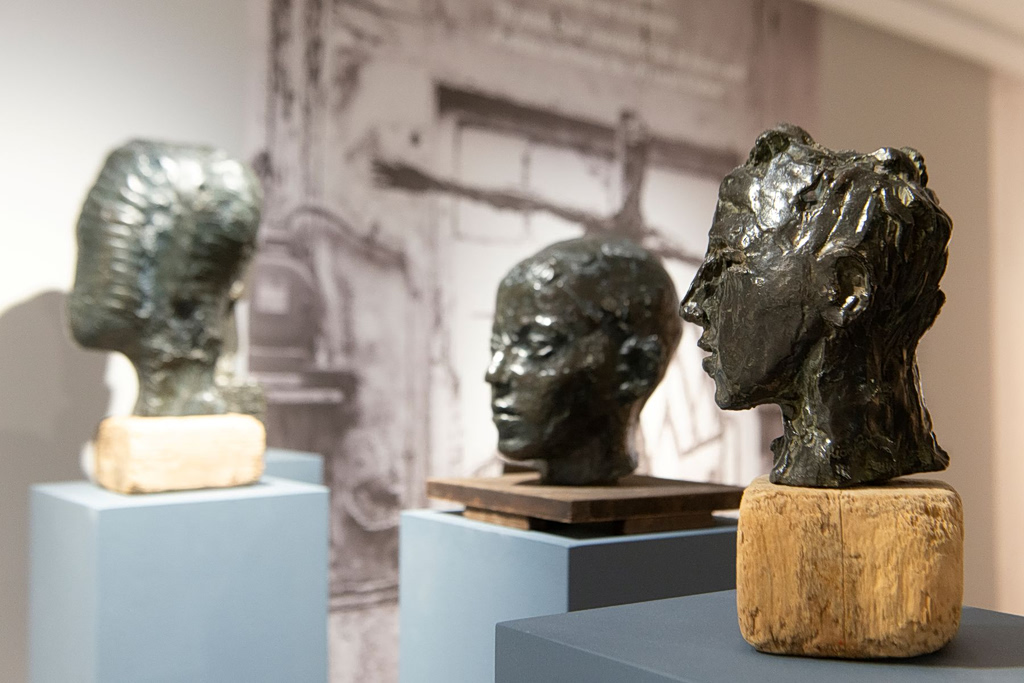
The B&E Goulandris Foundation exhibition further includes a section dedicated to Richier’s studio, an apartment immersed in a “chaos of plaster and clay” as described by the writer and art critic Georges Limbour. In addition, the exhibition highlights her engagement with printmaking, which she discovered in London in 1947 and soon incorporated into her daily artistic practice.
The exhibition is curated by Marie Koutsomallis-Moreau, Head of Collection at the B&E Goulandris Foundation, and Laurence Durieu, an expert on Richier’s work and author of her biography Germaine Richier – L’Ouragane.
The exhibition is accompanied by a trilingual catalogue (Greek, English and French). Greek-language public guided tours will take place daily from August 1 to 16, 12.00-12.40, except on Tuesdays when the Museum remains closed.
Information:
Curators:
Marie Koutsomallis-Moreau, Head of Collection at the B&E Goulandris Foundation
Laurence Durieu, expert on Richier’s work and author of her biography Germaine Richier – L’Ouragane
Exhibition design:
Paraskevi Gerolymatou, Andreas Georgiadis
Duration:
June 14 – September 27, 2026
Opening times: Wednesday-Sunday 11.00-15.00 & 18.00-21.00
Monday 11.00-15.00
Closed on Tuesday
Museum of Contemporary Art, Andros
Chora, Andros 84500
Τ: +30 22820 22444
andros@goulandris.gr