 Μake us preferred on Google
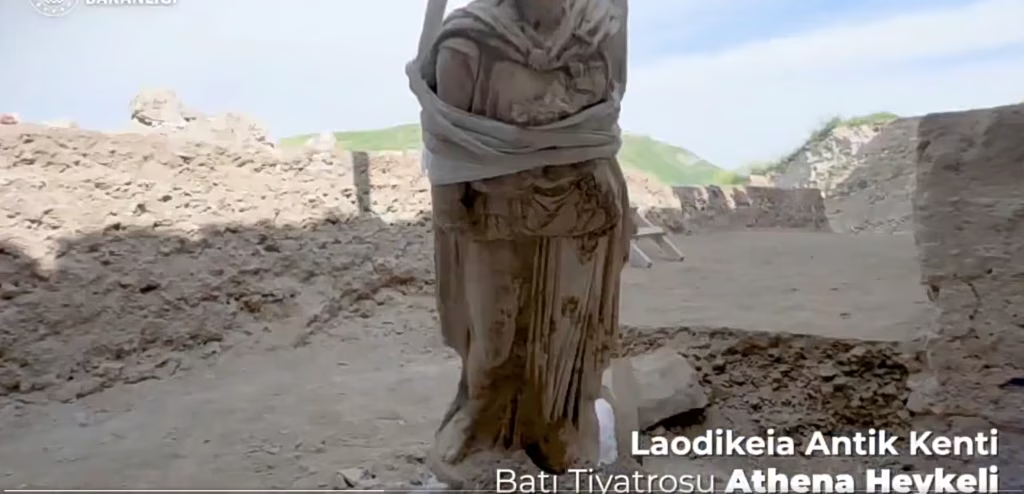
 A significant archaeological discovery was reported this week in western Turkey, where a nearly two-meter-tall statue of what is believed to depict the mythical Olympian goddess Athena has been uncovered in the archaeological site corresponding to the ancient city of Laodicea on the Lycus, near modern-day Pamukkale.
Breaking: An Athena statue has reportedly been uncovered during excavations at Laodicea’s West Theatre in Denizli, Türkiye. pic.twitter.com/LoTriQ7ZVp
— History Content (@HistContent) April 23, 2026
The find was revealed by Turkey’s Culture and Tourism Minister Mehmet Nuri Ersoy, who said the statue was discovered during excavation work at the city’s so-called western theater.
The white marble statue was found lying face down among ruins near the outer wall of the theater’s stage, and its head has not yet been identified. The sculpture depicts Athena standing on a circular base, dressed in a peplos and cloak, with the aegis—featuring the head of Medusa and serpents—visible on her chest.
Experts said the finely detailed drapery and naturalistic rendering point to high artistic quality, consistent with the classical style of the early imperial Roman period.
The theater itself dates back to the 2nd century BC and features a three-tiered architectural design with 16 columns per level. Sculptures found in the area also depict scenes from the Odyssey, including episodes such as the Laestrygonians, the cave of Polyphemus, and Scylla.
Excavations carried out in 2024–2025 have yielded numerous artifacts tied to these mythological narratives, reinforcing Laodicea’s importance as a major cultural center in antiquity.
Laodicea on the Lycus was one of the most important Greek cities of ancient western Asia Minor, located near modern-day Denizli, not far from Pamukkale.
The Hellenistic era settlement was founded in the 3rd century BC by the Seleucid ruler Antiochus II Theos, who named it after his wife, Laodice. Its strategic position on major trade routes helped it grow rapidly into a wealthy commercial and administrative center.