 Μake us preferred on Google
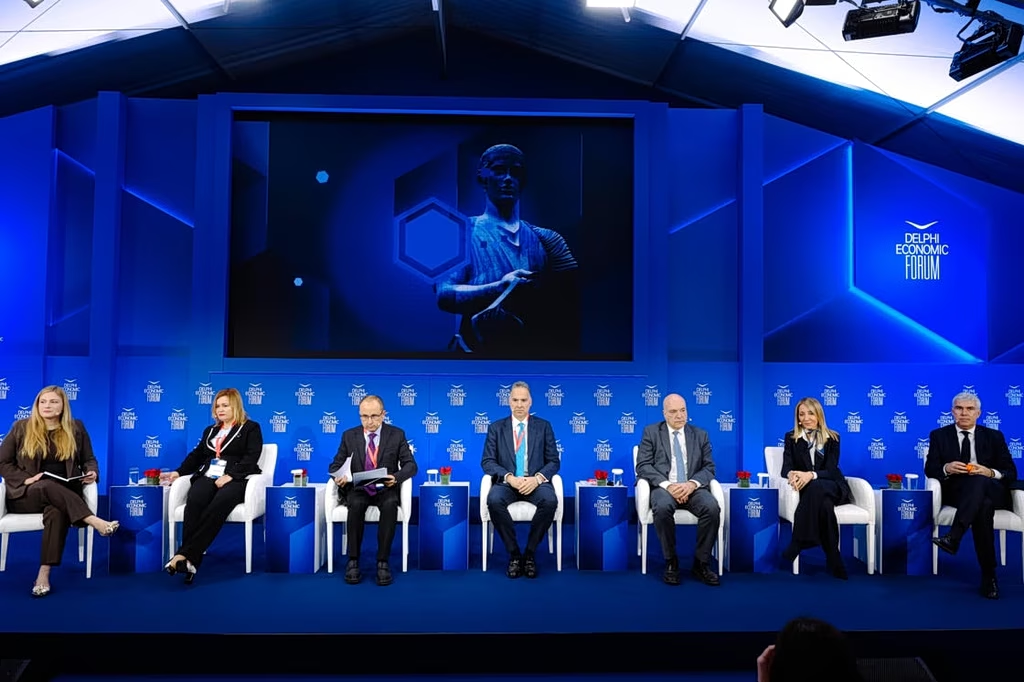
 The development of a major natural gas corridor linking Southeast and Central Europe is emerging as a critical priority for energy security, according to policymakers and industry leaders speaking at an international economic forum in Greece.
The project, often referred to as a “Vertical Gas Corridor,” aims to strengthen supply routes, improve connectivity between countries, and reduce dependence on limited energy sources at a time of heightened geopolitical instability.
Regional Cooperation at the Core
Officials stressed that closer cooperation between countries in the region is essential to ensure reliable energy flows. Representatives from several European nations highlighted ongoing efforts to coordinate infrastructure development and create more competitive and flexible supply routes.
One key proposal under discussion is the creation of a unified system that would streamline gas transport capacity across multiple countries, potentially extending from southern Europe to Ukraine. Approval from European authorities is still pending.
Participants also emphasized the importance of European Union support, calling for targeted funding mechanisms to address infrastructure bottlenecks and accelerate cross-border energy projects.
Balancing Energy Priorities
Speakers agreed that energy strategy must balance three core objectives: reducing emissions, ensuring security of supply, and maintaining competitiveness.
While renewable energy remains a long-term goal, natural gas is expected to continue playing a significant role in the transition. Some countries are also maintaining or expanding investments in nuclear energy as part of their energy mix.
At the same time, officials noted that energy decisions should increasingly be guided by market conditions rather than purely regulatory frameworks.
Infrastructure and Supply Challenges
Industry representatives highlighted the importance of expanding infrastructure, including liquefied natural gas (LNG) terminals and pipeline networks, to enhance flexibility and resilience.
Existing facilities in Greece already play a key role in supplying gas to neighboring regions, while additional projects—such as new floating storage and regasification units (FSRUs)—are being considered to boost capacity.
Experts warned, however, that Europe remains heavily dependent on energy imports, particularly in natural gas, and that disruptions in global supply routes can have immediate consequences for regional markets.
Long-Term Strategy Needed
Despite progress in recent years, participants cautioned that Europe is not yet fully prepared to handle future energy crises. Building new infrastructure and reshaping supply networks requires time, long-term planning, and stable policy frameworks.
They also pointed to declining gas reserves across Europe and ongoing price volatility as factors that could create further uncertainty in the coming months.
A Strategic Opportunity
Beyond energy security, the corridor is also seen as an economic opportunity. By improving connectivity and creating competitive supply routes, the initiative could strengthen the region’s role in the broader European energy market.
However, experts stressed that achieving this goal will require coordinated action, sustained investment, and greater flexibility from European institutions to support large-scale infrastructure projects.