A Macedonian tomb dating from the Hellenistic period continues to draw attention in the center of the northern city of Drama, as it was uncovered and later preserved while an apartment building around it.
The ancient tomb now located in the open ground floor of the building on Trias Street, serving as a reminder that the modern city is built atop layers of centuries of history. The tomb, discovered in 1976 during the construction of the apartment building, is the city’s first Hellenistic-era monument discovered in the modern age and provides valuable information about the burial customs and daily life of the inhabitants of ancient Drama.
“This year marks 50 years since its discovery, which, admittedly, was completely unexpected but caused great admiration and fascination,” according to archaeologist Vasiliki Poulioudi.
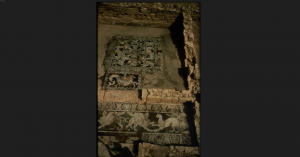
“When the workers were digging for the foundations of the apartment building, they did not expect to encounter a monumental tomb, fully erected and decorated with frescoes that were preserved in excellent condition,” she added.
The ancient structure is comprised of a corridor with a staircase, an antechamber made of stone bricks, and a burial chamber likely constructed from clay bricks, and made from the local clay soil.
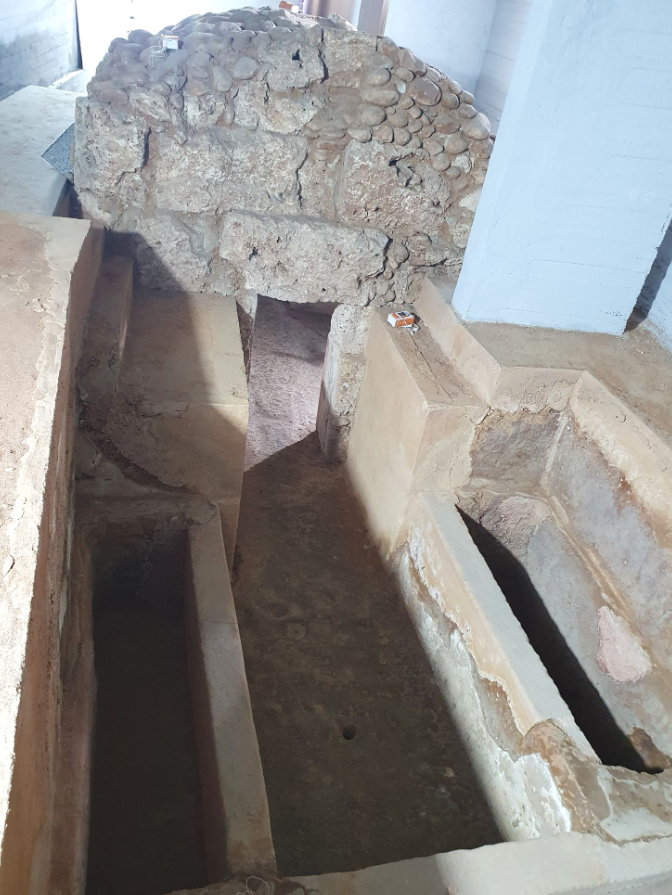
Hellenistic Drama as revealed by the tomb
The excavation provided valuable historical context for Hellenistic-era Drama. The tomb dates from the last decades of the 3rd century to the mid-2nd century BC and appears to have been used by members of a wealthy family. Its existence helped define the boundaries of the ancient city and shed light on the social, economic, and cultural life of the period.
Today, the Macedonian tomb on Trias Street, though hidden within densely populated central Drama, remains a living witness to the Hellenistic past. The object found in the grave are now displayed in the museum, ranging from perfume vessels and oil lamps to gold jewelry.
The tomb is open to visitors every Sunday morning, while on weekdays it can be visited via arrangement with the local ephorate of antiquities. A visit can be combined with a walk through the city’s historic center and nearby monuments, such as the Sadirvan mosque, the Museum of Photographic Cameras, and the park of the springs of Aghia Varvara (St. Barbara).