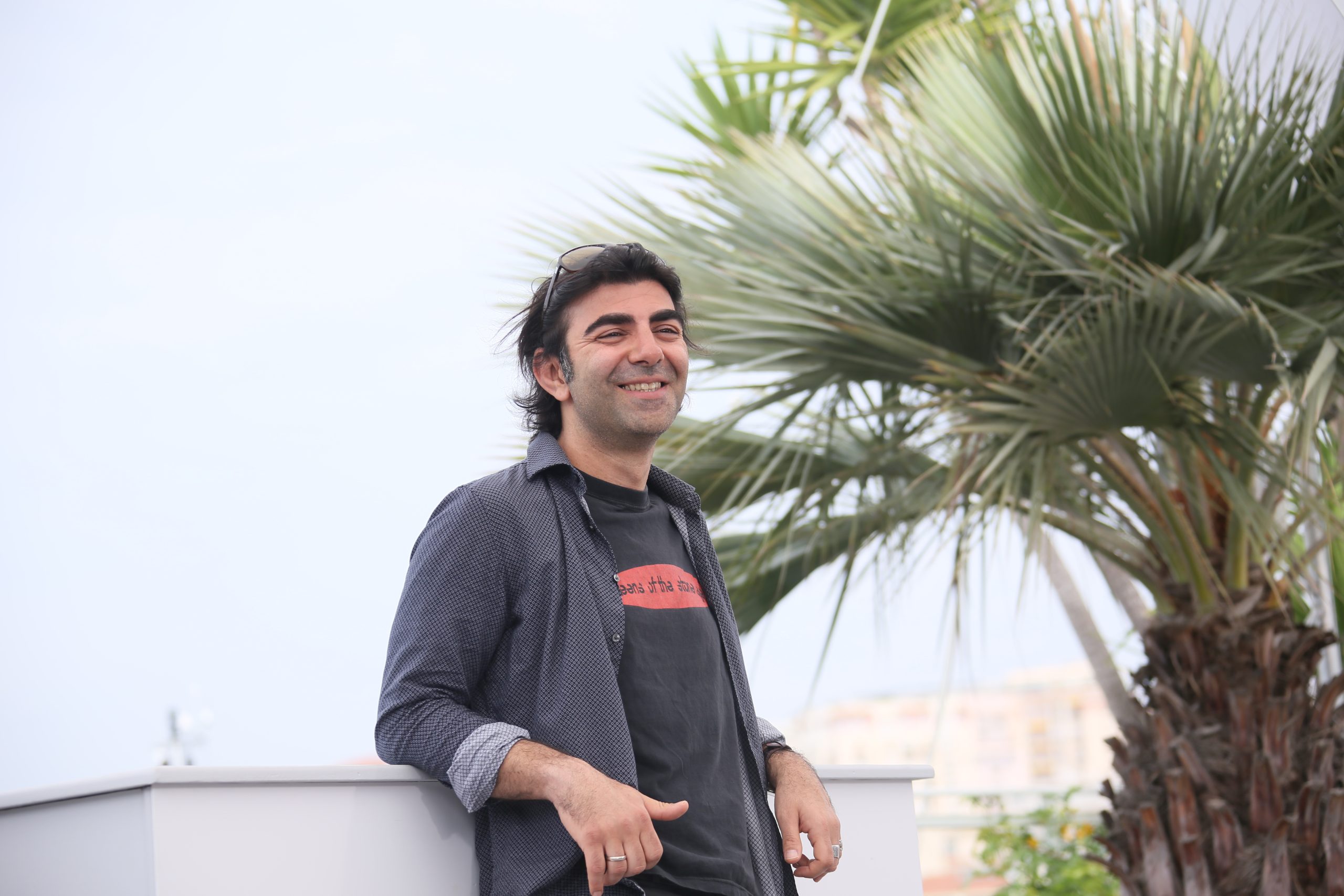
Coming-of-age stories are not the first thing that comes to mind when one thinks of Fatih Akin’s cinema. The German filmmaker of Turkish descent, who became internationally known in 2002 with Head-On (winner of the Golden Bear at the Berlin Film Festival), has accustomed us to hard-hitting subject matter—always in tune with the contemporary issues of the time his films are made—even when the base is comedy, as in his biggest hit, Soul Kitchen (2009). Who can forget films like In the Fade (2017), where Akin addressed modern terrorism, or his masterpiece The Edge of Heaven (2007), a skillfully constructed family drama split between Germany and Turkey?
Therefore, On the Island of Amrum (Amrum), the latest work by the 52-year-old Hamburg-born director and screenwriter, comes as something of a surprise. Set in 1945 on the German island of Amrum, as World War II draws to a close, the story follows 12-year-old Nanning—portrayed by the remarkable Jasper Billerbeck—who must cope with his mother’s anguish. A fanatical Nazi, she cannot comprehend Germany’s defeat and the collapse of an ideology that had dominated the German people for years.
A Link to the Present
“For me, it was very relevant to deal with themes like those in The Island of Amrum,” Akin told To Vima at this year’s Cannes Film Festival, where the film screened out of competition. “Given the situation in my own country—about which I can speak—I know that 12 million people voted for the far-right. That means 12 out of 80 citizens are on the far-right. And that’s no longer a fringe; we’re not talking about the skinheads of the nineties anymore. It’s your neighbor. It’s your child’s teacher. It might even be your cousin—or your own child. You don’t know. It’s all there. It’s all happening. And this was an opportunity to talk about that.”
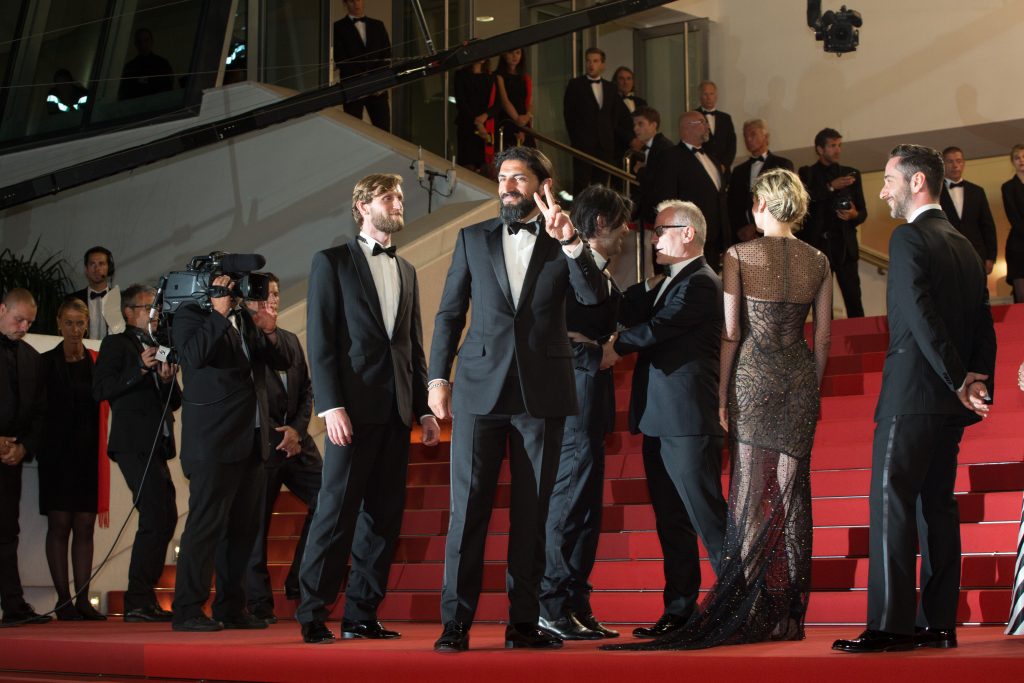
Was it a risky topic? “When I make a film, I don’t think about whether the subject is dangerous or not. I think of danger differently. How can I make the film without it becoming kitsch? How can I shoot it without false sentimentality? How can I do it the right way? Those are the challenges—that’s where the real risks lie, not in the topic itself. I’ve done riskier things and survived.”
Fatih Akin has indeed taken risks and survived—but he has done so by delving into the present, not the historical past. He is a filmmaker of the here and now, rarely turning his gaze backward. And when he does, as in The Cut (2014)—a film about the Armenian genocide—the results can be mixed. But in the case of On the Island of Amrum, it could not have been otherwise.
“First of all, it was in the script,” he said. “It’s the memory of my mentor—he wrote it,” Akin explained, referring to his teacher, veteran German director and screenwriter Hark Bohm, who co-wrote the screenplay and initially planned to direct the film himself (Bohm also appears in a small role).
Return to Childhood
Everything we see in the film is inspired by Bohm’s childhood memories—it is a story told through the eyes of a child who undergoes a profound transformation through an inner journey, while the world around him is reshaped by the fall of Hitler.
“In fact,” Akin said, “when we talked about it, I was the one who convinced Hark to make the film. That happened a few years ago when I noticed a wave of directors making films about their childhoods.” He mentioned works like Alfonso Cuarón’s Roma, Steven Spielberg’s The Fabelmans, and Kenneth Branagh’s Belfast. “I told Hark, ‘You have to do it. Because no matter what you say about your parents, your mother was a Nazi. You’re the one who has to write this.’ At first, he didn’t want to—but in the end, I convinced him. So we come back to what we were saying earlier: Can a film set in the past still be about today?”
Akin takes a sip of his coffee. “You know the saying: the future is now. We are who we are because of the past. Our past leads us to decide what we do now, and what we do now shapes the future. Future, past, and present are the same thing. How I capture that on film, and how I finance it, is another matter.”
The Film’s Photography
And indeed, that’s how it was done. Akin approached the subject with admirable simplicity. “I told my director of photography, Karl Walter Lindenlaub, ‘I want to do this simply.’ Like they did in the old days of neorealism. We watched old films, sure—but we have modern tools, modern lenses. I didn’t want that kind of nostalgic look, which I detest. That was something we had to be careful about.”
Akin said that several films came to mind—not only old ones. Vittorio De Sica’s Bicycle Thieves and Shoeshine, Charles Laughton’s The Night of the Hunter, and later works like Rob Reiner’s Stand by Me. “My cinematic upbringing shaped my connection to the project—and with that realization, everything began to fall into place.”