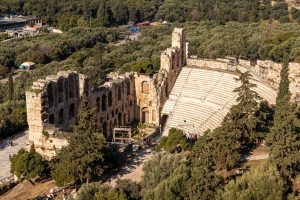
Greece’s Central Archaeological Council has unanimously approved the implementation of an ambitious, comprehensive program for the protection, restoration and enhancement of the Odeon of Herodes Atticus. The decision follows a positive assessment of the second phase of a research project led by the National Technical University of Athens.
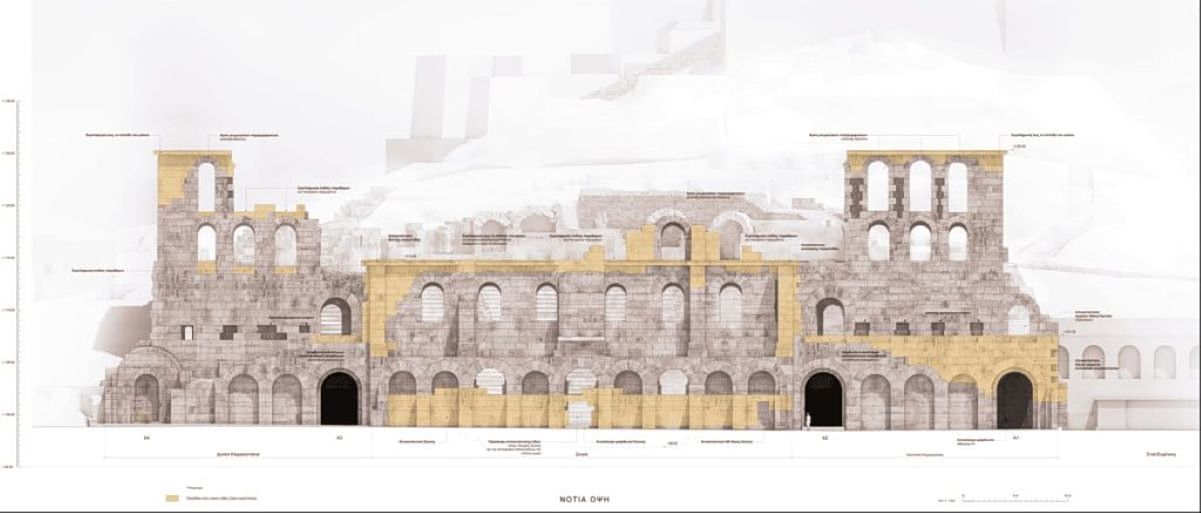
The interdisciplinary study will serve as the foundation for extensive restoration works and a major upgrade of the monument’s infrastructure, with particular care given to integrating the site into the natural landscape and historic fabric of the Acropolis’ southern slope.
Interventions in the Stage Building
At the heart of the architectural proposal are targeted additions to the masonry and the reconstruction of selected sections, aiming to restore the monument’s architectural coherence and improve functionality. Planned interventions focus on the stage building, where the original outline will be reinstated to a height sufficient to highlight the monument’s three-dimensional form and facilitate the installation of temporary stage structures.
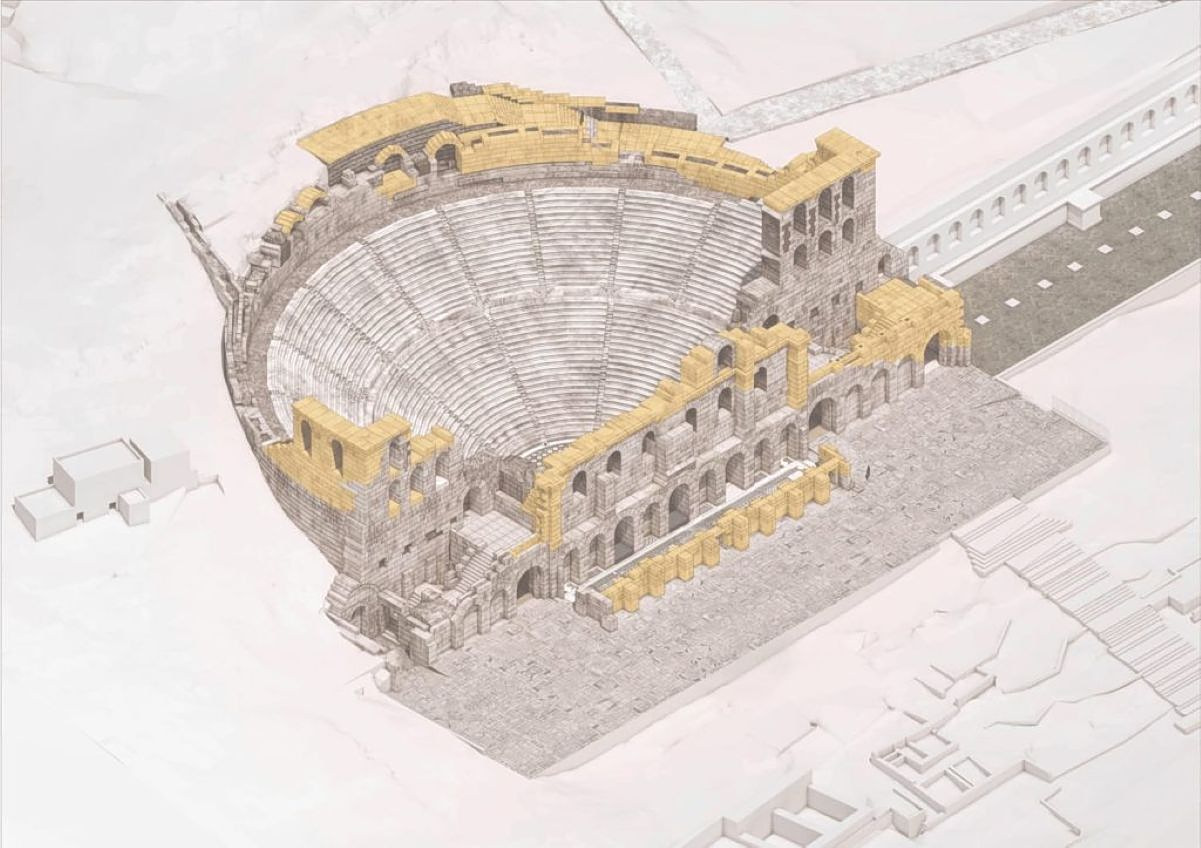
The proscenium will be made fully accessible and safe for visitors, while works will also address the arches of the parodoi (the two, wide side-entrances in ancient Greek theaters). A new central opening is foreseen to better accommodate the operational needs of the Athens Epidaurus Festival. These large-scale interventions are designed both to safeguard the monument and streamline its use.
Mosaic, Lighting and Acoustics
Restoration plans also prioritize the full unveiling of the mosaic floor, which will remain visible to the public outside the festival season. Significant upgrades to sound and lighting systems are scheduled, including the replacement of outdated lighting and the introduction of measures to curb noise and vibrations, after studies showed sound levels exceeding safe limits.
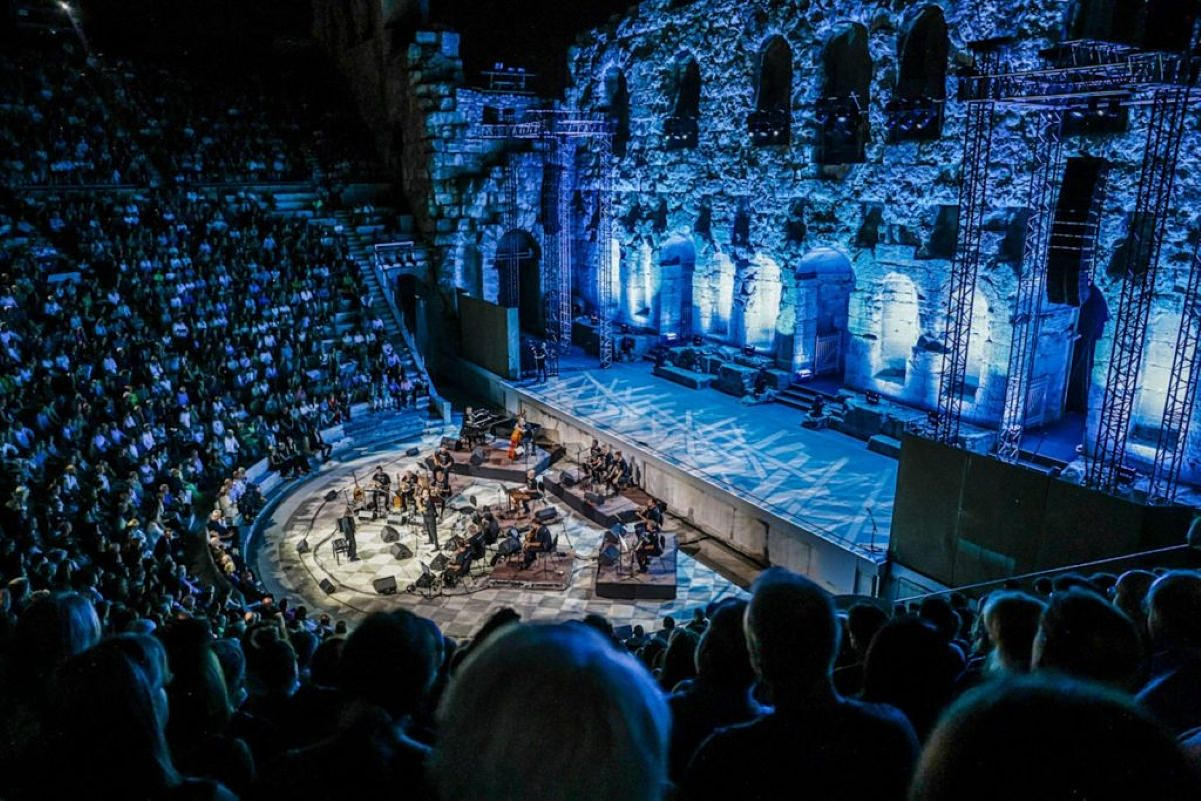
ΗΡΩΔΕΙΟ – @ΘΟΔΩΡΗΣ ΜΑΝΩΛΟΠΟΥΛΟΣ/ΓΡΑΦΕΙΟ ΤΥΠΟΥ ΠΡΟΕΔΡΙΑΣ ΤΗΣ ΔΗΜΟΚΡΑΤΙΑΣ/EUROKINISSI)
According to Culture Minister Lina Mendoni, the project contractor is expected to be installed at the site in July, allowing festival performances to proceed in June.
Built around 161 AD by the wealthy benefactor Herodes Atticus, the 5,000-seat theater remains a masterpiece of Roman architecture—an enduring cultural landmark beneath the Acropolis.