In this interview with TO BHMA International Edition, she explores how true creation demands both destruction and reconstruction, reflecting on her own experiences, the works of iconic artists, and the challenges of fostering authentic expression in a digitally saturated world. From the emptiness of creative blocks to the transformative power of love, Moshidi invites readers to consider creativity not as a luxury, but as a vital necessity of life.
There comes a point, Elena Moshidi says, “when you’re no longer moved by anything around you.” When you experience an “unbearable psychological emptiness” in which “inspiration is nowhere to be found.” When “I did not create, and therefore did not exist.”
This was the point of departure for her book Creativity: From Pan to Eros. A work that is neither dry theory or “self-help”, but a deeply personal and confessional experience. Because for her, “creating” is nothing less than “inner devastation: a shattering followed by reconstruction on new foundations.” A process whose stages include breaking with the past and calling givens into question; “a doing necessarily preceded by an undoing.”
Throughout our conversation, Elena Moshidi keeps circling back to the same word: eros/love. “For me, this divine energy is everywhere,” she says. “Everything begins and ends with love”, whether we’re talking about life or art.
Using personal experiences, but also through an idiosyncratic dialogue with creators who—as she notes—”continue their work in our joint collective unconscious”, she sets out to creep up on creation as something “we all have the potential to embark on.”
In an era in which “information is outpacing us at the speed of light” and “a screen, not an embrace, is now the natural extension of our self,” creativity is being put to the ultimate test. And perhaps that is why her answer is so clear: it takes ‘the courage and honesty to let yourself be broken in order to build something truly creative within yourself’.
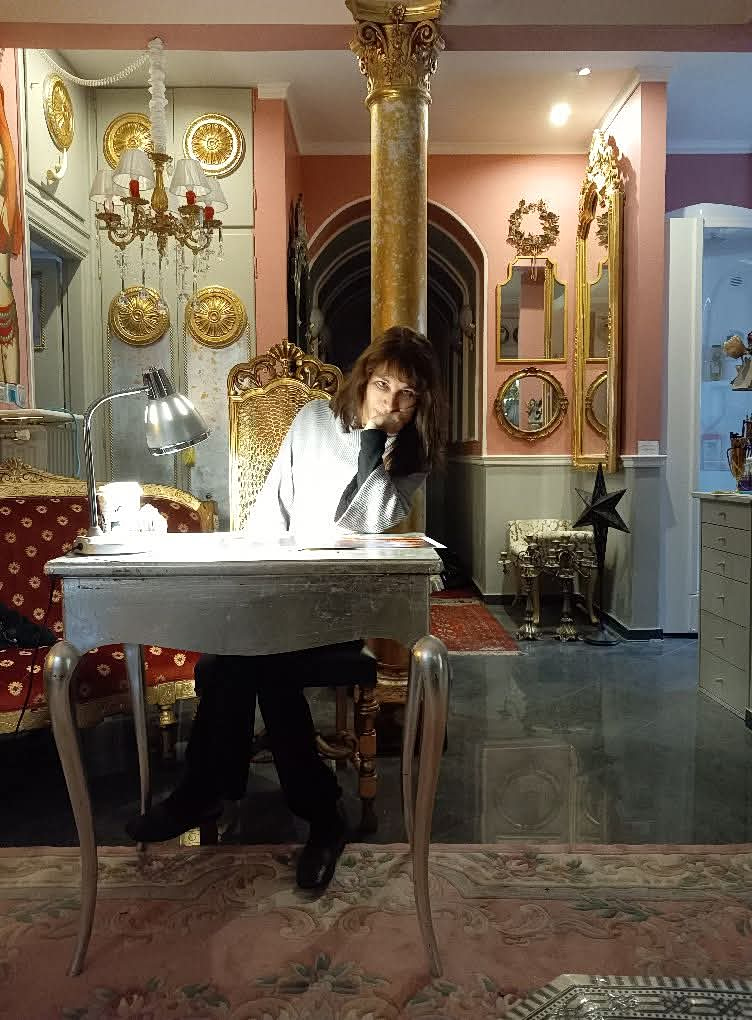
Elena, good evening and thank you very much for granting me this interview. Could you define yourself for us? How would you introduce yourself to a reader who was making your acquaintance for the first time?
I was a profoundly restless and adventurous person, with a powerful need to encounter the world. In particular, a world very few of my colleagues in Greece were engaging with in their research: The violation of human rights. Socio-political deadlocks. Luminaries of art and letters, of politics. People with addictions and passions. I spent hours on end, often days, striving to capture their stories and everyday lives on paper. I was forever on the road as a foreign correspondent, sending back copy from the Middle East and Turkey in the main, but from many other countries, too. The first step toward making my dream reality came with Epsilon magazine, an Eleftherotypia Sunday supplement. That taught me so much and gave me everything I needed to do my job as I saw fit. I always worked as a freelancer. It was a way of life for me and an inviolable rule, because there is always an element of inspiration and solitude in my freedom, my subject-matter, and my way of working. Collaborations followed with other Sunday supplements, including Kappa (Kathimerini) and BHMAgazino (To Vima), in which I continued to pursue similar themes. But I remember how very sad I’d feel when, on a Sunday evening, articles I’d sweat over for weeks would be “deleted” after being “live” for just 24 hours. In 2008, by which time I was working exclusively with Kapa, I set off to Thrace with my collaborator the photographer Pepi Looulakaki to work on an album dealing with the minorities there. I’d decided to try and turn my research into something more permanent: a book. I needed time, space and—of course—something new in my work. The book, Muslim Thrace: a world so near yet distant, was published by Kastaniotis in 2010 when we had completed our research. And that brought my Sunday supplements era to an end. I had moved on and no longer needed the perpetual adrenaline rush or escape offered by my daily routine. My existential searchings, coupled with a new perspective on research, led me to a deeply personal style in which I moved away from academic discourse toward a more experiential, embodied narrative that conveys an essay’s essence as vividly as possible. After that, I spent five years researching the history of prostitution and contemporary reports on the subject for a book including visual contributions by the artist Elena Navrozidou: the essay My Dear Bordello, the “slave girls of the sanctuary” was published by Jemma Press in 2020. The following year, I started work on my essay on the act of creation. Creativity: From Pan to Eros was published in 2025 by Kontyli Publications.
Your book “Creativity: From Pan to Eros” explores creativity as a profound inner process. What does “creating” mean to you?
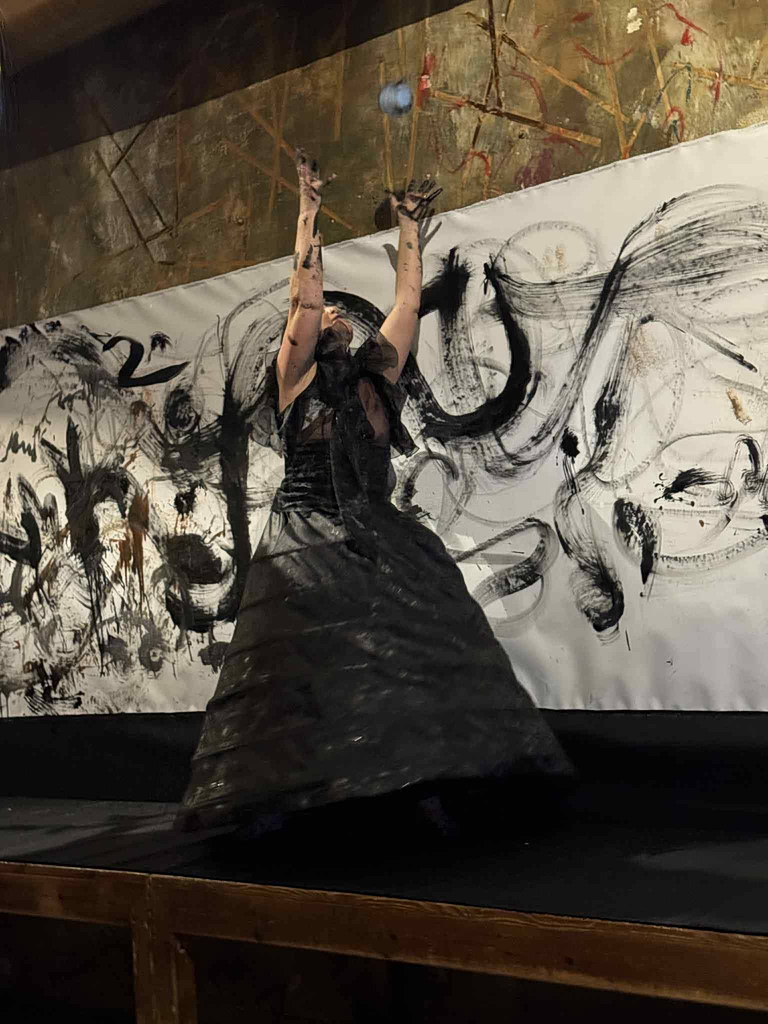
Creating, for me, means inner destruction: a shattering followed by reconstruction on new foundations. Because, as I write in the book: “And how can we understand who we are unless we are first destroyed… We wish to see our thoughts and reflections reduced to fragments. To shatter our traumas into fragments. To shatter everything we know to provide space for improvisation and the act of creation.
Why did you choose the symbolism of “from Pan to Eros”? What does this path represent?
“Pan is associated with creativity; he is an archetype of the procreative urge. His exuberant, untamed energy. His adoration of music. Of nature. This is how I see the act of creation; and it goes without saying that Eros is born and bred of that same process. I consider the book highly erotic.
Was there a particular moment or experience that served as a springboard for this work?
Yes. Of course. When My Dear Bordello was published, I suffered an unbearable psychological emptiness which I found very hard to handle. Inspiration was nowhere to be found. I was hard on my self, demanding that it bring forth a new idea right there, right then. But inspiration was nowhere to be found; truth be told, I felt dead inside. I did not create, and therefore did not exist. I discussed my situation with a very good friend, Nikos Laliotis, who helped me out of my impasse by saying it was something I had to work at. Meaning creativity itself. And so I embarked on a new adventure, which would last for four years. I originally wrote a long book, but my commercial head and my reader’s instincts told me it needed to be more concise—so I hardened my heart and removed half the material before submitting it to the publisher.
What moves you most today as a creator?
Love! For me this divine energy is everywhere. Everything begins and ends with love, which is the greatest driving force in my life. It is for everyone, though we each experience it in our own way. I look for love everywhere and in all things. Not necessarily in a person. A creator also feels love as they birth and build a work, which could have been inspired by nature or anything else that moves them. So I look for emotion in an idea, or during the writing process, or when I’m cooking. When I’m walking. When I take someone in my arms.
Let’s delve a little deeper. To what extent do you think your book is personal and to what extent philosophical?
The book is an essay. It’s personal, of course, since it was born out of a creative block which I myself experienced, but it is still an essay, crafted in line with the principles and rules of the genre. Still, the writing is different from that of classical essays. I engage with titans of the arts and letters. I bring them to life while conveying all the information a book of this sort should provide for reader through our conversations. Yes, it’s philosophy and sociology, while some people consider it a self-help book.
You argue that society and education often suppress authentic expression. In an era as frenetic and digitally saturated as our own, is there still a role for creativity, literature, and the arts?
I believe that the child of today, like children throughout history, suffers a fundamental repression of their independence, autonomy, and freedom as an individual at the hands of the educational system and the parental environment. Let’s not kid ourselves that this is no longer the case. Because if our children weren’t still repressed, our world would be completely different and we wouldn’t be spending half our lives in therapy discovering what has always been within us—that part of the self with which a child communicates naturally and with ease. Now, in an era in which virtual reality is leading the way and information is outpacing us at the speed of light, in which a screen not an embrace is now the natural extension of our self, I feel the end result is a mass numbing of our emotions and our empathy. Increasingly, we seek to avoid pain at all costs. To strive and struggle bloodlessly. Even in love. The South Korean philosopher Byung-Chul Han puts it clearly. Erotic desire died long ago. Who today would argue that we should set aside our sense of self in order to devote oneself to another self? Who is willing to give their life? Love, as the highest form of fulfillment, passes through death; by dying within the other, one is reborn into oneself. Contemporary man perceives himself in more illusory and mediated terms—through consumer goods and media images which suppress our imagination with their density, till it withers away. And, since literature and art are born of upheavals in the imagination—which is to say from the disappearance of the other, or to be more precise, from the death throes of love— we have been stagnating spiritually and intellectually for years. Literature is a dead zone, despite a plethora of publications, and the new media are to blame. They are admirable, but they make a terrible din. And everyone is obsessed with leaving their mark and being heard. Being recognized. Having people talk about them. It goes without saying that all those things are entirely unrelated to art and creativity.
Is creativity a privilege or a need? And if it is a need, why do we so often ignore it?
Creativity is essential if we are to have balance. If its energy is blocked for some reason, it can have a devastating impact on our life. Repressed creativity can manifest as violence, for instance, when it cannot find a way to express itself in the way we desire. It is not a privilege of artists; it is something we all have the potential to embark on. It’s just that artists feel the construction more intensely and seek expression directly.
In your book you “converse” with figures including Charles Bukowski, Oscar Wilde, Johann Sebastian Bach and Rainer Maria Rilke. What attracts you to these creators?
Apart from the fact that I love them and they inspire me, some of them continue their work in our joint collective unconscious; that’s why I used them.
If you could ask one of them a question, what would it be?
I’ve asked them a good many things in the book.
You also write that the act of creation can turn pain into “diamonds of the soul”. Is pain necessary to create?
Most of the time, yes. How can one grow as a person if you don’t first find yourself in an impasse? ‘Creation is evolution, is it not?’
What’s next? Are you working on something new?
This year, Elena Navrozidou and I completed a graphic novel based on an idea and a scenario of hers and texts of mine. We aim to publish it abroad. I’m also starting out on a new essay, on violence.
If your book were a word, what would it be?
Life.
What would you like the reader to take away from the book when they close it?
The courage and honesty to let themselves be broken in order to build something truly creative within.