Greece’s retail sector closed the 2025 Christmas season on a weaker note than hoped, as sales failed to reach the roughly €4.5 billion that businesses and trade bodies had been expecting – a figure that was meant to slightly exceed last year’s performance.
The shortfall came despite a noticeable pickup in activity from mid-December onward, when private-sector employees began receiving their legally mandated Christmas bonus, a 13th-month-style payment that often fuels holiday shopping. That cash injection helped lift demand, especially for clothing, footwear, cosmetics and gifts, but it was not enough to reverse the broader slowdown in consumer spending.
More than half of retailers saw lower sales
According to a nationwide survey by the Institute of the Hellenic Confederation of Commerce & Entrepreneurship (ESEE), the main umbrella body for Greek retailers, 52% of businesses reported lower holiday sales compared with last year. About 32% said sales were roughly unchanged, while only a minority recorded growth.
Among those that saw a drop, nearly half (46%) reported declines of up to 10%, while one in three (34%) said their turnover fell by 11% to 20%. Overall, four in 10 businesses (42%) experienced a sales decline of up to 20% during what is traditionally the most important period of the year.
Food retailers performed noticeably better than other sectors, highlighting how Greek consumers prioritized essentials over discretionary spending during the holidays.
Store traffic painted a similarly mixed picture. Four in 10 businesses (41%) said they were moderately satisfied with customer visits, while a significant 33% were little or not at all satisfied.
In a shift from older patterns, when shopping activity typically peaked in the days leading up to Christmas, this year 40% of retailers said their busiest period was between Christmas and New Year’s, a trend also seen last year, reflecting more cautious, last-minute consumer behavior.
Retailers themselves had gone into the season with muted expectations. More than four in 10 businesses (43%) ordered the same volume of goods from suppliers as last year, while 30% stocked less, signaling widespread caution even before the holidays began.
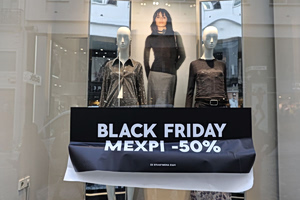
Shrinking real disposable incomes, higher operating costs and ongoing economic uncertainty pushed many retailers into offering promotions. Four in 10 businesses (42%) ran discounts during the festive period, and nearly half of those that cut prices did so by 11% to 20%.
Shoppers, for their part, split their spending almost evenly between higher-priced and cheaper products, with 48% favoring more expensive items and 49% opting for budget choices.
The survey also highlighted how much Greece’s retail landscape has changed since the COVID-19 pandemic. Just 13% of businesses said most of their transactions were made in cash, underlining the rapid shift toward cards and digital payments across the country.
A gloomy outlook for 2026
Looking beyond the holidays, the mood among retailers remains subdued. For the whole of 2025, 49% of businesses estimate their sales declined, compared with just 15% that believe they improved.
Expectations for the winter sales season of 2026 are equally cautious: 47% of retailers expect low sales, while 35% foresee only moderate performance.
Their list of challenges is long and familiar: rising operating costs, heavy financial obligations, weaker consumer spending, higher supplier prices and the difficulty of managing price increases. Adding to the pressure is growing competition from large foreign e-commerce platforms, which many Greek retailers say undercut local businesses.
The strain is already showing in company finances. One in three retail businesses has not been able to fully meet its tax and social security obligations.
Stavros Kafounis, president of ESEE, warned that the disappointing holiday season failed to make up for losses earlier in the year and has compounded existing problems.
“Lower sales and restrained foot traffic marked the holiday season,” he said, adding that merchants are also pessimistic about the months ahead. With investment and hiring being postponed, Kafounis cautioned that without targeted measures to improve access to financing and ease tax and social security burdens, “2026 will test the endurance of thousands of commercial enterprises.”