Greek industry leaders are pushing back against the government’s latest €300 million support package, warning that its insufficient and doesn’t tackle the long-standing structural problems that have plagued the sector.
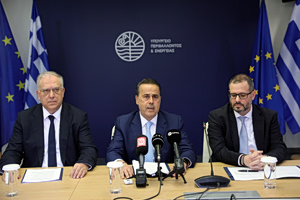
The measures, which were unveiled on Monday April 6, after six months of negotiations with the European Commission, are aimed, according to the government, at easing the burden of high electricity prices. But employers and industry associations call the package announced a temporary fix, which doesn’t address Greece’s lagging industrial competitiveness.
“The problem is not solved”
“The problem is that, as we all know, Greece pays higher energy costs for industry than many countries in the EU,” said Spyros Theodoropoulos, president of the Hellenic Federation of Enterprises (SEV), the country’s leading business group.
“If I had to give an answer to the question whether the measures announced solve the problem, I would say that they certainly do not,” he underlined. “They are steps in the right direction, but their significance and impact will differ from industry to industry.” The comments reflect broader concerns that Greece’s industrial sector remains burdened by persistently high electricity prices compared with European peers.
Limited scope of support
Antonios Kontoleon, president of the Hellenic Union of Industrial Consumers of Energy Consumers (EVIKEN), criticized the focus of the measures.
“We see that the measures mainly strengthen an existing mechanism — carbon cost compensation — which has been in place since 2013 and does not cover all energy-intensive industries,” he said.
He added that the effectiveness of the scheme depends on future allocations from emissions revenues, noting that only a fraction of available funds has been distributed in recent years.
On another key measure, namely the reduction in public service obligation charges, Kontoleon said it falls short for most businesses.
“Clearly, the reduction is not sufficient to offset rising energy costs for industries that are not subsidized by the compensation mechanism, which make up the majority,” he said.
Manufacturing still lags in Europe
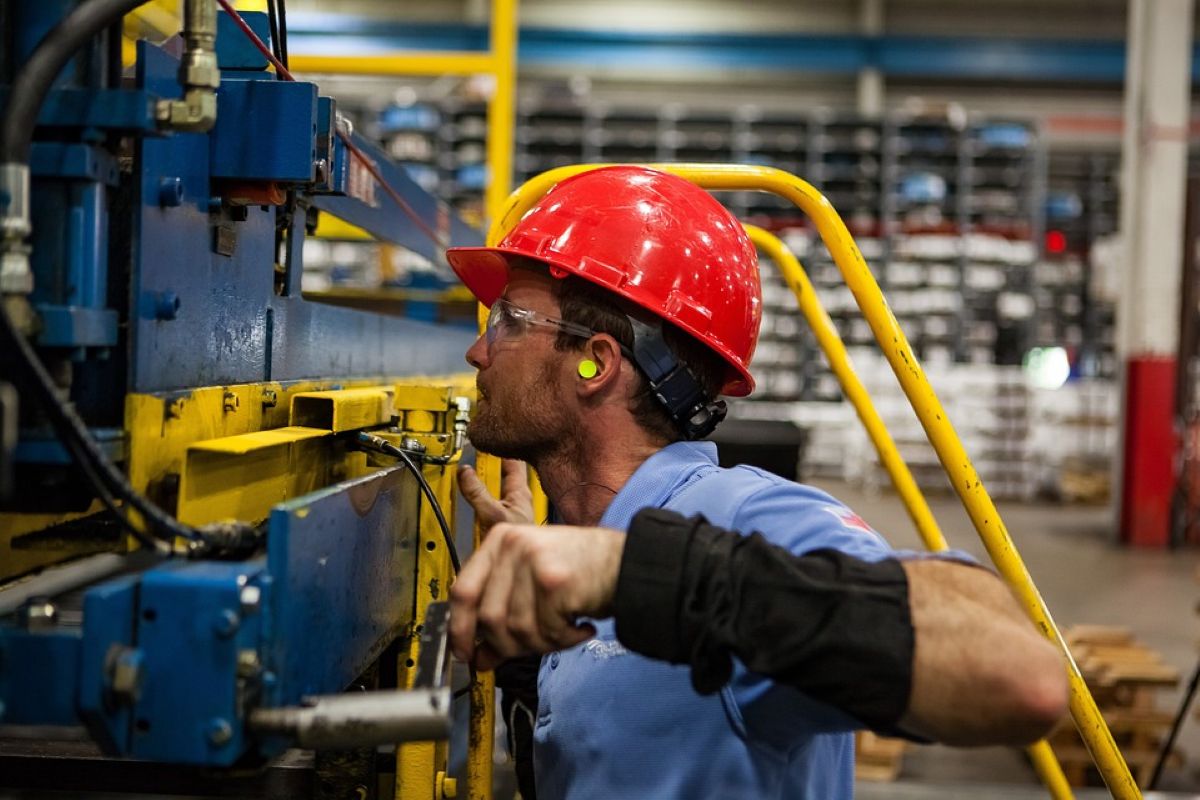
The debate comes as Greece’s manufacturing sector, while growing, continues to trail most of the European Union.
Data presented by industry representatives show Greece ranked fourth from the bottom among the EU’s 27 member states in both 2019 and 2024 in terms of manufacturing’s contribution to GDP.
The sector’s gross value added rose to 9.1% of GDP in 2024 from 7.8% in 2019. Still, Greece outperforms only Malta, Cyprus and Luxembourg.
Even with recent gains, manufacturing’s share of the economy has only just returned to levels last seen around 2005.
Export performance also remains weak relative to peers. Countries of similar size, such as Portugal, Sweden and Denmark, export roughly twice as much as a share of GDP, while Austria and Bulgaria export nearly three times as much.
Greece pays more for power
Energy costs remain a central constraint.
According to Eurostat data cited in a recent economic bulletin, Greek industry paid significantly higher electricity prices than the EU average in the first half of 2025.
For non-household consumers with annual consumption between 20,000 and 70,000 megawatt-hours, prices stood at €0.1614 per kilowatt-hour in Greece, compared with €0.1382 in the EU.
For higher consumption levels, between 70,000 and 150,000 megawatt-hours, prices were €0.1533 per kilowatt-hour in Greece versus €0.1240 across the bloc.
Calls for long-term reforms
Industry groups say the current measures do not reflect the scale of the burden already borne by businesses and are calling for a broader strategy.
Loukia Saranti, president of the Federation of Industries of Greece (SVE), said longer-term action is needed.
“The measures are in the right direction and are clearly preferable to no intervention,” she said. “However, they do not reflect the magnitude of the burden already borne by industry, nor do they solve the long-standing problems.”
“In today’s energy and geopolitical environment, the country urgently needs a strategy that accelerates structural interventions and restores the competitiveness of our production,” she added.