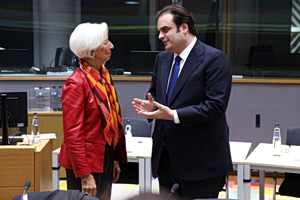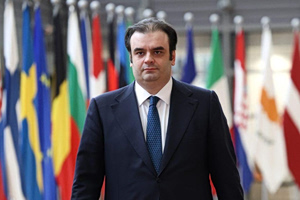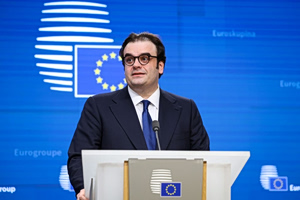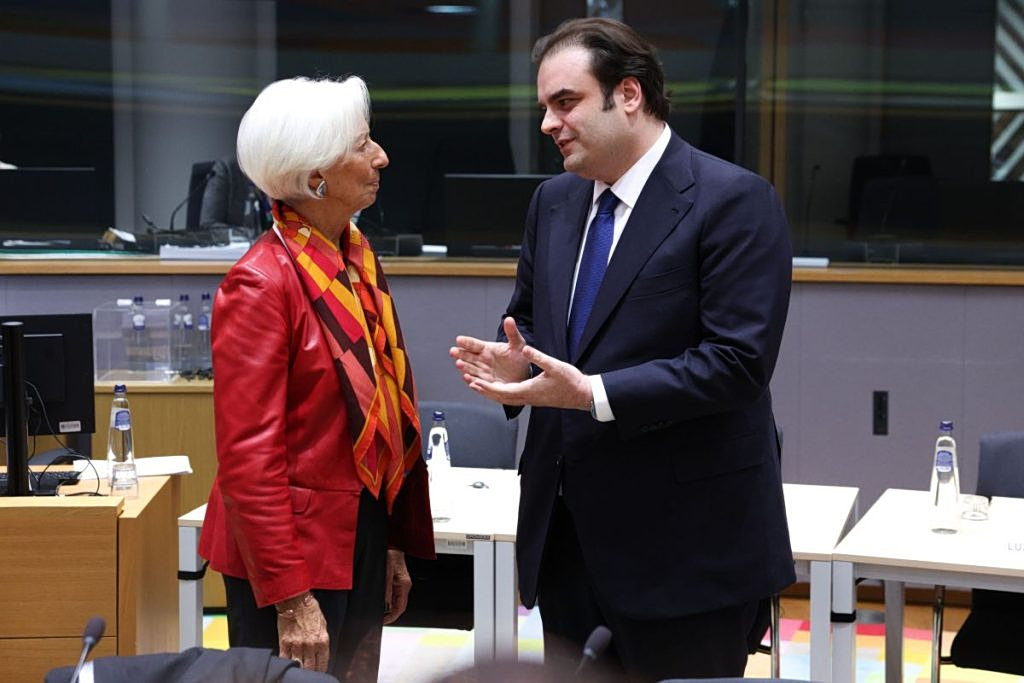
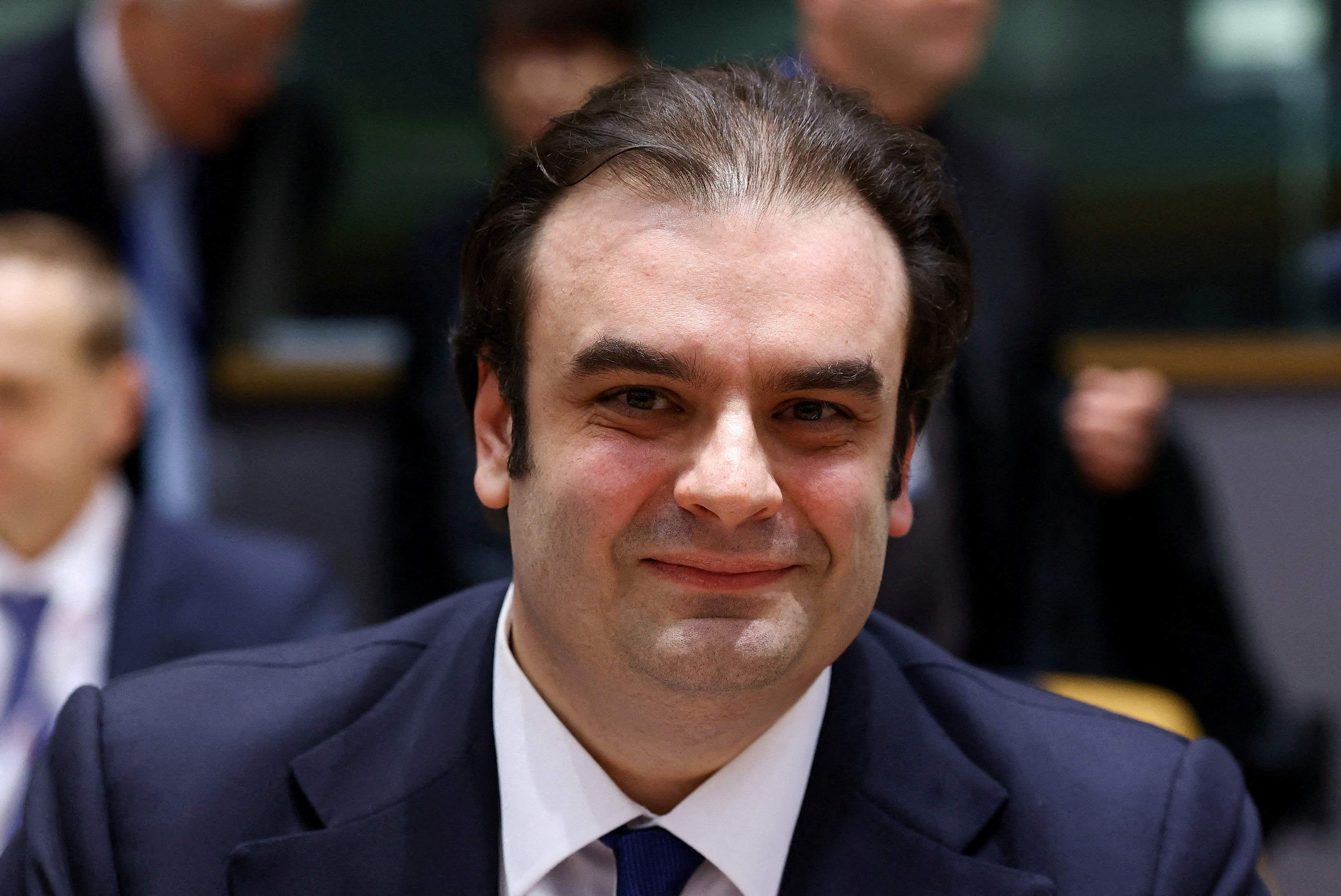
The duration of the current geopolitical crisis will determine how deeply it affects the global economy, Greece’s finance minister and Eurogroup President Kyriakos Pierrakakis said during a speech at the European Investment Bank (EIB) Forum, warning that Europe has entered what he called a “post-geopolitical innocence” era.
Speaking as tensions in the Middle East escalate, Pierrakakis said the conflict’s economic consequences will intensify the longer uncertainty persists.
“The full scale of the impact will depend on the duration of the crisis,” he said. “That is where the real effects on shipping, supply chains and investor confidence will become evident. The longer uncertainty persists, the wider the economic footprint.”
The Middle East sits at the center of global energy flows and key trade corridors, he noted, meaning instability there quickly reverberates across international markets through rising energy prices, higher transport costs and increased insurance premiums.
‘The Era of Geopolitical Innocence Is Over’
Pierrakakis warned that Europe can no longer treat geopolitical stability as a given.
“The era of geopolitical innocence is over,” he said, arguing that European sovereignty is now essential for economic survival and institutional strength.
According to the Eurogroup president, Europe must be able to absorb external shocks, safeguard energy security, protect its industrial base and respond collectively and decisively during crises.
He stressed that policymakers must act with urgency.
“In times of crisis, time is never a neutral variable,” Pierrakakis said, adding that Europe must move quickly and in coordination to protect its economic resilience.
Europe’s Competitiveness Challenge
Despite demonstrating resilience through financial turmoil, the sovereign debt crisis, the COVID-19 pandemic and the energy shock triggered by global tensions, Pierrakakis said resilience alone cannot sustain economic growth.
“Resilience is not a growth strategy,” he said.
Europe now faces a structural competitiveness problem, he argued, pointing to lagging productivity growth and a widening economic gap with the United States over the past two decades.
At the same time, demographic trends are becoming a major economic constraint. Europe’s workforce could shrink by nearly 2 million people annually by 2040, he said.
“This changes the equation,” Pierrakakis noted. “Growth can no longer rely on expanding labor supply. It must come from higher productivity.”
Europe’s Untapped Savings
A central challenge, Pierrakakis said, is that Europe saves heavily but fails to channel those funds efficiently into innovation and business growth.
Europeans save about €1.4 trillion each year, but too much of that capital remains in low-yield deposits rather than being invested in new technologies or expanding companies.
Meanwhile, Europe invests significantly less in research and development and venture capital compared with the United States.
“Europe does not lack ideas. It does not lack talent. It does not lack savings,” he said. “What it lacks is the scale and the channels to turn savings into innovation.”
The Role of the European Investment Bank
Pierrakakis highlighted the role of the EIB Group, including the European Investment Fund, in bridging that gap.
He described the institutions as key drivers of investment that can reduce risks for private investors, help projects become bankable and attract private capital into strategic sectors.
“If Europe wants to compete, we need more projects that are investable, more markets that are investable, and more pathways for private capital to follow public de-risking,” he said.
Digital Finance as a Strategic Opportunity
A major focus of Pierrakakis’ remarks was the transformation of financial markets through digital technologies.
Digital finance, he said, is not simply an incremental upgrade but a structural shift in how capital is raised, allocated and supervised.
Technologies such as distributed ledger systems and tokenization could lower costs, speed up cross-border payments and expand access to investment — particularly for small and medium-sized enterprises.
If implemented within a coordinated European framework, digital finance could connect savers with innovators and deepen cross-border capital markets.
“The transformation will happen,” Pierrakakis said. “The real question is whether Europe shapes it or adapts to frameworks designed elsewhere.”
Balancing Innovation With Stability
However, Pierrakakis warned that financial innovation also brings risks, including market fragmentation, volatility and cybersecurity threats.
He pointed to Europe’s regulatory framework for crypto assets, known as MiCAR, as an example of how smart regulation can build trust while allowing innovation to grow.
He also highlighted the strategic importance of the proposed digital euro, which would ensure that central bank money remains available in the digital age while strengthening Europe’s monetary sovereignty and payment systems.
If the legislative framework is approved in 2026, a pilot program could follow in 2027, with a potential rollout around 2029.
A Strategic Choice for Europe
Pierrakakis concluded that Europe must move beyond crisis management and focus on building the foundations of long-term prosperity.
Success, he said, would mean a Europe where savings fund innovation, businesses can scale across borders easily and technology strengthens — rather than undermines — financial stability.
“If we get this right,” he said, “digital finance will deepen capital markets, enable seamless cross-border investment and fund innovation at scale.”
And institutions such as the EIB Group, he added, will remain central — not only as lenders, but as builders of Europe’s economic capacity.
Source: ot.gr, EIB