
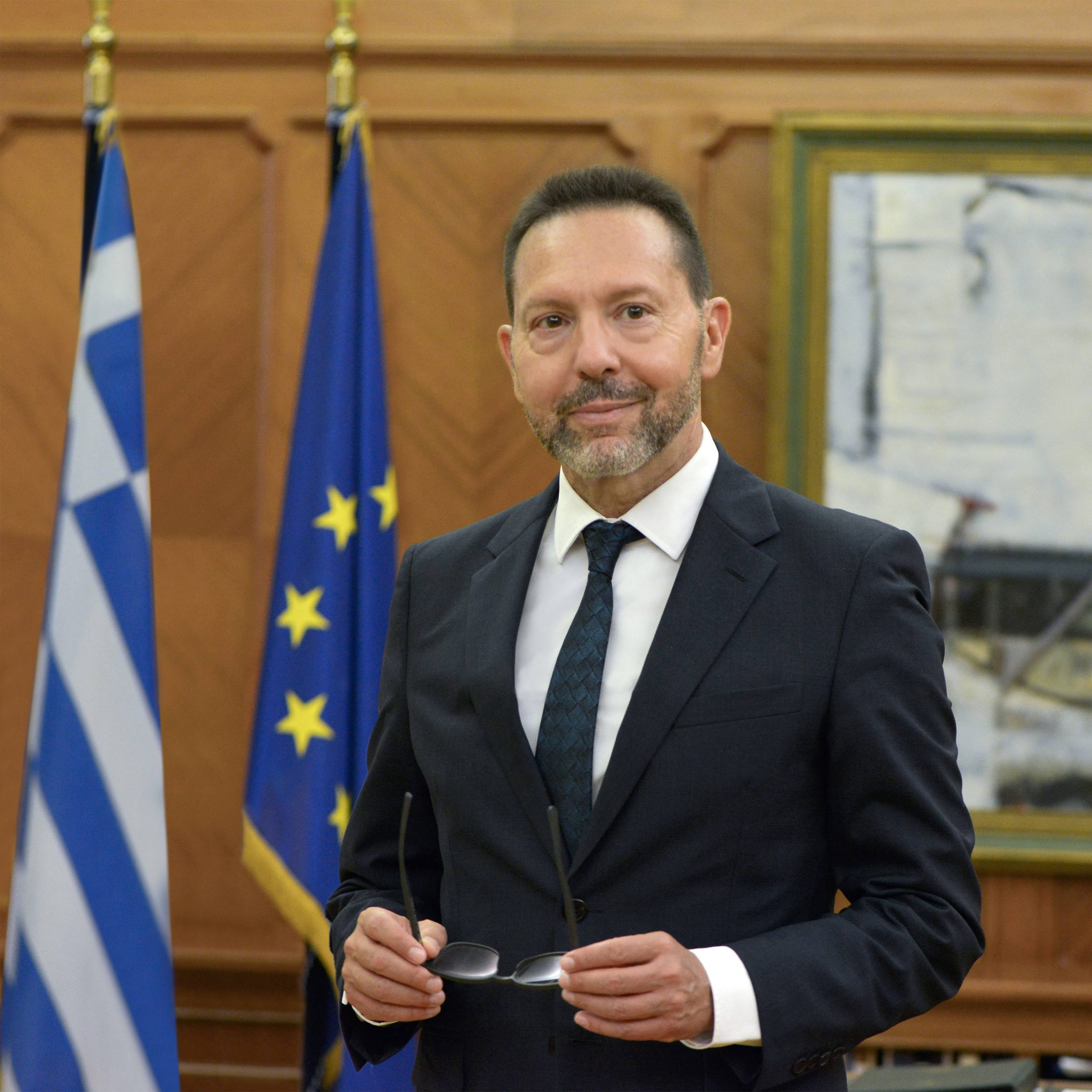
Yannis Stournaras, governor of the Bank of Greece, said provisions have been made to ensure that Greece’s financial stability will not be affected by a recent ruling of Greece’s supreme civil and criminal court, known as Areios Pagos, on loan interest linked to Law 3869 / 2010 (the so-called Katseli Law).
Speaking on public radio, Stournaras said the central bank is awaiting the official publication of the court’s full reasoning, noting that “details play an important role.”
“I want to believe that all necessary provisions have been taken so that the country’s financial stability is not affected,” he said.
Supreme Court Ruling on the Katseli Law
The ruling was issued by the plenary session of Areios Pagos on February 5, and sided with borrowers.
By a wide majority, the court decided that interest on loans included under Law 3869/2010 (Katseli Law) must be calculated based on the monthly installment amount rather than on the total outstanding loan amount.
The decision affects approximately 350,000 borrowers. As a result, their loan installments are expected to be significantly reduced, in some cases becoming almost interest-free.
Stournaras did not comment on the substance of the ruling but emphasized that the Bank of Greece is closely monitoring developments.
Swiss Franc Loan Regulations
Addressing separate regulations concerning loans denominated in Swiss francs, Stournaras said he believes the government has done “the best possible” for borrowers while also protecting financial stability.
“In any case, the Bank of Greece is here precisely to provide technical assistance on these matters,” he said.
Political Stability as “Intangible Capital”
Responding to a question about whether the political climate could affect the economy, Stournaras described political stability as perhaps the country’s most important “intangible capital.”
“In an international environment shaken by geopolitical instability, tariffs and trade wars, political stability is a prerequisite for everything else,” he said.
He added that he cannot imagine this stability being called into question, describing it as an achievement that helped Greece emerge from crisis under extremely difficult conditions.
Gradual Improvement in Social Inequality
On social inequality, Stournaras acknowledged that it remains one of Greece’s most significant challenges. However, he said the country is making progress.
“Every year social inequalities are improving,” he said, noting that the Bank of Greece monitors such data. “We are doing better. This is something we must never forget, just as we must not forget where we were 10 years ago.”