 Μake us preferred on Google
 The undersea cable meant to connect the electricity grids of Greece and Cyprus has cleared a major financial hurdle, but a cluster of technical, financial and diplomatic questions still need to be resolved before construction can move into its next phase.
The project, known as the Great Sea Interconnector (GSI), gained fresh momentum after French investment group Meridiam agreed to take a majority stake in the company developing the Greece-Cyprus leg, an agreement that built on the alliance between Athens and Paris forged after French President Emmanuel Macron’s visit to Athens last April.
The next step: mapping the seabed
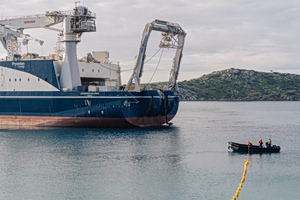
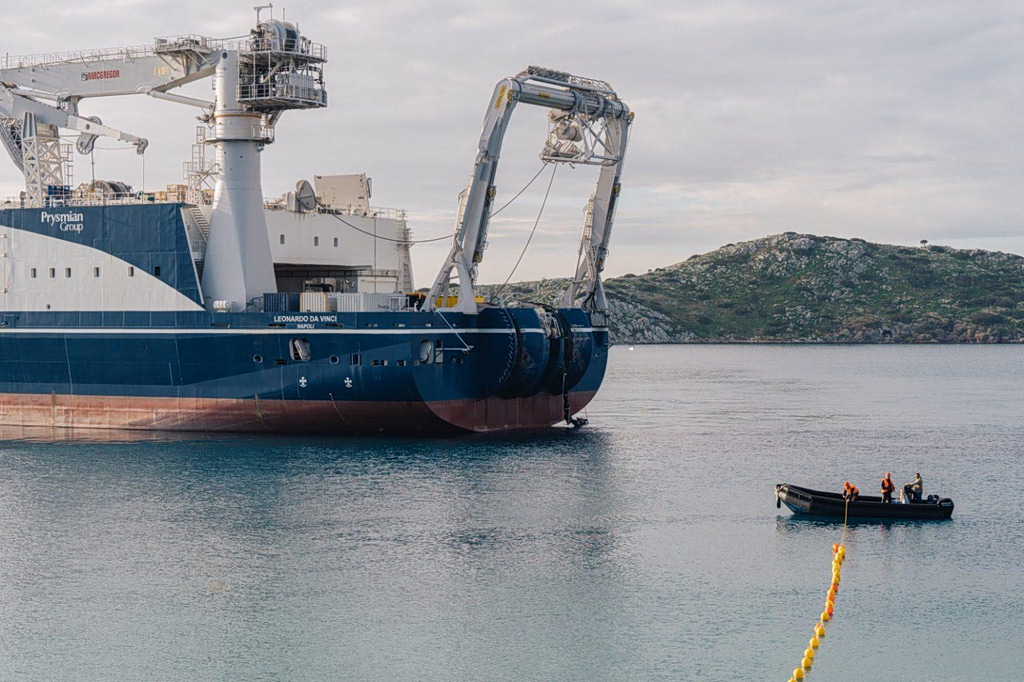
With the financing question largely settled, attention is turning to the physical work of building the cable. The next critical step is a set of seabed surveys to identify the best route between Crete and Cyprus, work that requires a specialized research vessel and a formal navigational notice, known as a NAVTEX, that Athens plans to request from the Hellenic Navy. A NAVTEX is an internationally recognized maritime safety notice that alerts other vessels operating in a given area, a routine but necessary step before survey ships can begin work in contested or sensitive waters.
Financial and political backing already in place
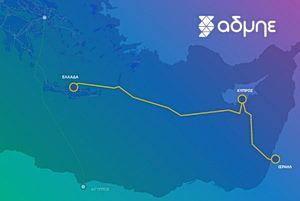
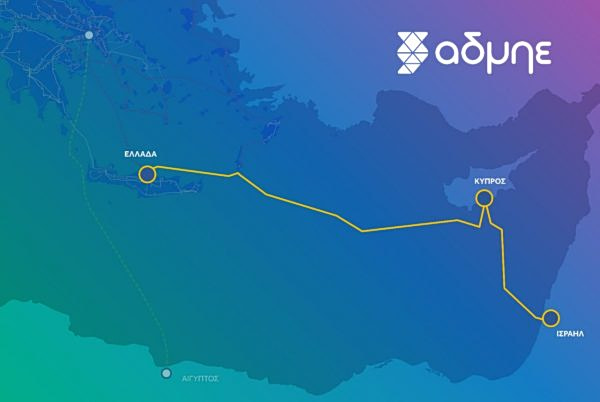
The project has assembled significant financial and diplomatic support. The European Union has already disbursed a 657 million euro subsidy for the interconnector, and the European Investment Bank has approved a financing request for the project, whose total budget is close to 2 billion euros. Meridiam’s entry into the consortium’s share capital brought in a French firm with close ties to the Élysée Palace, the official residence of the French president, while the contract to build the 898 kilometer cable connecting Crete and Cyprus has gone to another French company, Nexans. The U.S. State Department has also weighed in, expressing support in a recent statement for energy security in the Eastern Mediterranean.
What Nicosia still needs to resolve
Despite that backing, the project cannot advance to its next implementation steps until Cyprus resolves a set of outstanding issues on its end. According to sources familiar with the matter, Cypriot authorities need to recover roughly 50 million euros in costs from consumers, covering the two years the interconnection project has already been in development, and to clear a number of pending regulatory matters. Other parties involved in the project are said to be waiting on Nicosia to complete these steps before the next phase can begin.
The Turkish factor
Looming over all of this is a bigger question: how Turkey will respond once the IPTO-Nexans-GSI consortium, which has already signed a contract for the surveys, formally requests the NAVTEX needed to begin seabed work. Two years ago, Turkey obstructed seabed surveys being carried out near the Greek island of Kasos, a small island in the Dodecanese near Crete, by an Italian research vessel, and the surveys were halted. The Greece-Cyprus cable project has effectively been stalled ever since.
Survey work has already been completed within Greek territorial waters, which extend six nautical miles from shore, and within Cyprus’s 12 nautical mile territorial waters. What remains outstanding are the surveys in international waters east of Kasos and in the waters west of Cyprus, the stretches where the earlier dispute with Turkey arose.
A diplomatic push to restart the surveys
According to a report by the Cypriot news outlet Philenews, phone consultations are underway between Cypriot President Nikos Christodoulides, Greek Prime Minister Kyriakos Mitsotakis and Macron aimed at restarting the bathymetric surveys, the depth and seabed mapping work needed to plan the undersea route between Crete and Cyprus. Sources say there is a push to assign that survey work to a French company specifically, a move meant to secure full French backing for the project going forward.
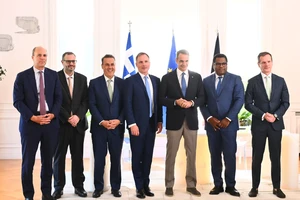
On the question of how Ankara might react, diplomatic sources point to a recent signal: Turkey’s publication of plans for two marine protected areas, one in the North Aegean and another in the Eastern Mediterranean, decisions that came just days after Greece and Cyprus signed the Meridiam contracts on August 5 at the Maximos Mansion, the Greek prime minister’s official offices in Athens. The same sources say the Eastern Mediterranean marine park, as currently planned, does not overlap with the cable’s intended route.
What to watch for
For now, all sides are watching the same set of milestones. Officials expect the bureaucratic steps finalizing Meridiam’s entry into the project, the completion of the outstanding seabed surveys by IPTO, Nexans and GSI, and the resolution of Nicosia’s pending issues to all wrap up by September. If that timeline holds, and barring any new setbacks, the NAVTEX needed to formally restart survey work could follow soon after.