
 Μake us preferred on Google
 Greece’s Recovery and Resilience Facility has completed its implementation, with Minister of State Akis Skertsos highlighting figures he said demonstrate how the program has affected the daily lives of citizens.
In a post marking the completion of the program, Skertsos listed examples from hundreds of projects and reforms implemented through the fund. The implementation of the milestones and targets linked to Greece’s final funding request was completed on August 31, according to an announcement from the Ministry of National Economy and Finance.
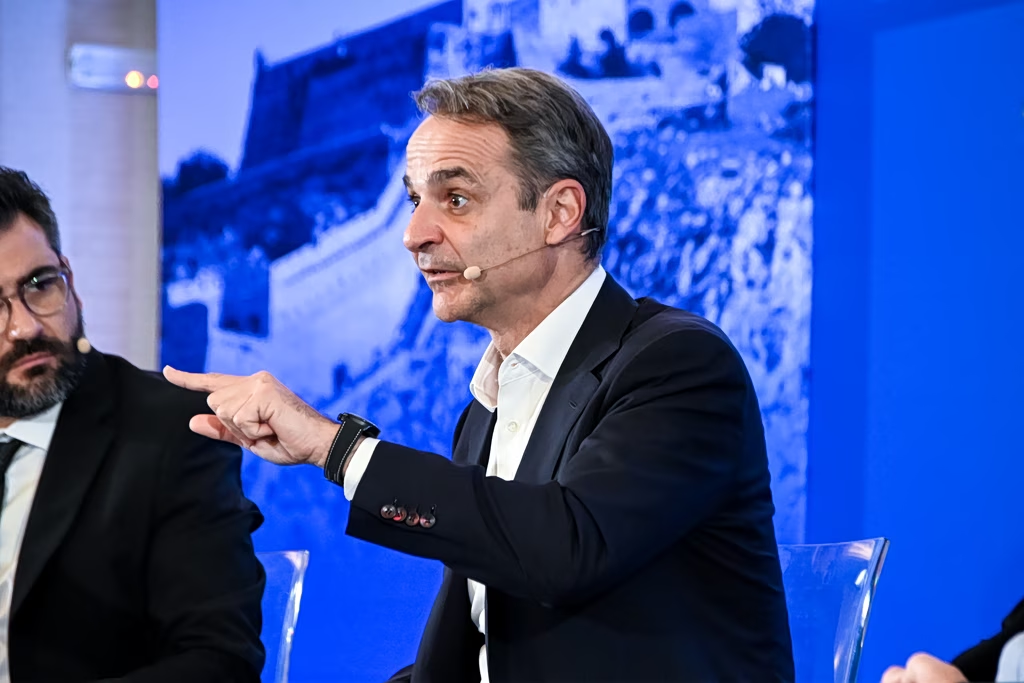
“The Recovery Fund is successfully completed on time. Its impact has already changed the lives of all Greeks,” Skertsos said, presenting a series of figures on services and programs.
Digital government and health care
According to the figures presented by Skertsos, 9 million people now use gov.gr, Greece’s online government services portal.
In health care:
- 7 million people underwent free preventive medical screenings, with more than 300,000 referred for further testing and treatment.
- 5.2 million people have registered with a free personal doctor.
- 165,000 children have a free personal pediatrician.
- 1.2 million insured people use the digital health record.
The national preventive screening program, which was funded through the Recovery and Resilience Facility during its current cycle, has also continued into a new phase following the completion of the fund’s projects.
Work, education and housing
Skertsos also highlighted measures affecting employment and education.
Some 2.5 million workers are covered by the digital employment card, while more than 7.5 million overtime hours have been recorded and paid through the system.
Meanwhile, 410,000 students are using a free digital tutoring program.
In housing, 23,000 households have acquired their first home through the “My Home 1 & 2” programs.
The figures also include 20,000 people who underwent surgery through free afternoon surgical procedures and 1,812 people with disabilities who received a personal assistant.
Services in remote areas
The government minister also pointed to initiatives aimed at people living in mountainous and island areas.
Mobile health units provided examinations to 25,500 residents of these areas.
In addition, 99% of Greece now has cadastral information posted online, according to the figures cited by Skertsos.
“The Greek public administration, when it wants to, can set ambitious goals and achieve them,” Skertsos said.