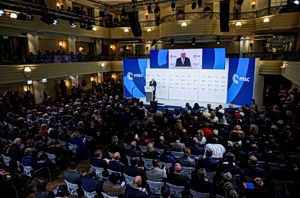
This year, Donald Trump left his most confrontational surrogate off the stage. Instead of dispatching the administration’s habitual provocateur – known for wielding the rhetorical sledgehammer with little regard for diplomatic fallout – the president sent his secretary of state to what is arguably the year’s most consequential security conference.
Europeans had reason to brace themselves. Their memories are still fresh. Only weeks into the new administration, Vice President J.D. Vance stood before Europe’s assembled political leadership in Munich and, rather than identifying Russia or China as the principal threats, denounced what he called the “domestic” failings of European democracies – an alleged erosion of free speech and democratic norms. Last year’s speech stunned the audience and offered a preview of the upheavals that would soon shake the transatlantic relationship.
This year, Munich’s organizers took precautions. In a break with tradition, the German chancellor did not speak on the conference’s second day but delivered the opening address. Europeans were determined to set the tone. They would not again allow themselves to be publicly humiliated by their American allies.
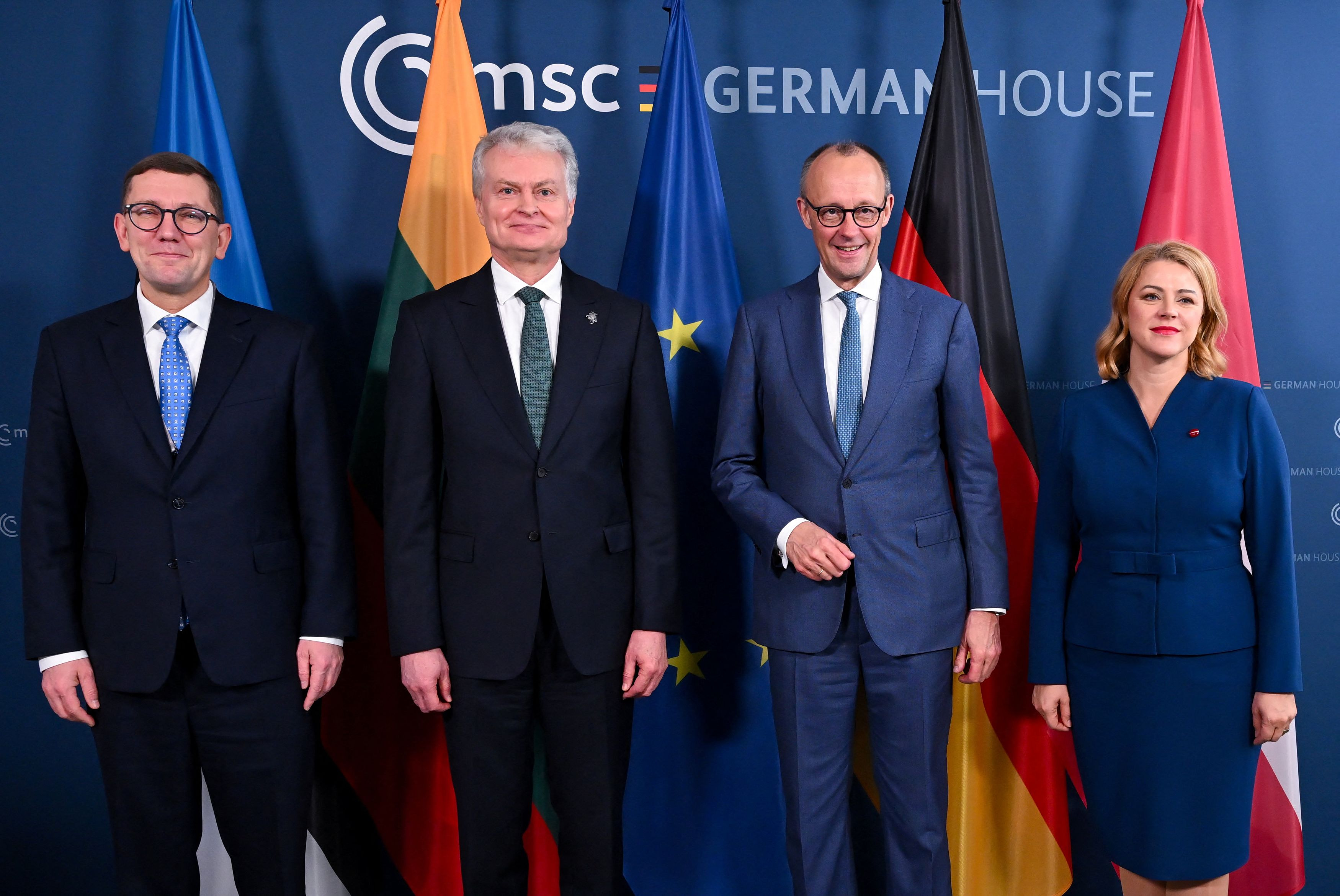
Estonia’s Prime Minister Kristen Michal, Lithuania’s President Gitanas Nauseda German Chancellor Friedrich Merz and Latvia’s Prime Minister Evika Silina meet for talks on the sidelines of the Munich Security Conference (MSC) in Munich, Germany, February 14, 2026. Sven Hoppe/Pool via REUTERS
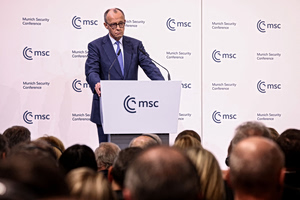
Friedrich Merz’s speech ranks among the most significant of his long political career. German media report that his speechwriters labored over the text for weeks. One commentary described it as a “European declaration of independence.” With unusual candor, the chancellor laid out the state of transatlantic relations: “A deep chasm, a deep trench has opened between Europe and the United States.” Yet Merz did more than diagnose the rupture – a description echoed by other prominent speakers. His central message was that Europe has overcome its initial shock at the once-unthinkable break with Washington, accepted the new realities and now enters the next round in the struggle over a new world order with resolve and renewed self-confidence. “We are not at the mercy of this world; we can shape it,” the German chancellor declared, head held high. Germany, Merz said, would assume a leadership role. That leadership, he added in a crucial qualification, must – for historical reasons – be embedded within a European framework.
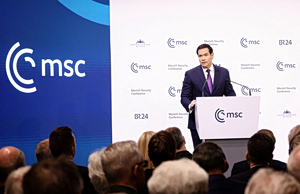
In the tightly choreographed drama of the conference, Secretary of State Marco Rubio delivered the response to Merz’s opening address. Rubio’s speech, conciliatory in tone and at moments almost sentimental in its invocations of shared transatlantic history, omitted the crude invective Europeans have come to expect from Vance and the president. “We want Europe to be strong, we believe Europe must survive,” he said – a key line from a figure regarded as one of the few genuine transatlanticists in an administration otherwise dominated by nationalists.
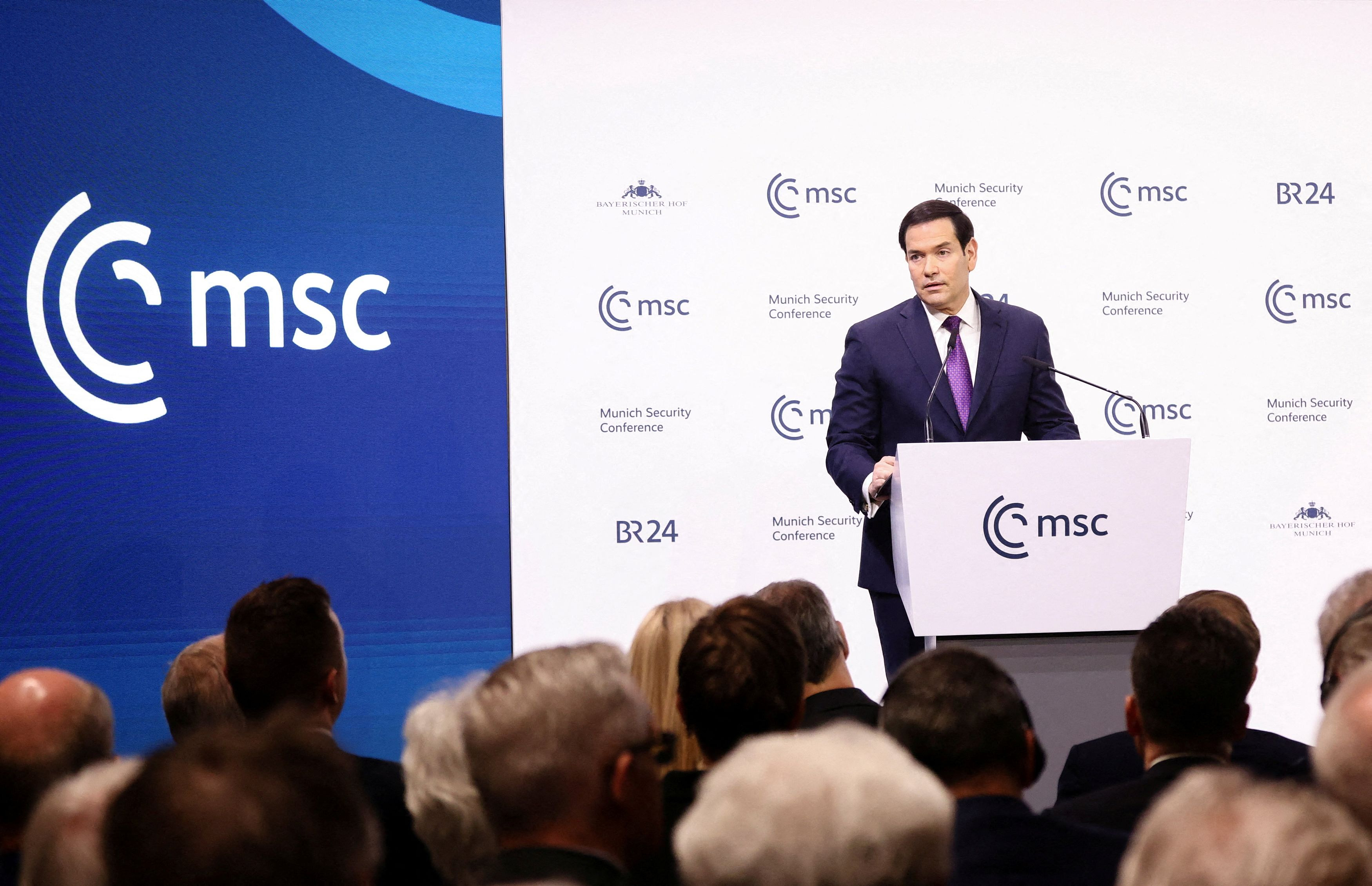
U.S. Secretary of State Marco Rubio speaks during the Munich Security Conference (MSC) in Munich, Germany, February 14, 2026. REUTERS/Liesa Johannssen TPX IMAGES OF THE DAY
Yet the tonal differences should not be overstated. Rubio would not be secretary of state under Trump if he did not embrace the core tenets of the president’s worldview in word and deed. In Munich, he criticized Europe’s migration policies and warned of a “civilizational erasure” of European culture should governments fail to follow the Trump playbook.
Washington, Rubio insisted, remains interested in the survival of the West. But what the United States is offering is not a partnership of equals. The proposal is for a new form of cooperation – one in which the United States, and its power-conscious president, hold the reins.
For decades, Europeans existed in a geostrategic state of deep slumber, relying – as many now openly concede – with a certain naïveté on the American military shield. Under President Trump, Washington has revoked that arrangement. From that rupture flowed the two central questions that dominated Munich: How can – and how will – the West, or what remains of it, assert itself militarily and strategically in a new world order without American guarantees? And second, after the secretary of state’s partly conciliatory speech, is there still a path to salvaging at least some elements of the transatlantic alliance?
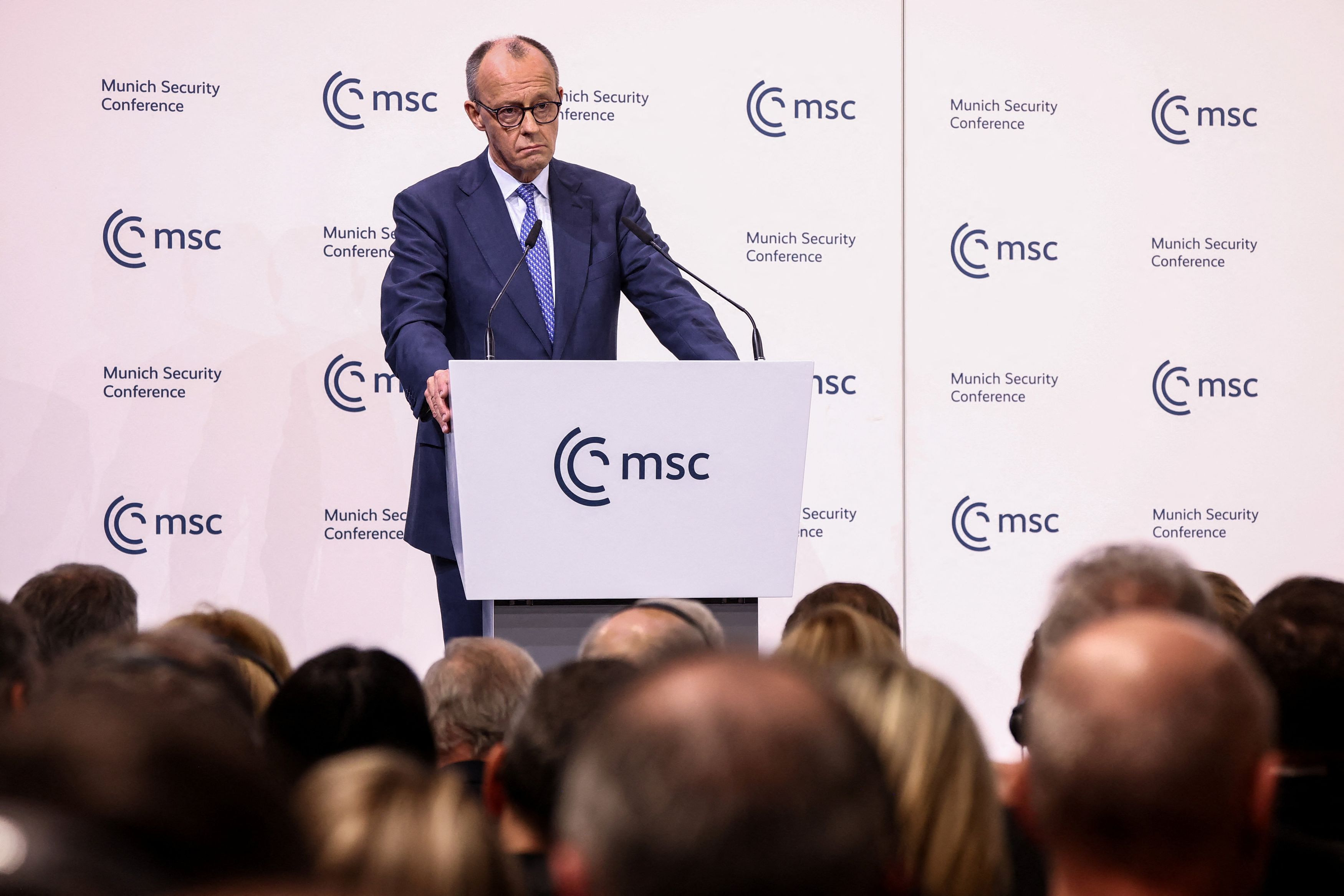
German Chancellor Friedrich Merz speaks during the Munich Security Conference (MSC) in Munich, Germany, February 13, 2026. REUTERS/Liesa Johannssen
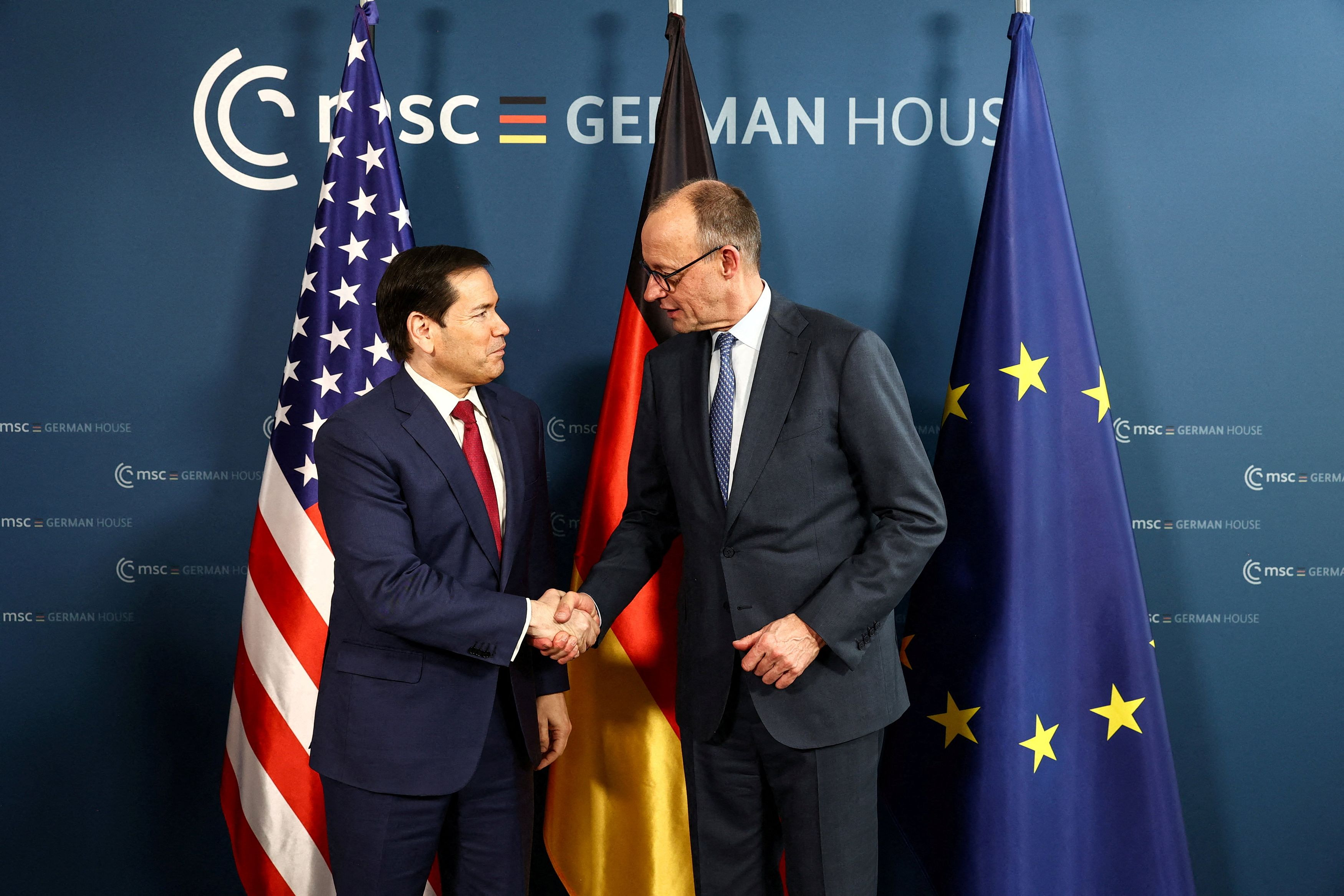
German Chancellor Friedrich Merz shakes hands with U.S. Secretary of State Marco Rubio during the Munich Security Conference (MSC) in Munich, Germany, February 13, 2026. REUTERS/Liesa Johannssen/Pool TPX IMAGES OF THE DAY
For one of the most important passages of his address, the German chancellor switched into English, clearly hoping that as many Americans as possible would hear the appeal in his own voice. “Being part of NATO is not only a competitive advantage for Europe, but also for the United States,” Merz said, urging Americans not to abandon the Western alliance out of sheer self-interest. Based on his remarks in Munich, Rubio would likely agree with that formulation. Whether his boss in the White House sees it the same way is a question the coming months and years will answer.
Dr. Ronald Meinardus is a senior research fellow at the Hellenic Foundation for European and Foreign Policy (ELIAMEP).