From Colin Crouch’s theory of post-democracy to more recent theories of party-systems and polycrisis, Europe appears to be experiencing a period of transition during which both its practical and normative capacities are being tested. Under these circumstances, issues such as the resilience of the current party system and the governance capacity of states are increasingly exposed to both internal and external stresses.
We are now familiar with the idea that domestic developments can be interpreted through a broader international perspective due to phenomena such as domino and spillover effects. Furthermore, we increasingly observe how crises originating in one system, such as the economy or the environment, can produce significant consequences for other systems, including governance. In this context, it is analytically valuable to briefly examine three categories of cases: countries that have left the EU, such as the United Kingdom, influential EU member states, such as Italy, and smaller regional actors seeking to align with European standards, such as Greece.
The case of the United Kingdom is particularly significant because of the combination of visible, latent, and structural factors that have contributed to the transformation of its party system and the weakening of governance capacity. Identifying a precise starting point for this process is challenging. However, for the purposes of this analysis, the Brexit referendum serves as an appropriate reference point. Former Prime Minister David Cameron’s attempt to contain internal party divisions through the Brexit referendum can be interpreted as the beginning of a prolonged period of political instability and cascading effects. Since then, the erosion of long-established political actors has coincided with a broader European leadership crisis, reflected in the succession of post-Brexit Prime Ministers. The initial optimism surrounding the Labour government has gradually been followed by growing public dissatisfaction with both its domestic agenda and foreign policy, contributing to increasing electoral volatility. Consequently, voter support has become more dispersed, benefiting alternative political actors. A notable example is the continuing rise of Reform UK. Under these circumstances, the resignation of Sir Keir Starmer and the subsequent choice of Andy Burnham as the new leader of the Labour Party and PM could represent another critical crossroads. On the one hand, it may lead to the emergence of renewed charismatic leadership. On the other, it could facilitate the further rise of alternative political actors and alliances, prolonging the current period of parliamentary fragmentation and political instability.
In contrast to the situation in the United Kingdom, Italy presents a rather different picture with regards to political stability. Prime Minister Giorgia Meloni’s government has now entered its fourth year in office, demonstrating remarkable resilience in what has traditionally been one of Europe’s most volatile political systems (La Repubblica, 2026). At the same time, Meloni has managed to derive political benefits from her confrontation with Donald Trump, further strengthening her leadership profile at a time when the question of political leadership has once again become central to the European debate (Brevini B., 2026).
It is, of course, impossible to overlook the Prime Minister’s far right political origins. Nevertheless, since taking office at the Palazzo Chigi, Meloni has considerably moderated her rhetoric and has chosen to uphold Italy’s commitments both to the European Union and to its transatlantic allies. Despite this political moderation, however, her government’s record on several of Italy’s most pressing structural challenges remains less convincing. Key issues including addressing the country’s acute demographic crisis, improving citizens’ quality of life and adapting Italy to the growing consequences of climate change and mass tourism, have not been tackled with sufficient effectiveness.
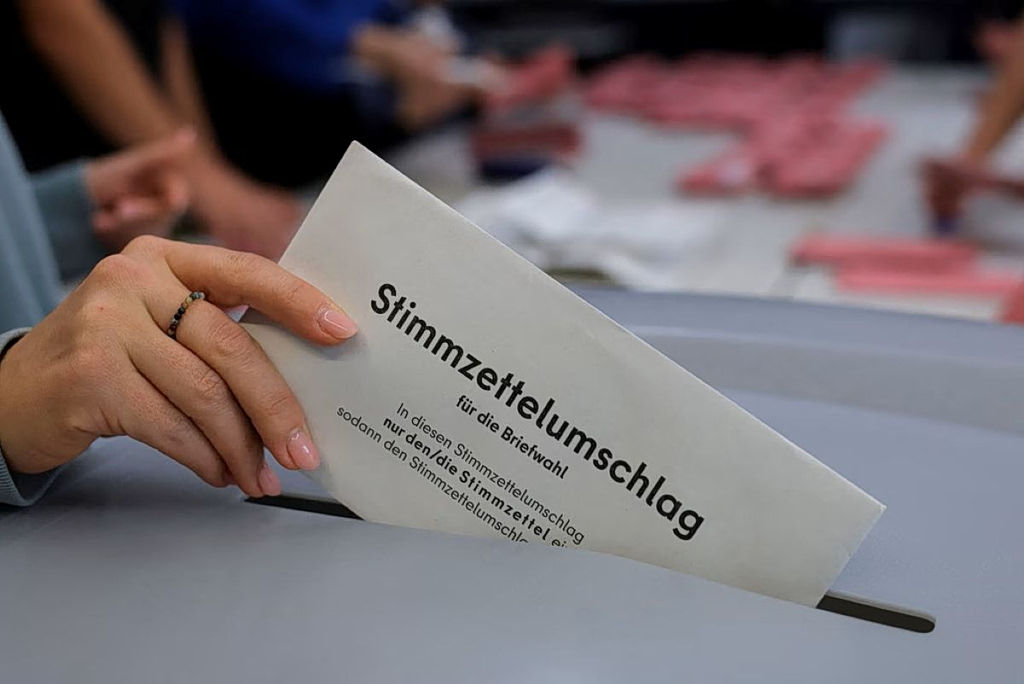
Moreover, the state of civil liberties such as freedom of expression has deteriorated. A notable example is the decline in the freedom of the Media in a country that has long been regarded as one of the pillars of European integration (Wirmer A, 2025). Against this backdrop, a fundamental question remains unresolved: how can Italy address its increasingly severe crisis of political representation when a substantial share of the electorate continues to abstain from voting. It is worth noting that during the referendum on judicial reform held last March, approximately 42% of the electorate did not turn out to vote (Corriere della Sera, 2026). This persistent level of electoral disengagement highlights the widening gap between political institutions and society, raising serious questions about the long-term legitimacy and representativeness of European democratic systems.
Italy’s experience is not an isolated case. Across Europe, governments are increasingly confronted with a common dilemma: while political stability may have improved in some countries, rebuilding citizens’ trust and strengthening democratic representation remain far more complex challenges. Greece provides a particularly revealing example of this broader trend. Following a decade marked by sovereign debt, political fragmentation and repeated elections, Greece has entered a period of comparatively strong governmental stability. At first glance, this appears to contrast with the political uncertainty observed elsewhere in Europe. Yet beneath this stability lie many of the same structural challenges affecting other European democracies.
Public trust in institutions remains fragile, while electoral participation has yet to fully recover from the successive crises of the previous decade. At the same time, events such as the Tempi railway disaster, devastating wildfires and floods as well as ongoing debates over transparency, accountability and media freedom, have intensified public demands for more effective governance. These developments demonstrate that stable governments alone are not enough to restore confidence in democratic institutions.
At the European level, Greece has simultaneously sought to strengthen its role as a pillar of stability in the Eastern Mediterranean, assuming greater geopolitical responsibilities while facing persistent migration pressures, regional security challenges and the growing consequences of climate change. The Greek case therefore illustrates that political stability and democratic resilience do not necessarily evolve in parallel. The real challenge in maintaining a stable government under these circumstances is to turn political stability into effective governance, institutional accountability and renewed public trust.
Although the political trajectories of the United Kingdom, Italy and Greece differ significantly, they ultimately point towards the same European reality. Democratic resilience can no longer be measured solely by the duration of governments or electoral outcomes. Instead, it also increasingly depends on the capacity of political institutions to adapt and respond effectively to interconnected crises, preserve public trust and renew democratic representation. As Europe enters an era defined by geopolitical uncertainty, economic transformation and societal change, strengthening governance and reconnecting institutions with citizens may prove to be the defining political challenge of the coming decade.
*Dimitris Tsaknis works for the EPLO/ELGS Rome Office (Italy) as Responsible for Academic Affairs. He is a Political Scientist with a Master in International and European Governance. His academic interests spanning EU Security and Defense Policies, EU Enlargement, the relations between the EU and the US as well EU and Russia.
Athina Fatsea is a PhD Candidate at the Ionian University (A.G. Leventis & ESDC Doctoral Fellow). She works as Research Assistant to the Director General and European Programme Manager at ELIAMEP. She serves as a Research Fellow at the Laboratory for Geocultural Analyses (GeoLab). She holds an MA in International and European Governance and Politics (NKUA). She has participated in conferences in Europe, Africa and Asia, and has authored publications in collective volumes and scientific journals.
Georgios Tsialas is a PhD Candidate in Politics (Research) at King’s College London. His research focuses on crises, polycrisies, securitization and comparative politics. He holds an MSc in Comparative Politics (LSE) and a BA in Political Science and History (Panteion University). He has served as Senior Political Analyst and Editor at the Association of International and European Affairs (ΟΔΕΘ) and as a Research Assistant and Research Administrator at the Hellenic Observatory Centre (LSE).