 Μake us preferred on Google
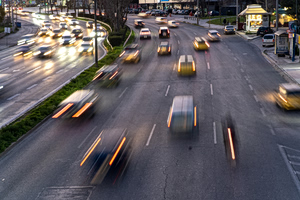
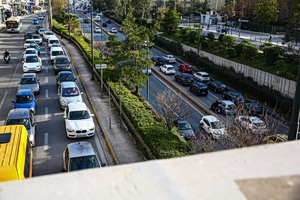
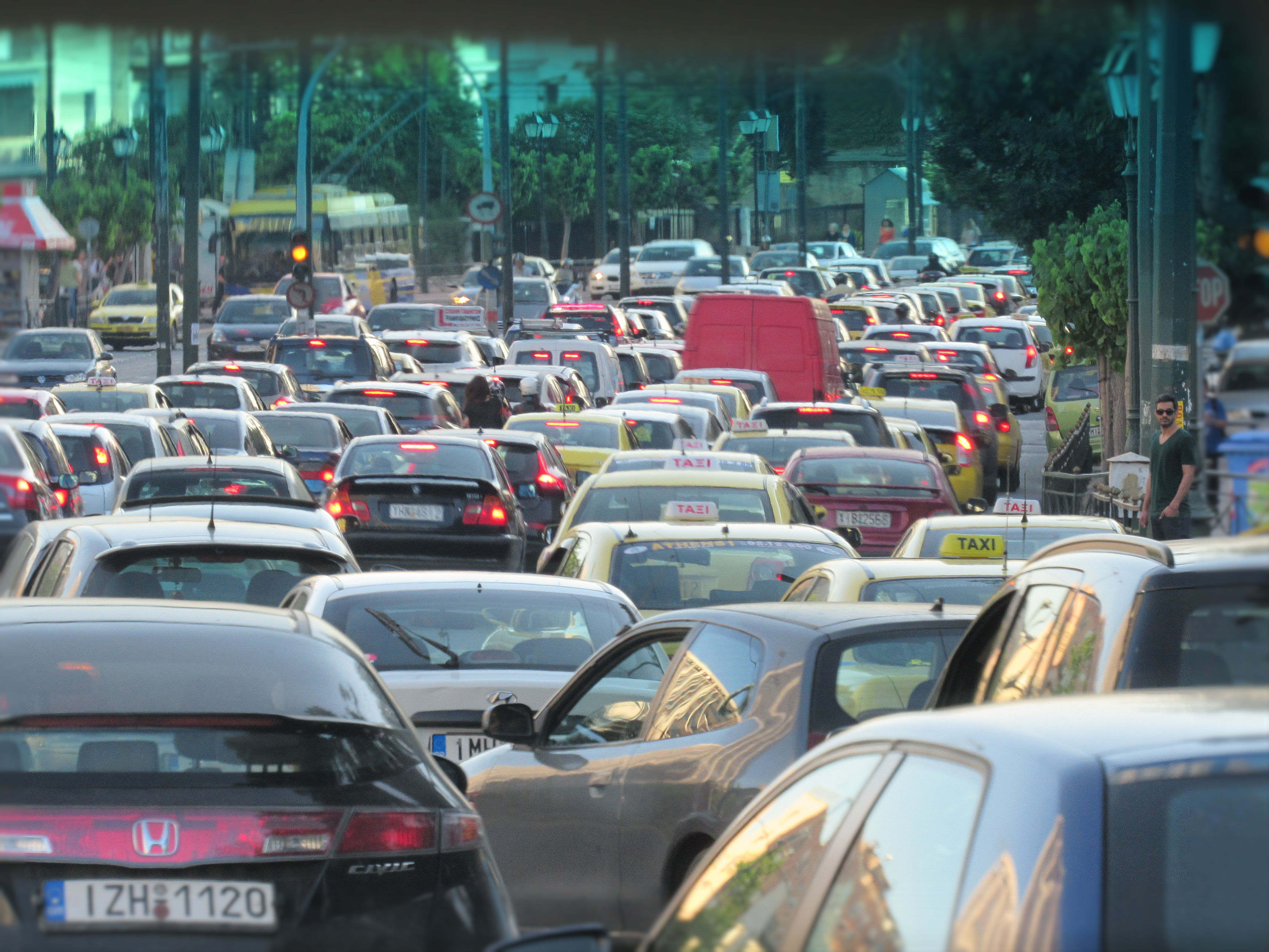
Athens has become a city of near-constant traffic congestion, with heavy delays affecting its roads for most of the day. Apart from late-night hours, traffic typically begins building around 7 a.m. and remains heavy until approximately 8 p.m., leaving drivers struggling to find even short periods when they can travel without significant delays.
“We have reached the point where we are looking for off-peak hours,” Athanasios Tsianos, president of the Hellenic Association of Transport Engineers, told To BHMA, describing the worsening situation on the capital’s roads.
He attributes the problem primarily to two factors: the uncontrolled use of private cars and the inability of public transportation to meet residents’ needs. Public transit services deteriorated significantly during Greece’s financial crisis and, despite improvements in recent years, have yet to regain the level of operation and service required.
“Unless we take measures, the situation will get worse,” Tsianos warned.
Private car use has doubled relative to public transit
The shift in commuting habits is reflected in the figures. Around 20 years ago, in 2006, trips made by private car and those using public transportation were roughly equal.
Today, the balance has changed considerably, with twice as many trips made by private vehicles as by public transit. The ratio now stands at two car trips for every one made by public transportation, placing additional pressure on the road network across Attica, the region that includes Athens.
Congestion is also no longer confined to the capital’s main roads. Routes that drivers once used as alternatives to avoid traffic are now experiencing significant delays as well.
More than 8 million trips every weekday
The scale of the problem becomes clearer when considering the total volume of daily travel. More than 8 million trips are made across Attica on weekdays, with private cars accounting for the largest share.
According to Tsianos, economic growth has also been accompanied by an increase in car use, creating a cycle that further aggravates congestion.
As more private vehicles take to the roads, traffic becomes heavier and delays increase. These delays also affect bus services, making public transportation a less attractive option for commuters. As a result, more people turn to private cars, adding to the pressure on the road network.
More buses, drivers and dedicated lanes
Addressing the problem requires a change in approach, Tsianos said. Rather than treating congestion simply as a traffic issue, authorities should focus on the broader challenge of how people move around the city.
Public transportation has not been given sufficient space or priority, he argued. Reversing the current ratio of two private-car trips for every public-transit trip and bringing it closer to the one-to-one balance recorded in 2006 will require substantial interventions.
These include expanding the bus fleet, hiring more drivers and extending dedicated bus lanes while ensuring they operate effectively.
Major infrastructure projects, particularly the expansion of the Athens Metro, will also play an important role. The objective, Tsianos said, should be to allow people to travel around the city quickly and safely without having to rely exclusively on private vehicles.
The need for metropolitan transport planning
Better coordination between the authorities responsible for transportation is another key part of the solution.
Tsianos said congestion cannot be addressed through the fragmented efforts of individual agencies. Instead, Attica needs a unified strategy covering the entire transportation system.
He also highlighted the need to develop multimodal transportation, allowing commuters to combine private cars with public transit or switch between different modes of transport during a journey.
In Greece, only 2.5% of trips involve this type of travel, compared with more than 15% elsewhere in Europe. The gap points to significant opportunities to make better use of different transportation options and develop an integrated network that makes transfers between them easier.
“This entire network needs to be developed,” Tsianos said, emphasizing that easing congestion in Athens will require more than isolated interventions. It will depend on a broader change in how travel across the capital is organized.