 Μake us preferred on Google
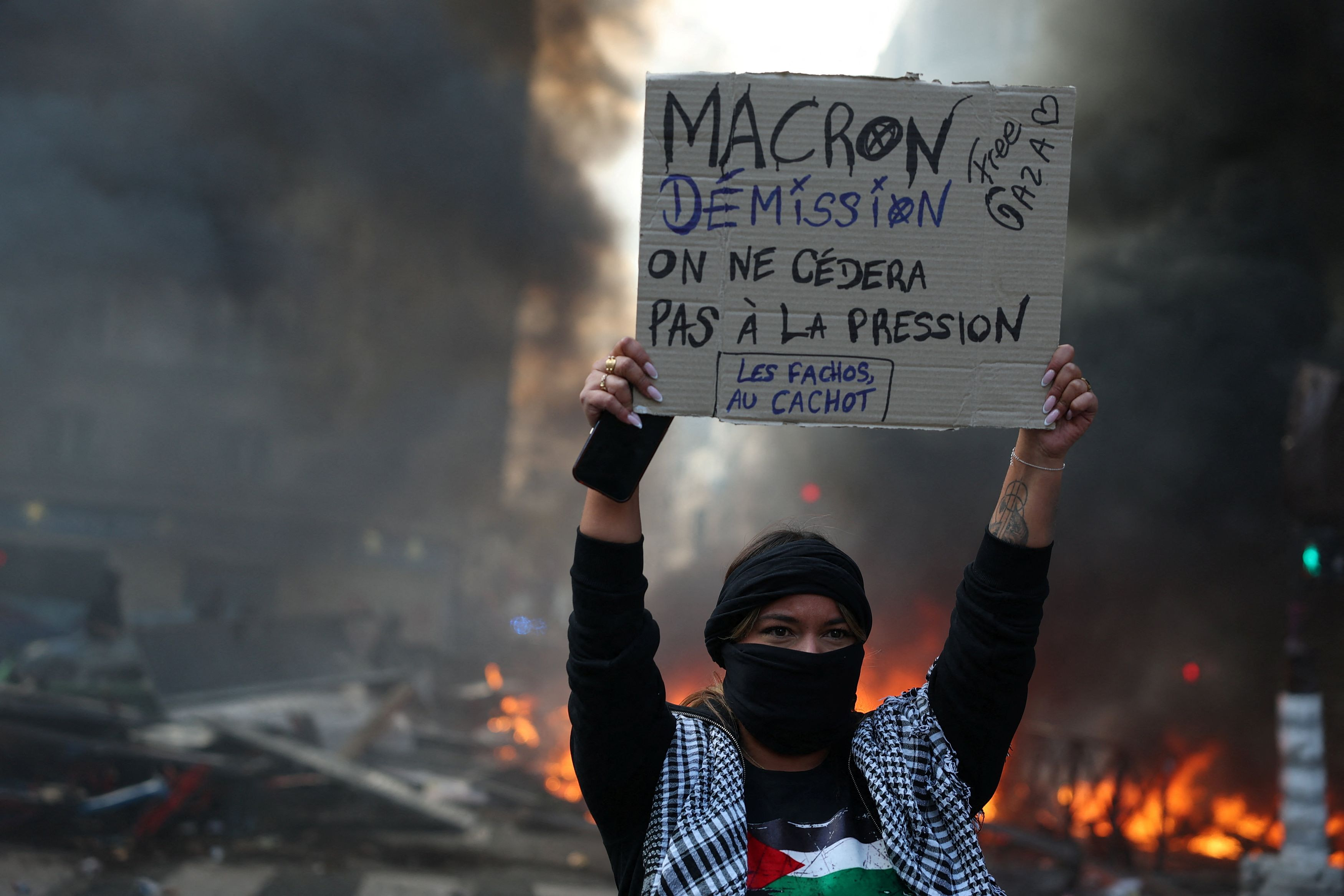
The end of Emmanuel Macron’s presidency and the road toward choosing his successor are being shaped by three parallel, mutually reinforcing crises: economic, political and social. They expose deeper problems, including an aging population that has contributed to a sluggish economy, a political system geared toward preserving the status quo and the de facto marginalization of younger generations. The electoral influence of a growing elderly population weighs heavily on the budget through the excessive cost of pensions and health care.
France sustains this system by resorting to borrowing. It spends as much servicing its debt as it does on education. It tries to head off any protest by young people with flattery and hollow promises. It has significantly weakened hierarchy, relaxed discipline, embraced a culture of minimal effort and yielded to prevailing trends. It has placed minors and adults on an equal footing. This decline was also legitimized by the older deconstructionist ideas of May 1968, such as the slogan “It is forbidden to forbid.”
Today, the decline in educational standards and a complete inability to withstand the difficulties and disappointments of everyday life are being observed across the board. The OECD’s PISA program has starkly highlighted gaps in knowledge. At the same time, digital technology and social media, by providing instant information and easily digestible slogans, have resulted in reduced concentration and, consequently, an absence of deeper thought and critical judgment.
An already problematic situation has rapidly deteriorated. Teaching has become dangerous and almost impossible in “sensitive” areas. University graduates are increasingly reluctant to choose teaching as a profession.
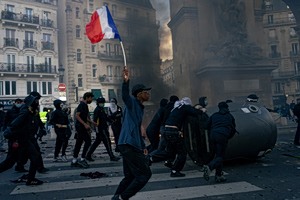
Among young people, resorting to violence is progressively becoming more prevalent — not only against the state, those in authority or the police, but also against teachers themselves and, worse still, against peers who disagree or resist. Critical judgment, respect, patience and empathy are absent, allowing negative stimuli to operate without filters; they pass through neither thought nor emotional processing. Everything falls within a logic of immediacy — as in video games.
The political system, trapped in a dead end, offers no growth. In practice, it tolerates inequality, as each segment of the population tries to survive at the expense of another. With the once-dominant ideologies of communism and nationalism having collapsed, most young people have no ideals to inspire them.
Morally and intellectually defenseless against any form of pressure, they surrender uncritically to anger and the violence that follows. This destructive dynamic is being exploited by both extremes, right and left. The far right expects to attract voters who were previously hesitant or even unwilling to support it, in the name of law and order and security.
The far left aims to radicalize and capture the most vulnerable part of society — young people, both adults and minors. It also possesses organizational mechanisms and a revolutionary methodology through which it seeks to channel a subversive dynamic into electoral support and sustain it until the election. In the event of electoral defeat, this dynamic will be used to challenge the result.
France’s international image is under attack and in decline. The French psychodrama is unfolding under pressure from financial markets. In an unfavorable international economic environment, with interest rates continually rising, the sustainability of the country’s debt amid such social and political turmoil is beginning to appear uncertain.
What will remain of Europe if France ultimately finds itself under the supervision of a Troika? What if, like Greece during its sovereign debt crisis, France loses its national sovereignty and is forced to implement austerity policies that, according to economist Nicolas Baverez, would reduce purchasing power by 20%?
How could any European balance be maintained when it has already been undermined by German power? How would the French population react if sacrifices were imposed like those accepted by the more flexible and resilient Greek population? In Greece, traditional institutions, the church and the family helped. It is far from certain that France has comparable outlets. The danger of civil conflict lurks.
Like a Russian matryoshka doll, the explosion of anger among an unrestrained younger generation, manipulated by extreme political forces, threatens to destabilize French society and the economy. That destabilization, in turn, could halt European integration — all the more so as Russia and the United States lie in wait and may even be fueling the situation.
At the opposite end of this troubling picture, Pope Leo’s recent visit unleashed different forces. The strikingly broad response to his message revealed a different attitude. A large segment of young people expressed themselves collectively with joy, respect, hope, solidarity, order and at least a degree of optimism.
A return to religion? Without necessarily being members of the Catholic Church, this significant social group offered examples — even lessons — of a different kind of behavior and different expectations.
As always, the approaching presidential election has prompted a large number of politicians to declare their candidacies. The first round, contested by many candidates, will determine the top two, with the president then elected by majority vote in the second round.
The dominant political system appears inadequate and worn out — and so, by extension, do those who represent it. Yet as the critical election date approaches, new candidates are emerging without ties to the deeply unpopular establishment, including the newly elected candidate of the Socialist Party.
It is on these recent developments that hopes for social reconciliation and the restoration of peace rest, allowing France to effectively address the shortcomings of the past, the difficulties of the present and the uncertainty of the future.
France was a cornerstone of the European project. Today, it risks becoming a catalyst for its unraveling. May Europe recognize the threat and act in support.
Giorgos Prevelakis is a professor of geopolitics and a former ambassador to the OECD.