 Μake us preferred on Google
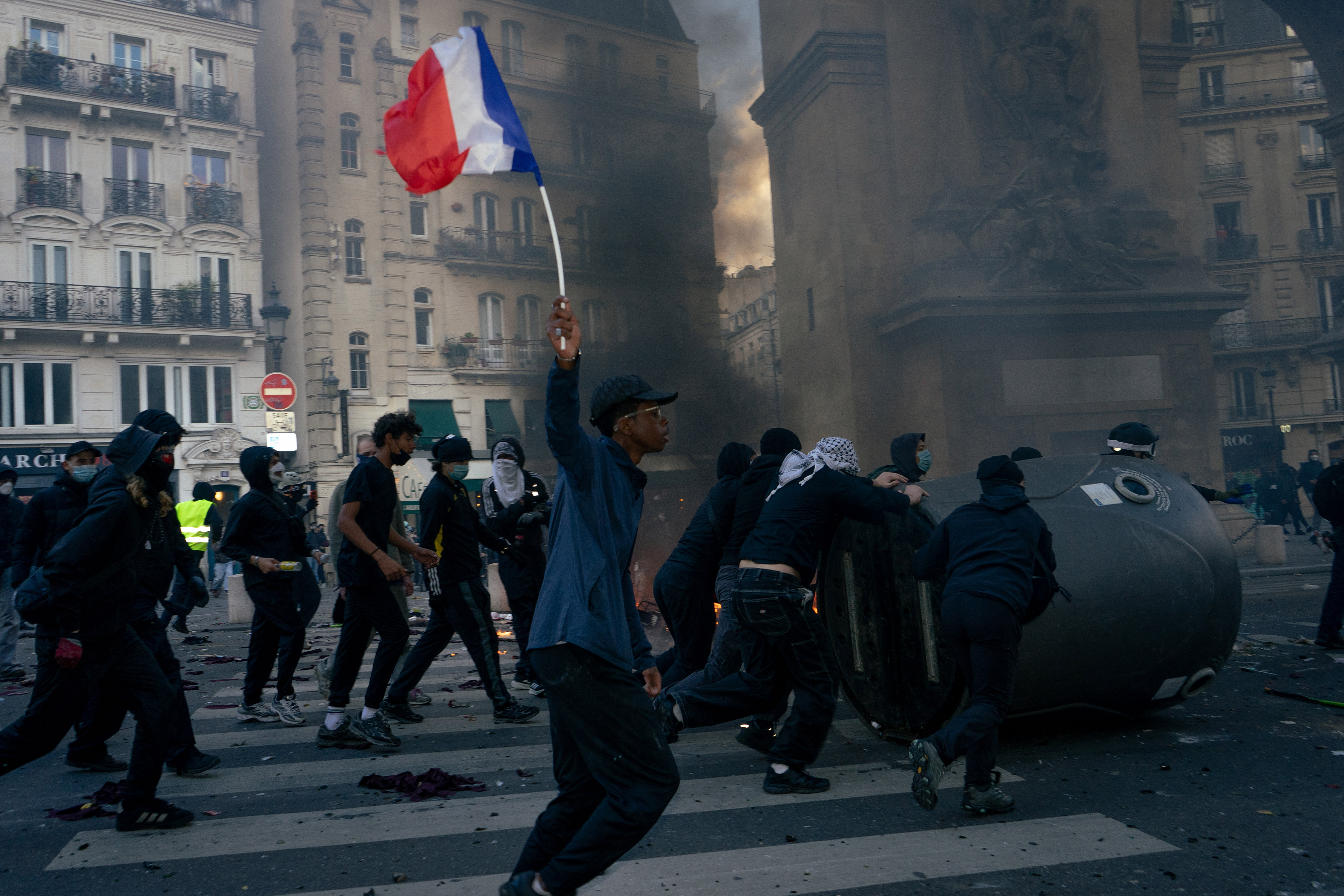
France is facing a deepening political crisis after violent unrest over the cost of living and conditions in schools left thousands of arrests, hundreds of damaged businesses and historic public buildings in flames. With presidential elections scheduled for next year, the fallout has intensified a confrontation between President Emmanuel Macron’s government, the left and the far right over responsibility for the violence.
The unrest has also raised questions about the authorities’ handling of the demonstrations, with political figures across the spectrum criticizing the police response. Meanwhile, the destruction of a historic town hall in Limoges has become a symbol of the damage inflicted on communities far beyond France’s largest cities.
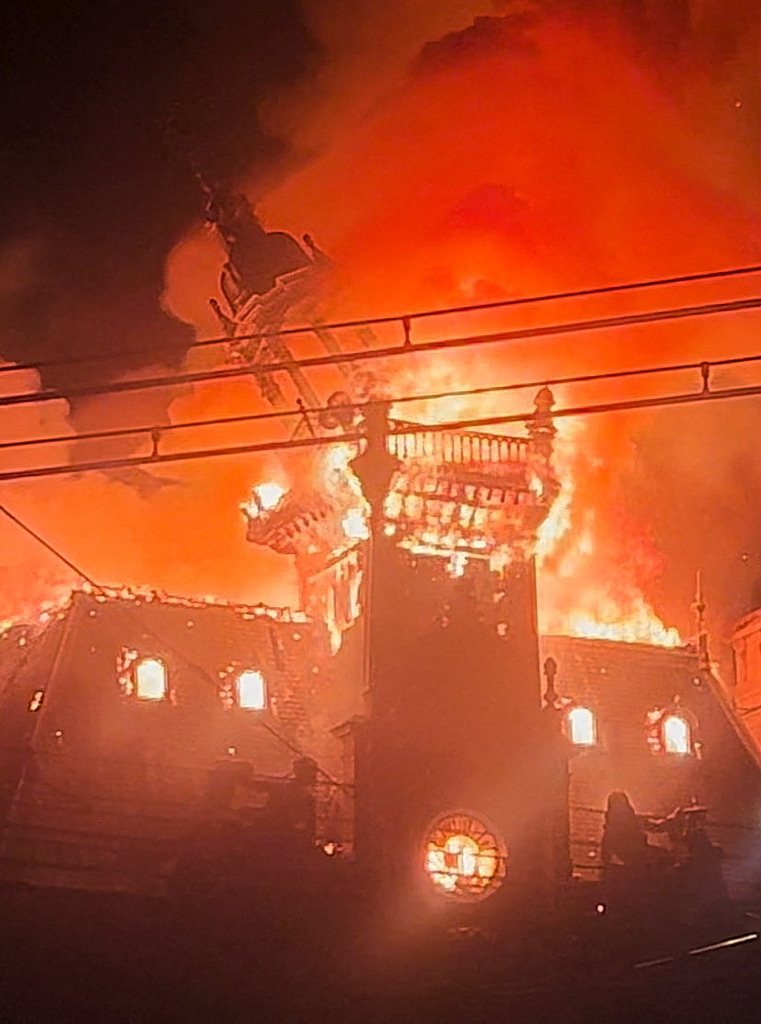
Fire in Limoges city hall amid protests, in Limoges, France, October 17, 2026, in this screengrab from a video obtained from social media. Lucas Destrem/via REUTERS THIS IMAGE HAS BEEN SUPPLIED BY A THIRD PARTY. MANDATORY CREDIT. NO RESALES. NO ARCHIVES. THIS IMAGE WAS PROCESSED BY REUTERS TO ENHANCE QUALITY, AN UNPROCESSED VERSION HAS BEEN PROVIDED SEPARATELY. TPX IMAGES OF THE DAY VERIFICATION Reuters verified the location of the video from original file metadata and building structure that matched archive and satellite imagery of the area. The date matched Reuters reporting of a fire in Limoges city hall on October 17.
Macron calls for calm and promises action
On Sunday, October 18, one day after the most intense clashes, Macron pledged to address some of the protesters’ demands, although he did not outline specific measures.
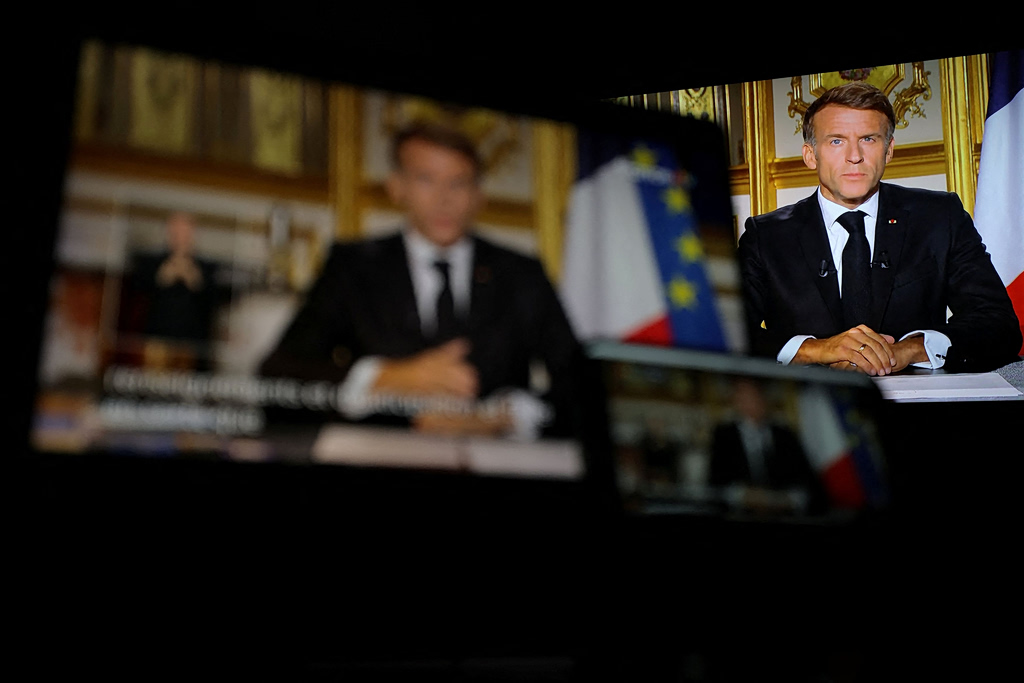
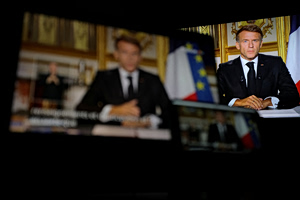
French President Emmanuel Macron appears on screen as he makes a television address to the nation a day after clashes during a national day of demonstrations against the cost of living and rising fuel prices, near Marseille, France, October 18, 2026. REUTERS/Manon Cruz
In a televised address, the president said he would seek to reduce gasoline prices, one of the demonstrators’ main demands, during a diplomatic trip to the Persian Gulf this week.
Macron offered few concrete concessions, instead calling for “order, calm, no escalation.” He criticized calls for people to take to the streets, protest and cause disruption.
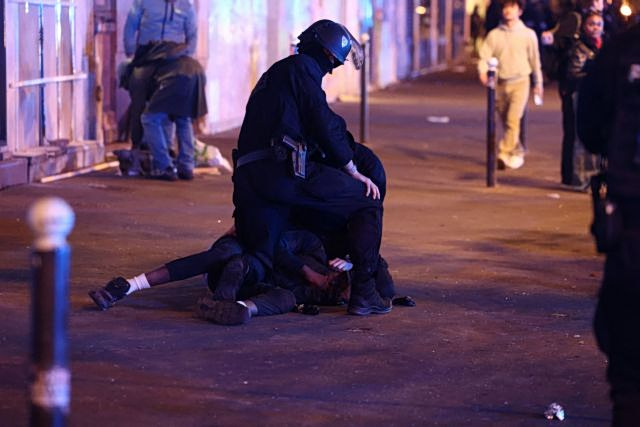
A demonstrator is detained during civil unrest, the day after a national day of demonstrations against the cost of living and rising fuel prices, in Paris, France, October 18, 2026. REUTERS/Abdul Saboor
Those responsible for looting, he warned, would have to pay for the damage, while those who had attempted to undermine the Republic would be held accountable.
His response has done little to ease the political confrontation, as government officials and opposition figures continue to dispute the causes of the unrest and the authorities’ response.
Government blames the far left
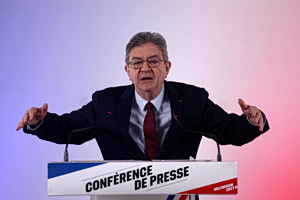
Prime Minister Sébastien Lecornu directly accused the left-wing party France Unbowed (La France Insoumise), led by Jean-Luc Mélenchon, of contributing to the unrest.
Lecornu alleged that Mélenchon had encouraged distrust of the police among student demonstrators. He also said the first rioters to attack public buildings belonged to the far left.
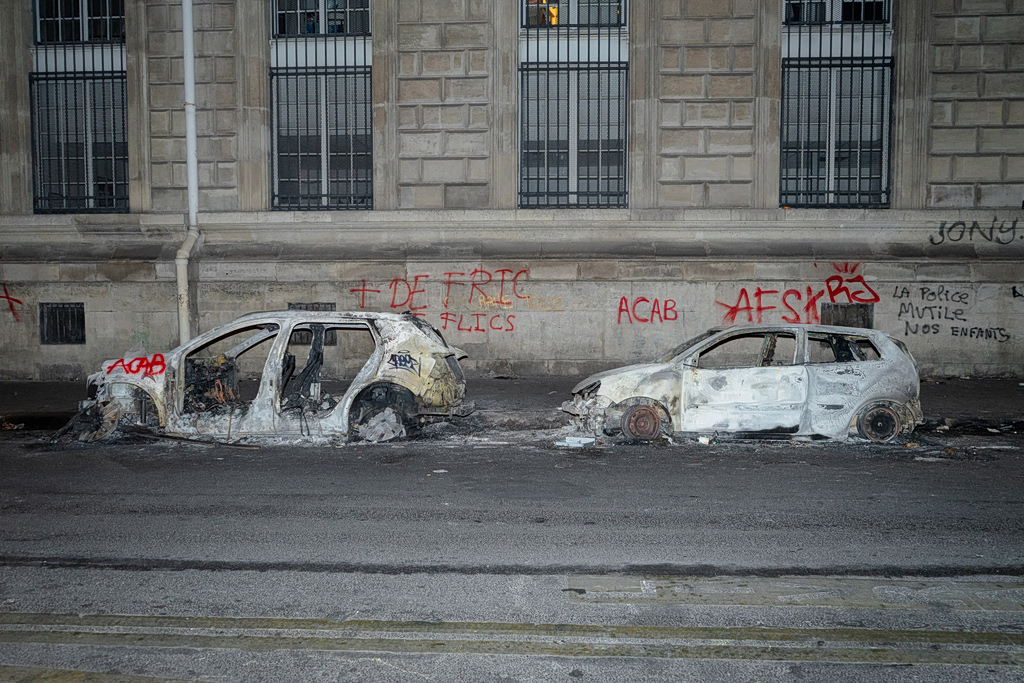
Burned cars at Republique square during a demonstration against the high cost of living in Paris, France, on October 17, 2026.
“Behind all this, there is obviously a political battle that must be fought,” Lecornu said, describing France as being at a “point of no return.”
“It is time to choose a side: Either you are in the camp of the Republic and law enforcement, or you are on the side of the rioters,” he added.
Mélenchon responded on social media by calling Lecornu “responsible for the chaos.” He accused the government of either incompetence or pursuing a worst-case strategy designed to create a law-and-order political movement and distract attention from its failures in public finances.
Mélenchon condemned the looting, saying that people who shared his movement’s struggle had no place in such acts. He also argued that the left must refuse to participate in actions without political meaning.
Le Pen accuses the left of exploiting public anger
Marine Le Pen, the far-right leader who is leading in polls for next year’s presidential election, also weighed in on the dispute.
She said protesters’ “legitimate social demands” had been appropriated by the far left and Mélenchon’s rhetoric, accusing them of fueling chaos by legitimizing violence.
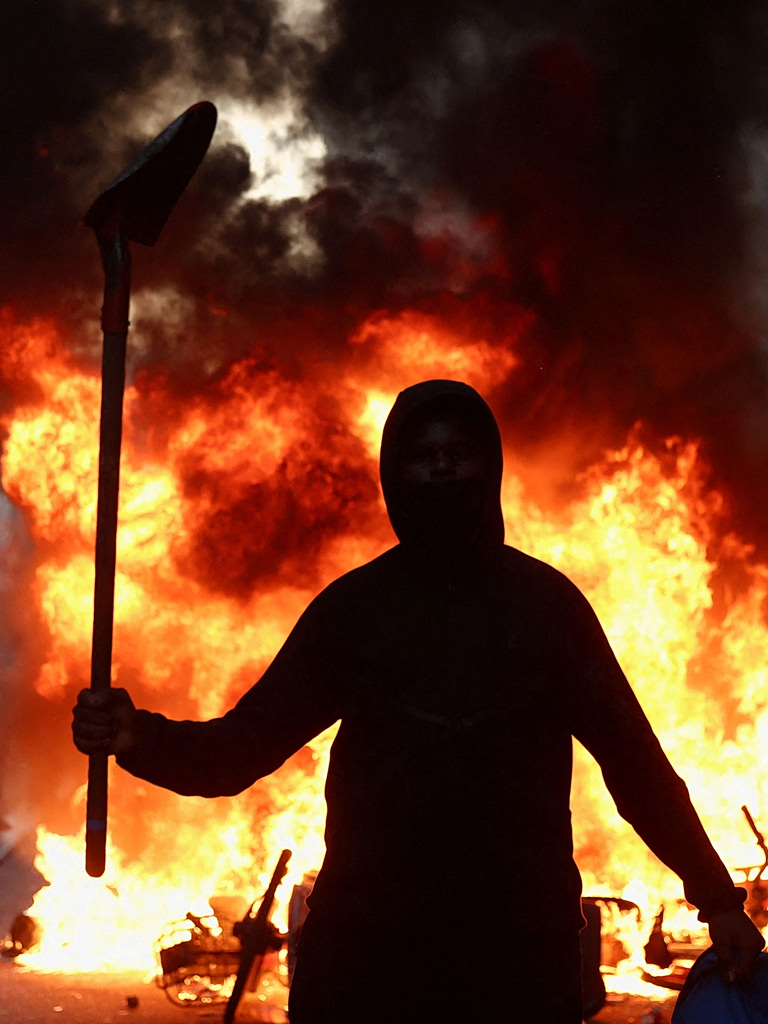
A demonstrator stands as flames rise behind them, during civil unrest, the day after a national day of demonstrations against the cost of living and rising fuel prices, in Paris, France, October 18, 2026. REUTERS/Abdul Saboor TPX IMAGES OF THE DAY
At the same time, politicians from across the political spectrum criticized the government’s handling of the unrest, describing the police response as weak or poorly prepared. Some called for Interior Minister Laurent Nuñez to resign.
Nuñez defended the authorities, arguing that the problem was not a shortage of personnel but the difficulty of containing rioters who were dispersed in small groups.
Nearly 1,500 businesses damaged
As political tensions mounted, the scale of the destruction became clearer. By Sunday, the violence had largely subsided, leaving behind extensive property damage, thousands of arrests and one reported death.
The looting in Paris today.. France riots https://t.co/lzz3sLLB80
— Open Source Intel (@Osint613) October 17, 2026
According to the figures cited in the reports, nearly 2,400 people had been arrested. One demonstrator died of cardiac arrest, while almost 1,000 police officers were injured, seven of them seriously.
Around 1,500 shops across France were damaged or looted. The cost of repairs was estimated at hundreds of millions of dollars, according to The New York Times.
Public buildings and national symbols were also targeted:
Limoges: A historic town hall dating to the 19th century was largely destroyed by fire.
Marseille: Intruders toppled a bust of Marianne, the symbolic female figure representing the French Republic.
Lyon: Fire destroyed the city’s tourist office.
The violence followed a day of demonstrations on Saturday, when more than half a million people took to the streets to protest the cost of living and conditions in schools. The mobilization brought together student protests that had been underway since September with broader social demands.
Amidst expanding far-left riots in France, that continue to go unchecked, the historic Limoges Town Hall, built in 1883, has largely been burned down after being set on fire by rioters. https://t.co/TTucu768eZ
— OSINTdefender (@sentdefender) October 18, 2026
The demonstrations unfolded differently across the country. Students, farmers, teachers and union members marched peacefully in some areas, while groups dressed in black clashed with police elsewhere.
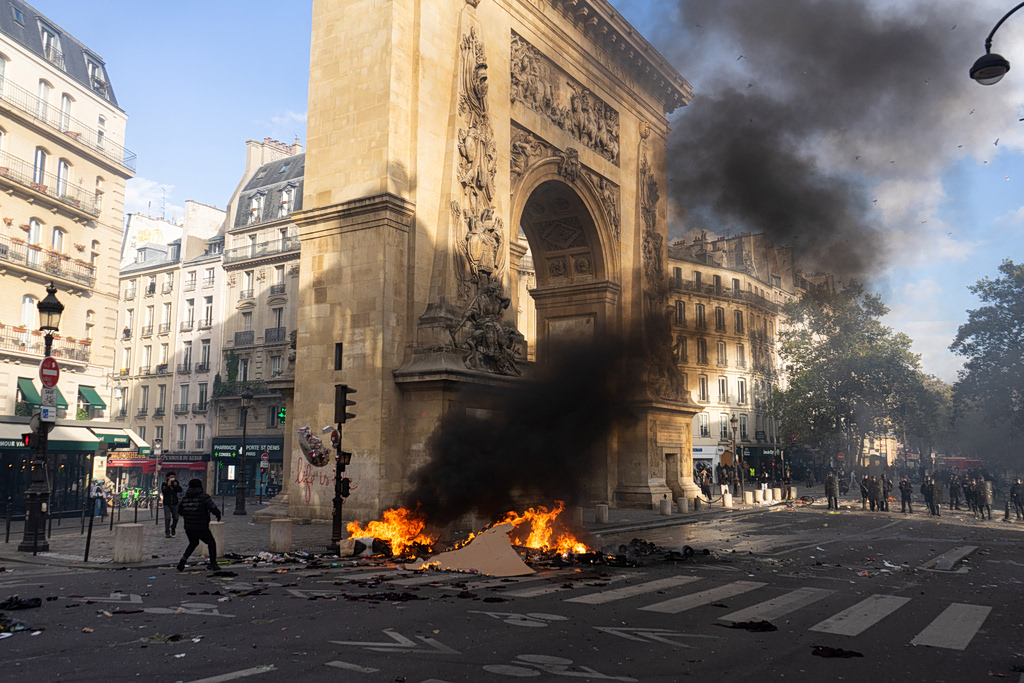
Clashes between protesters and police occur during a demonstration against the high cost of living at Strasbourg–Saint-Denis in Paris, France, on October 17, 2026.
Paris police said that after initial violent groups numbering between 500 and 1,000 people, a large number of individuals arrived later in the afternoon with the sole aim of stealing and looting.
Limoges town hall becomes a symbol of the unrest
The destruction in Limoges, a city of about 130,000 people in central France known internationally for its porcelain, was among the most striking incidents of the unrest.
🇫🇷 BREAKING: France Erupts 550,000 in Nationwide Unrest
Limoges Town Hall set on fire.
At least 550,000 people involved in nationwide protests and riots, according to France’s Interior Ministry.
A country shaken by unrest. A seat of local government in flames.
— SilencedSirs◼️ (@SilentlySirs) October 17, 2026
On Sunday afternoon, more than 100 residents gathered in the city’s central square to look at the remains of their historic town hall. Some stood silently, while others photographed the building’s blackened metal frame.
Only the gray stone walls remained of the imposing late-19th-century structure. Its roof, facade clock and metal bell tower had collapsed.
Gilles Pénielén, 64, and his wife, Sylvie, 61, had married in the building 35 years earlier. Looking at the wreckage of its interior staircase, Sylvie said: “All we have left now are the photographs. I am angry; it is a disgrace.”
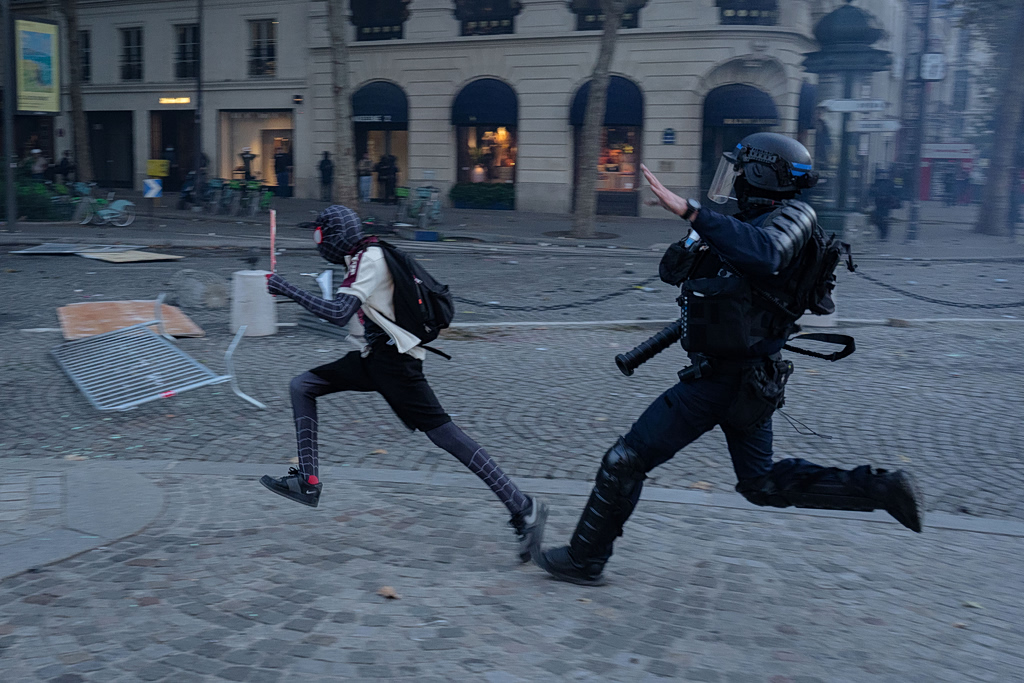
Clashes between protesters and police occur during a demonstration against the high cost of living in Paris, France, on October 17, 2026.
The fire began after a peaceful demonstration on Saturday morning, when thousands of people gathered in support of students calling for better school conditions and protesting the cost of living.
According to authorities, the situation deteriorated sharply at around 5 p.m., when groups of rioters entered the city center intent on vandalism. About an hour later, they broke into the town hall and set it on fire while employees and visitors were still inside.
Firefighters responded, but the wooden roof collapsed, followed hours later by the burning bell tower. Regional official Maurice Barate said the historic facade was almost completely destroyed, with strong winds complicating efforts to extinguish the fire.
A historic building reduced to ruins
Designed in the 1880s by Parisian architect Charles-Alfred Leclerc, the Limoges town hall was a protected historic monument and an example of 19th-century architecture. It featured elaborate mosaics depicting local figures.
The building also held a place in French and European history. At the beginning of World War II, it had housed Belgian lawmakers in exile after Nazi Germany occupied their country.
Its destruction prompted strong political reactions. Limoges Mayor Guillaume Guérin, a conservative member of the Republicans party, described the attack as an assault on the French state.
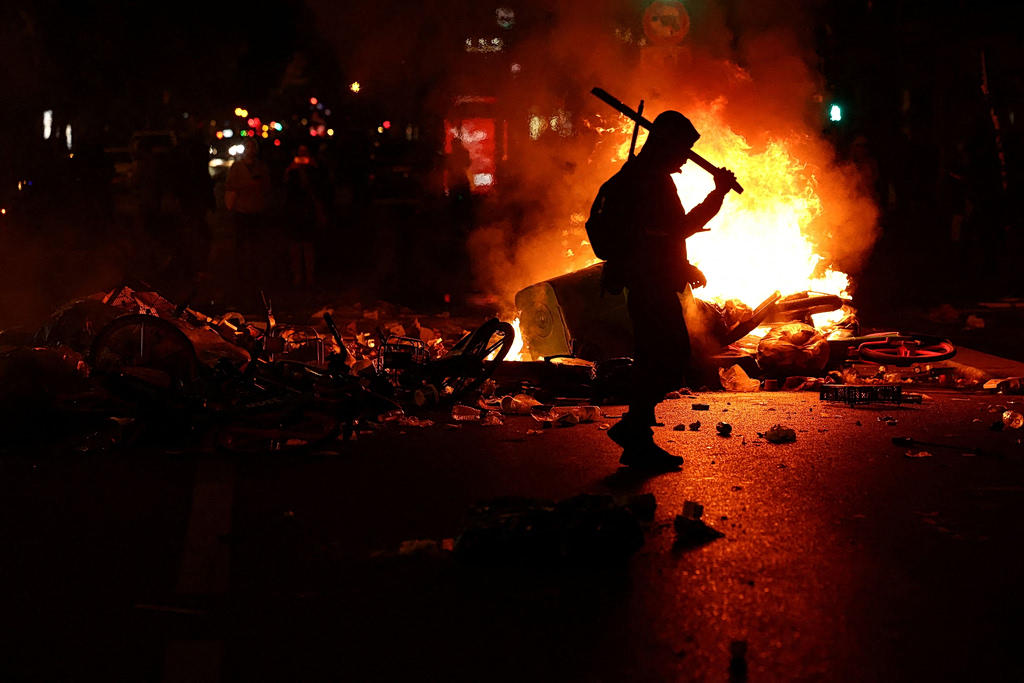
A person walks as flames rise during civil unrest, the day after a national day of demonstrations against the cost of living and rising fuel prices, in Paris, France, October 18, 2026. REUTERS/Abdul Saboor TPX IMAGES OF THE DAY
“Attacking the town hall is like attacking the Republic,” he said, accusing the far left of inciting or manipulating those responsible.
The local prosecutor’s office confirmed 17 arrests, including seven minors, but did not specify whether those detained were directly linked to the arson.
Lino Cardona, a 26-year-old art student, said the attack had abruptly overshadowed the peaceful character of the demonstration and the protesters’ demands.
“It was a powerful symbol of the fragile nature of our institutions,” she said.
Mayor criticizes government response
Residents also voiced frustration over what they saw as government inaction. Guérin accused the state of leaving local communities unprotected and said local police had run out of ammunition by 3:30 p.m. on Saturday.
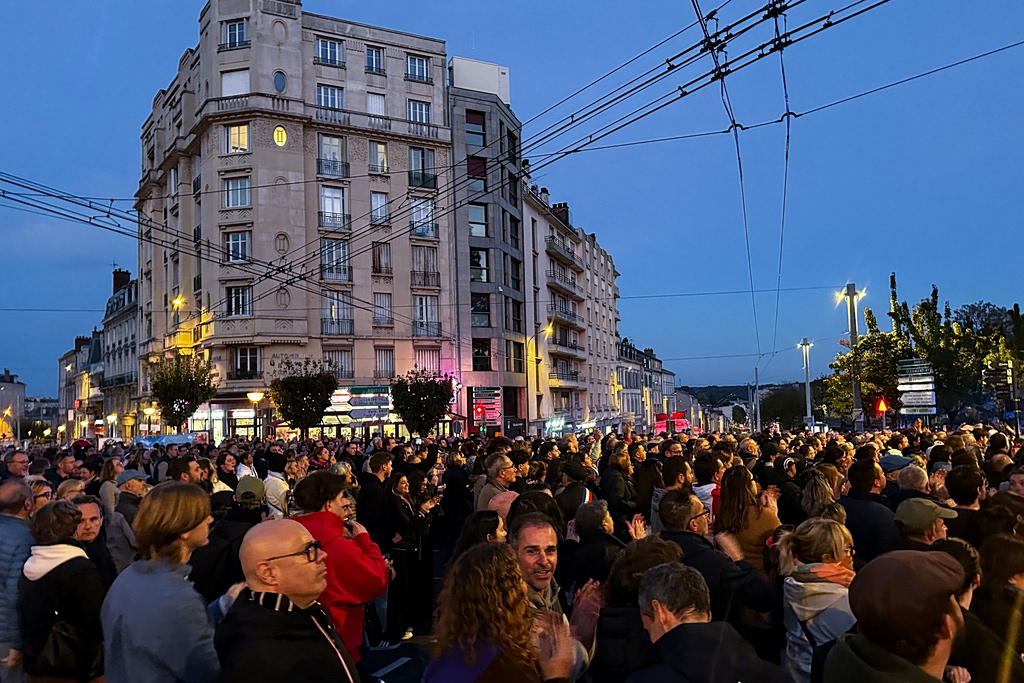
Residents gather during a protest following a fire at the town hall in Limoges, France, October 18, 2026. Picture taken with a mobile phone. REUTERS/Clotaire Achi
Warning that the situation could deteriorate further without a change in government policy, he said: “Things will end very badly.”
Lecornu, in a message to the mayor, promised that the state would cover the costs of restoring the town hall and said he would visit Limoges during the week. He reiterated that those responsible for the destruction would be made to pay.
With the presidential election approaching, the unrest has become a major political test for Macron’s government, as competing parties seek to define the causes of the violence and determine who should be held accountable.