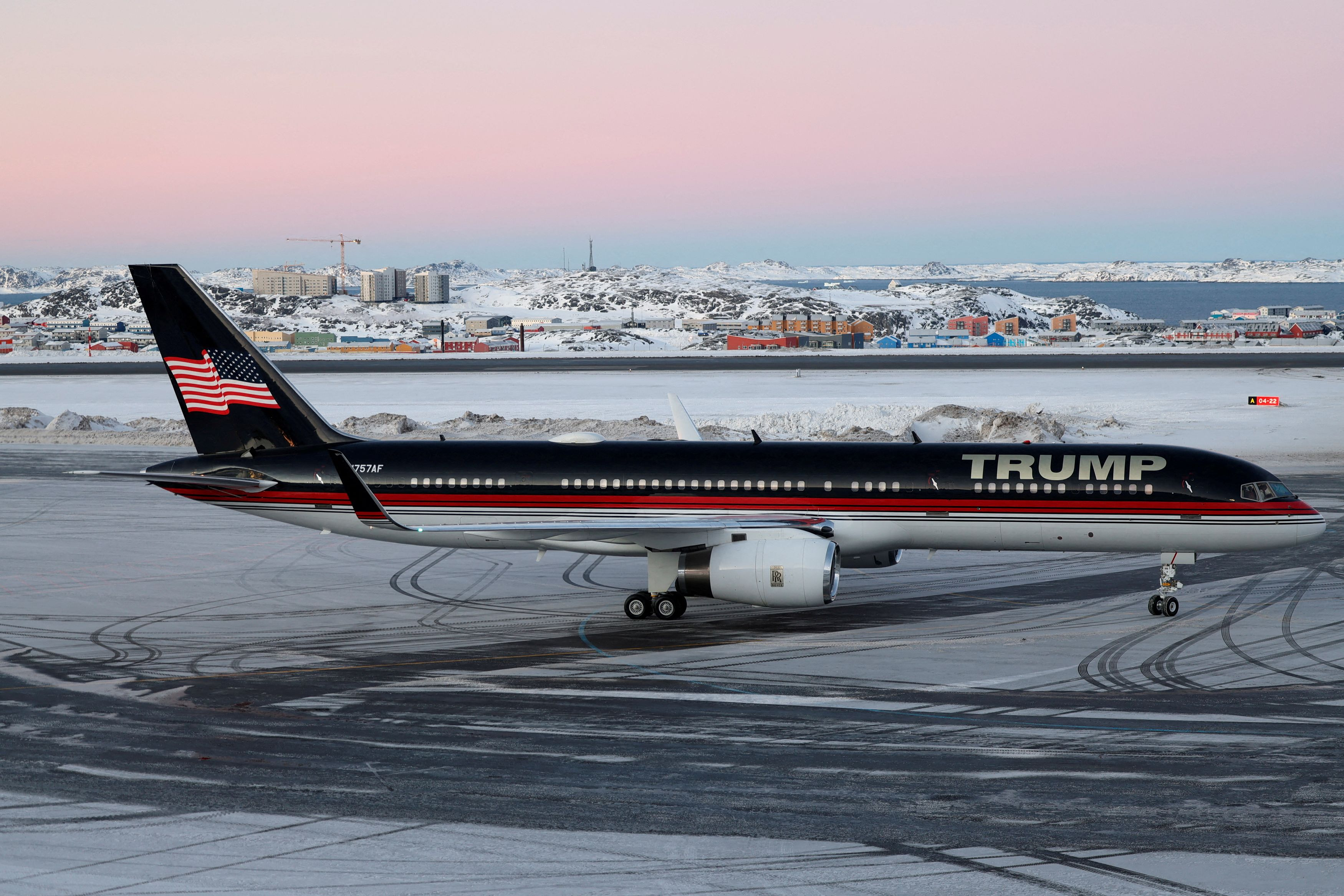
Developments in international politics are moving at a breathtaking pace. The primary driving force behind this acceleration is President Trump, who, in increasingly unpredictable fashion, has launched one dramatic initiative after another. The attack on Venezuela and the violent seizure of President Nicolás Maduro offers a preview of what the international community may face over the course of the year that has just begun.
The world has just witnessed what Trump and his all-powerful military are capable of. Meanwhile, planners in Washington – with intimidating transparency – are turning their attention to the next targets. Colombia, and above all Cuba, are widely seen as potential objectives of Washington’s interventionist ambitions – ambitions that no longer appear to be merely theoretical.
And then there is Greenland. In recent days, attention has increasingly focused on the enormous island north of the United States, rich in natural resources and of rapidly growing geostrategic importance. The sparsely populated territory formally belongs to the Kingdom of Denmark – a member of NATO and the European Union.
Much ink is being spilled in European editorial pages over the half-hearted responses of European governments to Trump’s violation of international law in Venezuela. That the abduction of the Venezuelan president – however severe and numerous his failings – constitutes a breach of international law is largely undisputed among those familiar with the matter. But international law is playing a diminishing role in the real world in which we live. This is not a time in which governments formally allied with Washington are inclined to invoke lofty legal principles in public. Let alone – almost unthinkably – to openly criticize the American president.
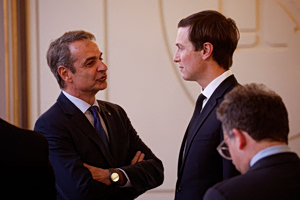
Instead, Europe’s governments are resorting to rhetorical evasions and elaborate formulations to avoid taking a clear stand. “The legal assessment of the U.S. operation is complex. We will take our time,” declared German Chancellor Friedrich Merz, who likes to cast himself as Europe’s leader in a world whose geopolitical order has come unmoored. The Greek Prime Minister, Kyriakos Mitsotakis, sounded similarly diplomatic – or opportunistic, to use another term for such flexible treatment of international law- when he remarked that this was not the right moment for Athens to comment on the legality of the American strike.
The reasons for the German chancellor’s verbal restraint are not hard to identify. Merz feels compelled to avoid anything that might jeopardize his reportedly good relationship with President Trump. Berlin is convinced that Germany and Europe are deeply dependent on the United States, above all for ending Russia’s war of aggression against Ukraine, where Washington’s position remains decisive. Public criticism of Trump’s Venezuela policy – which he hails as yet another triumph of his administration – could quickly backfire.
Ukraine plays far less of a role in the calculations of Greece’s prime minister. But Mitsotakis, too, is determined to avoid falling out of favor with Trump at any cost. Athens’ security strategy is dominated by the fear of a potential military move by NATO partner Turkey. In an hour of crisis, Greek policymakers believe, only the firm intervention of the U.S. president could halt an attack from Anatolia. Therefore, Greeks watch uneasily as Trump repeatedly displays open admiration for Turkish President Recep Tayyip Erdogan.
That Europe has become a secondary actor in military affairs in the emerging world order is reflected in its intense courting of American support in the effort to compel Vladimir Putin to relent in Ukraine. For Europe’s governments, Kyiv feels far closer than Caracas. And as long as what one American commentator has called the “Putinization of U.S. foreign policy” does not directly clash with Europe’s core interests, leaders across the “Old Continent” – lacking alternatives and mindful of their own weakness – appear willing to tolerate Trump’s maneuvers.
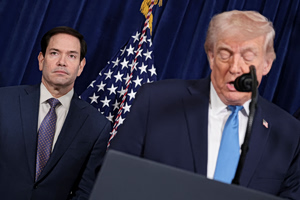
A new and dramatic turning point in transatlantic relations would come if the American president were to act on his expansionist aspirations about Greenland. “We need Greenland,” Trump declared on the very day his soldiers spirited the Venezuelan president away to the United States under cover of darkness. He left open when and how he might seize the territory: “We will deal with Greenland in about two months. Let’s talk about Greenland in 20 days,” he said – remarks that set off alarm bells in Copenhagen and other European capitals.
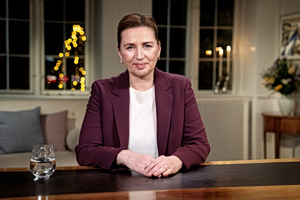
A U.S. military action against defenseless Greenland, Danish Prime Minister Mette Frederiksen warned, would plunge the transatlantic alliance into its gravest crisis and effectively spell the end of NATO. “If the U.S. chooses to attack another NATO country militarily, then everything stops, including NATO and thus the security that has been established since the end of the Second World War.”
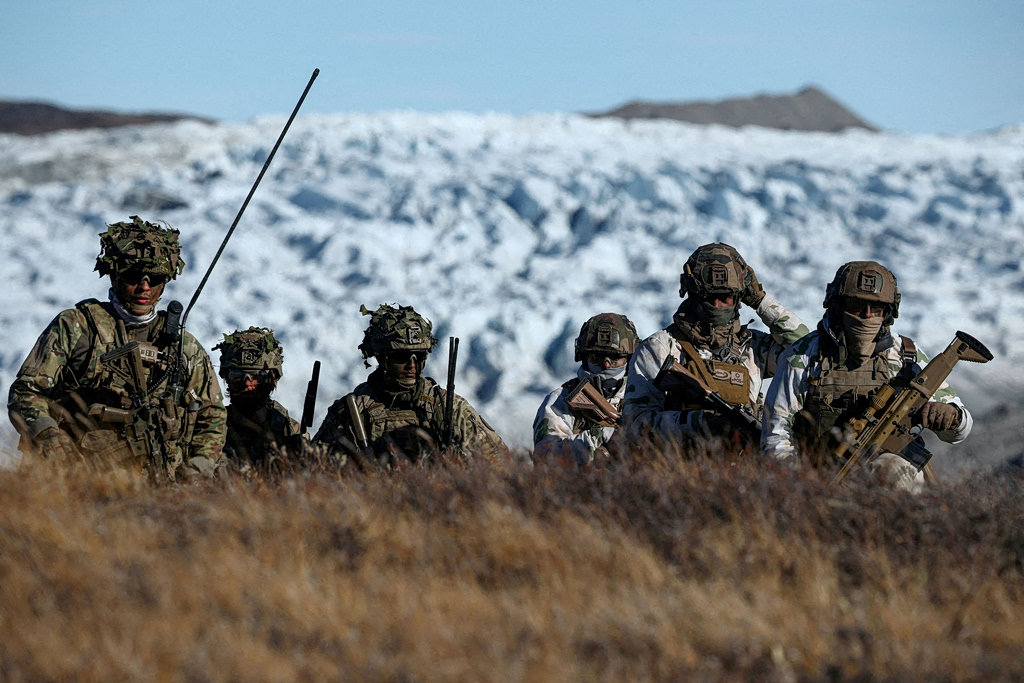
Danish troops practice looking for potential threats during a military drill as Danish, Swedish and Norwegian home guard units together with Danish, German and French troops take part in joint military drills in Kangerlussuaq, Greenland, September 17, 2025. REUTERS/Guglielmo Mangiapane/File Photo
Unlike NATO – which, because of the United States’ dominant role, could not rally to Denmark’s support in such a scenario – the European Union would be obligated to act. Article 42 (7) of the EU treaty provides that: “If a Member State is the victim of armed aggression on its territory, the other Member States shall have towards it an obligation of aid and assistance by all the means in their power.”
Until now, that clause has figured in security policy debates mainly in the context of a feared Russian attack on EU members in the East. Today, we are witnessing a dramatic and – until recently – unimaginable reassessment. For Europe, the question is no longer only how to contain the imperial ambitions of Russia’s Vladimir Putin. Increasingly, voices are calling for Europe to prepare – as one major German weekly put it – “to resist the imperialist Donald Trump as well, and as quickly as possible.”
Dr. Ronald Meinardus is a senior research fellow at the Hellenic Foundation for European and Foreign Policy (ELIAMEP).