Beneath the rise of new parties and old resentments lies something much more fundamental: a generation losing faith. Not necessarily faith in democracy itself. Not yet. But faith in the people who claim to represent it.
For years, European politicians have described young people as politically apathetic. They complain about low turnout, declining party membership and the neglect of civic duties. It is a comfortable explanation because it places the responsibility on the young. But perhaps we have misunderstood the problem. Perhaps this generation is not apolitical. Perhaps it is simply unconvinced.
Young Europeans have grown up through a succession of crises that were supposed to be temporary but became permanent: the financial crisis, the pandemic, war on Europe’s borders, soaring housing costs and an economy in which education alone no longer guarantees security. They were told to study harder, work harder and be patient. They did. Then they discovered that patience only gets them thus far.
This is where Europe’s political establishment has failed most profoundly. It has continued to speak to young people in the language of values while young people live in the world of insecurity.
Centre-left parties speak about inclusion. Centre-right parties speak about responsibility. Greens speak about climate. Liberals speak about progress. Conservatives speak about tradition.
But who speaks about the twenty five-year old who has two degrees, three internships and still earns the minimum wage doing a job that he or she has no interest in doing whatsoever. Who speaks to the thirty-year old who has postponed having children because economic independence seems like a luxury? Who speaks to the young person who looks at politics and sees a system that preaches about engagement, but is nothing more than an exclusive club that protects only those who can maintain its coherence.
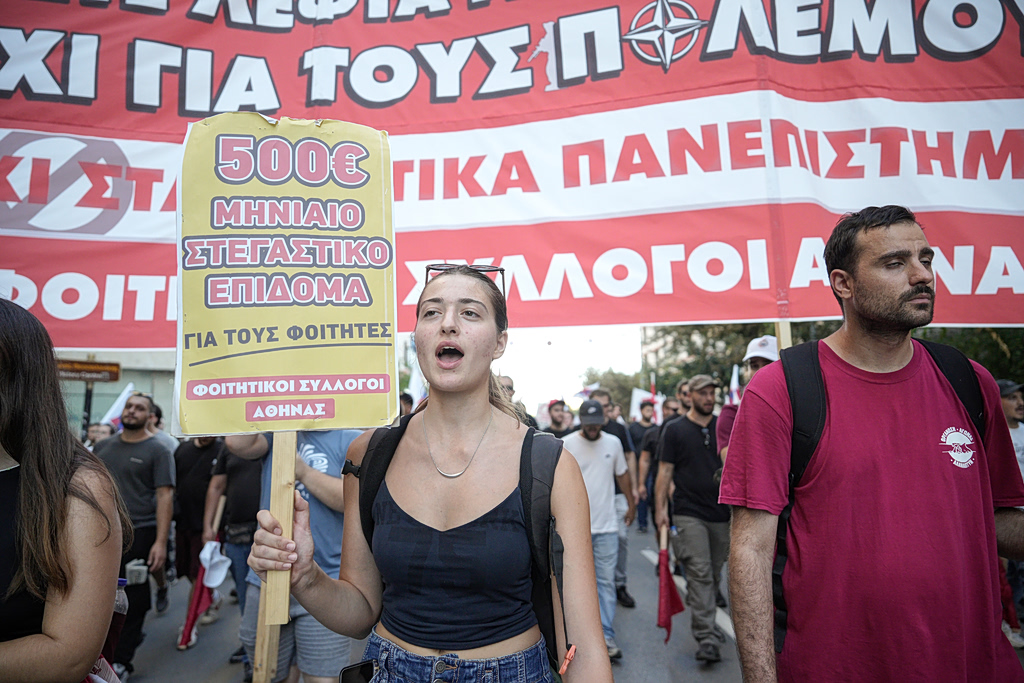
Demonstrations in Thessaloniki on the occasion of the Prime Minister’s annual speech at the 90th International Exhibition of Thessaloniki, September 5, 2026./
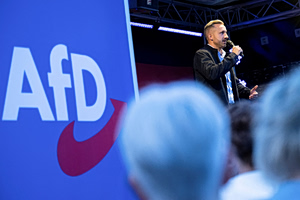
The far right deceitfully took advantage of this frustration earlier than its opponents. The Alternative for Germany (AfD) does not need young voters to agree with every element of its program. It only needs to convince them that the established parties do not feel their anger. The Rassemblement National in France has similarly benefited from turning political frustration into a story about border security, ethnic identity and national decline. In Sweden, the Sweden Democrats have helped move immigration from the political margins to the centre of national debate. In Italy, Giorgia Meloni’s Brothers of Italy has demonstrated how a party once regarded as radical can become a longstanding governing force. The lesson is uncomfortable. The far right does not always win because people suddenly become extremists. Sometimes it wins because everyone else has stopped offering convenient answers.
It is tempting for liberals and progressives to describe every young voter attracted to the populist right as ignorant, manipulated or intolerant. That may feel morally satisfying, but it is politically disastrous. You cannot persuade someone by telling them that their frustration is illegitimate. Then there is another mistake: assuming that young Europeans are moving uniformly and unconsciously to the right. They are not. The political map among young people is fragmented. Some are attracted to radical right parties. Others move towards radical left movements. Some support environmental parties. Others reject traditional politics altogether. But most importantly, the majority of the youth does not vote at all.
What unites them is not ideology. It is distrust. Distrust that the old political forces, that have repeatedly failed them, can instantaneously now tackle their everyday obstacles. The old political world as we knew it is gradually disappearing. A young European can support gay rights and stricter immigration controls. They can demand climate action while rejecting expensive green policies. They can favor a strong welfare state and distrust Brussels. They can support Ukraine and simultaneously believe that their own government has neglected domestic problems. The political system wants voters to fit neatly into ideological boxes. Young people increasingly refuse to do that.
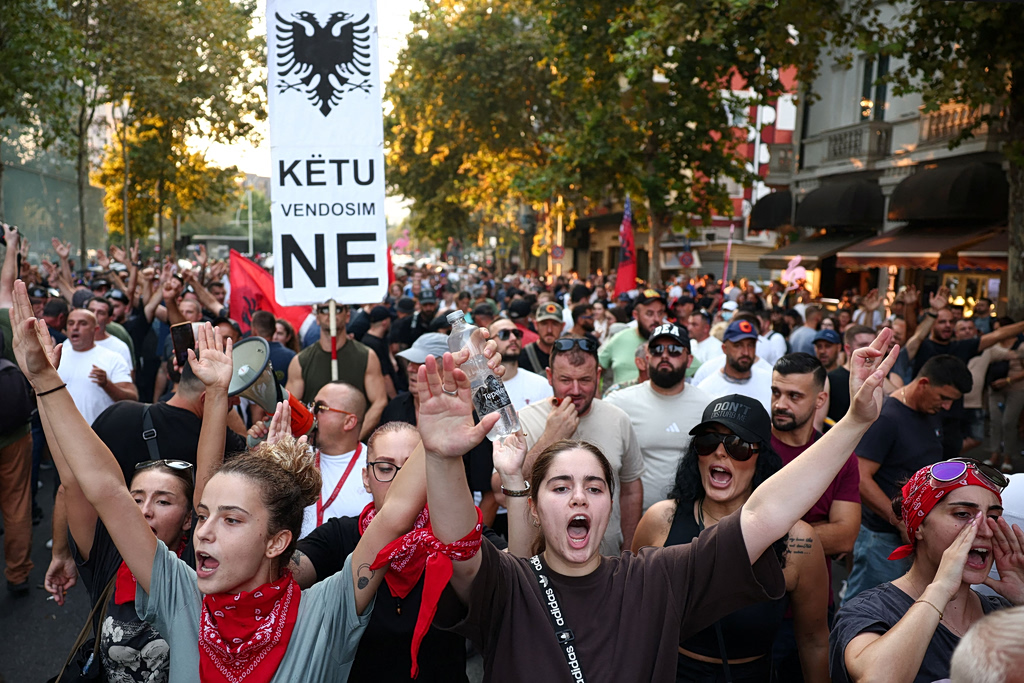
Protesters shout slogans during a demonstration against the government, following months of protests against a planned luxury resort backed by a company linked to Jared Kushner, the son-in-law of U.S. President Donald Trump, on an environmentally sensitive part of the Adriatic coast, in Tirana, Albania, September 8, 2026. REUTERS/Florion Goga
Social media has accelerated this transformation. Politics is no longer encountered primarily through speeches, party conferences or newspaper editorials. It arrives through thirty-second videos, memes, influencers and outrage. The politician who can explain a complicated policy in a sentence is guaranteed victory over the politician who needs twenty minutes to elaborate on the same topic. This does not make politics better. But it makes political communication brutally honest: attention must be earned. And traditional parties are losing. They are not earning this generation’s attention.
The greatest danger is therefore not that Europe’s youth moves to the far-right. It is that young Europeans have stopped believing that politics can change the way that they live. That is far more dangerous. Democracy will survive an election victory by the far right. It will survive a government changing hands. It will survive extreme political polarization. What it cannot easily survive is a generation that concludes that participation is pointless.
Europe’s political establishment should stop asking why young people are angry and start asking whether it has given them anything to be hopeful about. Hope is not a slogan. It is affordable housing. It is a decent first job. It is the possibility of starting a family without financial ruin. It is a political system that is not designed primarily for those who already own property, accumulated wealth or influence. The generation that stopped believing is not asking for a revolution, but for something presumed as much more radical: proof that the system can work.
What this generation needs is not another promise, but a reason to believe again. Someone willing to break the silence, listen to its voice, and remind it that the windshield is bigger than the rearview mirror, because what lies ahead is much more important than what has been left behind.
Emmanouil Kalathakis is a third-year law student at the National and Kapodistrian University of Athens (NKUA).