 Μake us preferred on Google
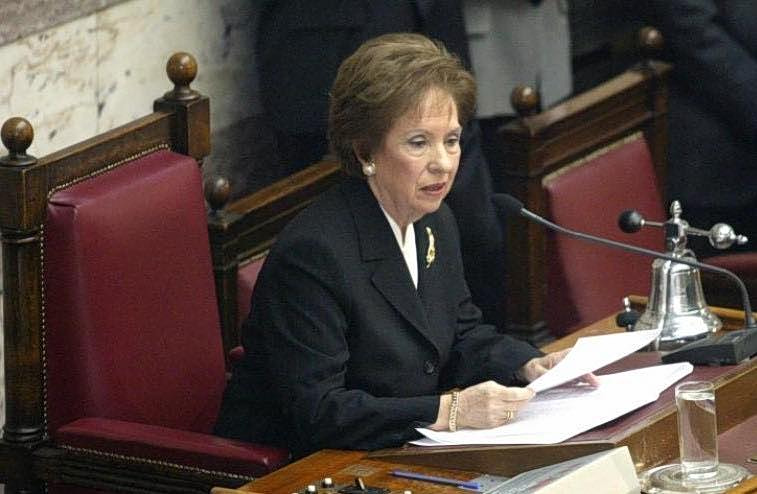
 Anna Psarouda-Benaki, a trailblazing legal scholar and one of the most prominent women in modern Greek public life, has died at the age of 92.
She made history as the first woman to serve as President of the Hellenic Parliament and later became the first female President of the Academy of Athens, Greece’s highest academic institution. Her career bridged academia, law and politics, shaping key institutions during a transformative period for the country.
From Athens to Europe’s Leading Universities
Psarouda-Benaki was born on Dec. 12, 1934, in central Athens. She graduated from the American College of Greece before studying law at the National and Kapodistrian University of Athens from 1952 to 1957.
She pursued postgraduate studies in criminal law at the universities of Bonn and Freiburg in Germany, earning her doctorate from the University of Bonn. Her international academic background helped shape her approach to legal scholarship at a time when few Greek women held such credentials.
A Distinguished Academic and Legal Career
Her academic career began in 1961 as an assistant in criminal law at the Athens Law School. She was elected associate professor in 1970 and became a full professor of criminal law in 1978, contributing significantly to the development of legal studies in Greece.
Alongside her academic work, she practiced law from 1962 and, beginning in 1975, published and directed the legal journal Poinika Chronika, a respected publication in the field of criminal law.
She also served as vice president of the Hellenic Society of Criminal Law and of the Archaeological Society at Athens. The Athens Bar Association honored her with a special award for her contribution to the legal profession.
Breaking Barriers in Public Life
In 2010, Psarouda-Benaki was elected a full member of the Academy of Athens in the chair of criminal law. She became its vice president in 2019 and, on Jan. 1, 2020, assumed the presidency — the first woman ever to hold the post.
Her earlier election as President of the Hellenic Parliament marked another milestone, making her the first woman to preside over Greece’s legislature. In both roles, she was widely seen as a figure who combined academic excellence with a strong institutional presence.
Personal Life and Legacy
Psarouda-Benaki was married to Linos Benakis, a historian of philosophy and former research director at the Academy of Athens, who died in October 2022. She spoke English, German and French and lived in central Athens.
Throughout her life, she was regarded as a pioneering figure who opened doors for women in Greece’s highest institutions. Her legacy endures in the country’s legal scholarship and in the history of its parliamentary and academic leadership.
President of Greece Pays Tribute
In a condolence message, President Konstantinos Tasoulas praised Psarouda-Benaki’s exceptional public service and historic achievements.
“She succeeded in surpassing conventional limits, excelling in every field she chose to serve, and in 2004 rightfully became the first woman President of the Hellenic Parliament,” he said.
Tasoulas noted that her death “brings sadness and reflection not only to her family and friends, not only to those of us who had the honor to know and work with her, but to all citizens who valued her personality and contribution.”
He described her as a political and intellectual figure who strengthened parliamentary institutions and served democracy with integrity and respect across party lines.
“With deep knowledge of parliamentary institutions, she enhanced the prestige of Parliament and earned the respect of all political parties,” he said. “Her love for Greece, dedication to academic teaching, service to legal science and passion for public life made her stand out not only in Parliament and government, but also in the Academy of Athens, where she rose to become president.”
Tasoulas said Psarouda-Benaki’s life stands as an example not only for women scientists seeking a role in politics, but for young people who believe that integrity, education, duty and strength of character remain essential in public and academic life.