 Μake us preferred on Google
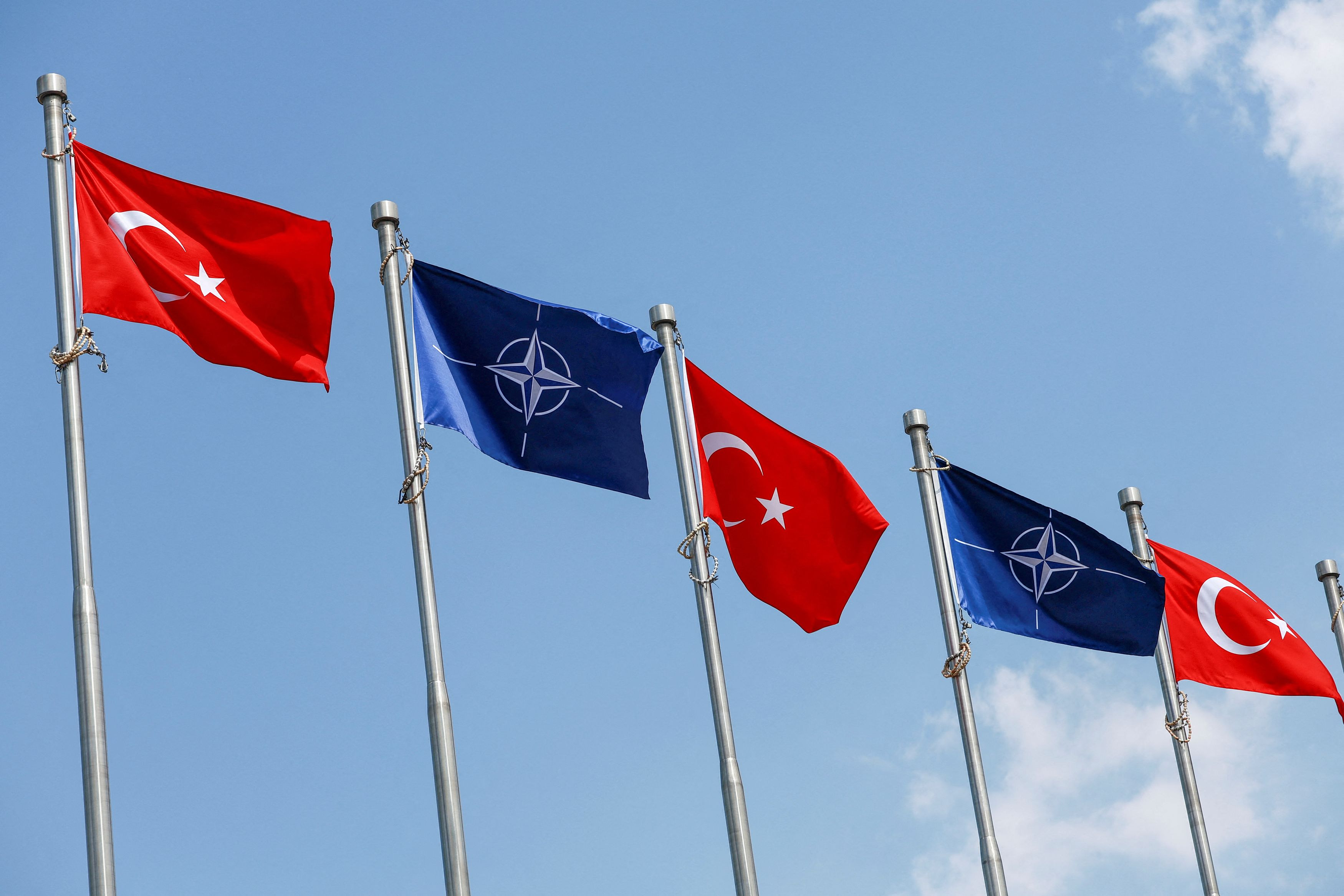
 As NATO leaders prepare to meet in Ankara on July 7 and 8, Athens is following the summit closely, working to interpret a Western alliance that has shifted rapidly in recent months. The stated goal of the NATO summit is unity, but two developments concern Greek diplomats: Washington’s declared, if gradual, retreat from the front line of European defense, and Turkey’s effort to secure a central role in the new european security order now taking shape across the continent.
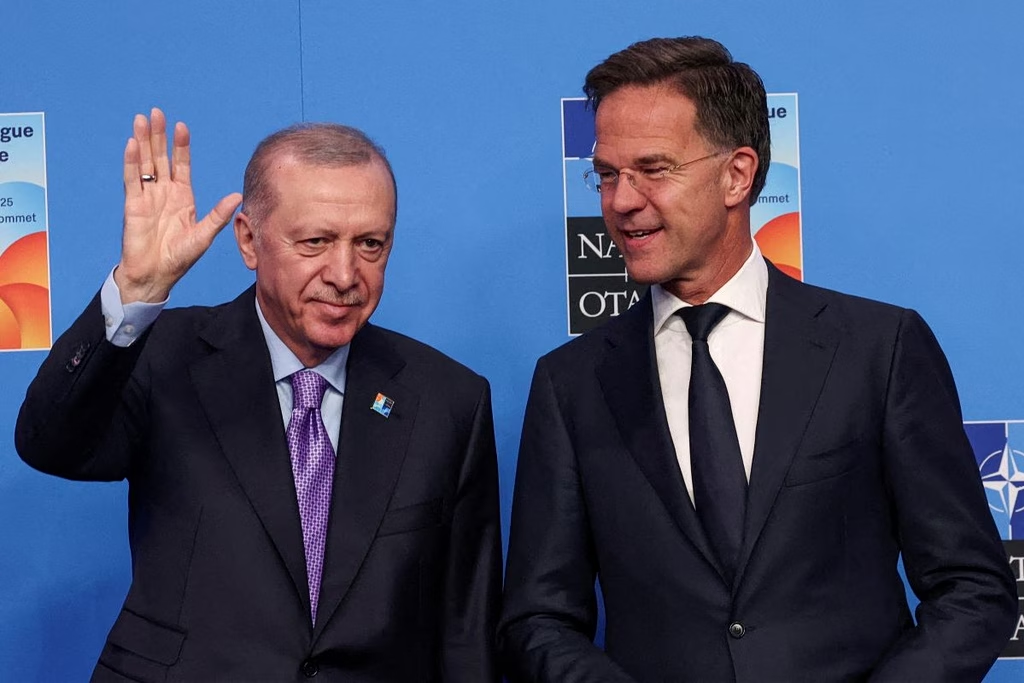
Greece is seeking to reinforce its position as a core part of NATO’s southeastern flank. It is also managing two parallel pressures: the warmer tone that has emerged in EU-Turkey relations, and the active advocacy of Secretary General Mark Rutte, who has repeatedly described Ankara as decisive for the strength of Euro-Atlantic defense.
Cohesion and ambitions
“There is no room right now for any single player to impose its own agenda, however big it thinks it is,” said a Greek diplomat closely familiar with the approach Prime Minister Kyriakos Mitsotakis is bringing to Ankara, in a reference to Turkey. The summit’s key word, the same official added, is “cohesion.” The priority for Rutte, and for all those attending, is to keep NATO united. This is a NATO summit, the diplomat stressed, not a European Council and not a EU-Turkey meeting.
Rutte’s first priority is to implement the decisions taken at the previous summit, in The Hague in 2025. That means raising defense budgets toward 5 percent of GDP and improving output from the defense industry, at least among the members equipped to deliver it, chiefly the major European powers and Turkey. He recently described the summit as a test of the alliance’s credibility, one in which political promises must become operational reality.
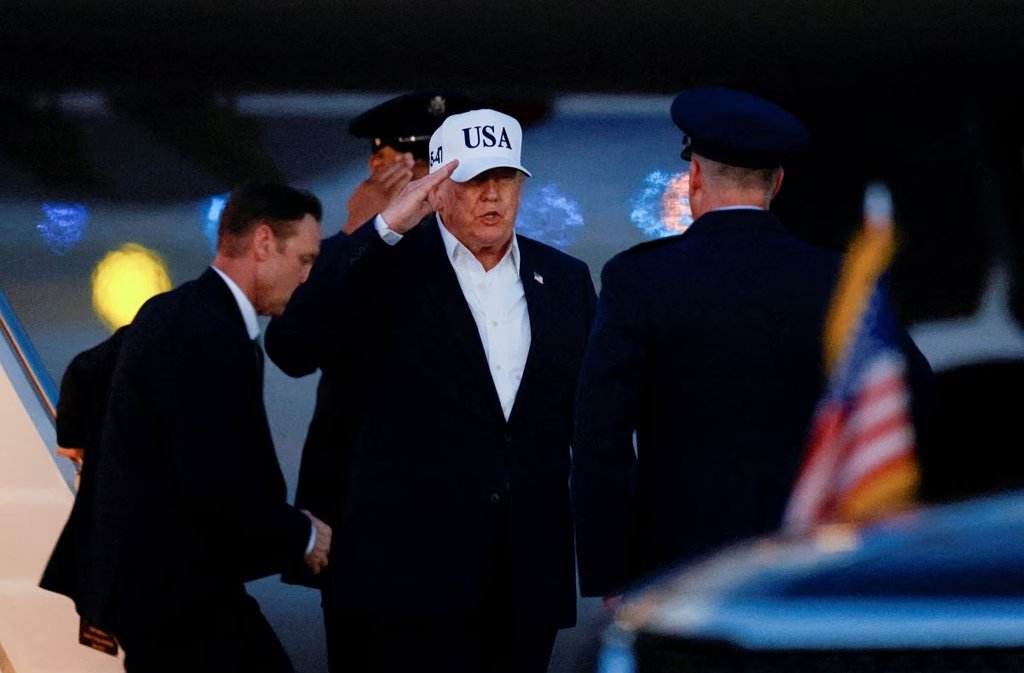
Trump will attend only one leaders’ session in Ankara, kept to a single meeting so that it remains as controlled as possible, as there is little appetite among leaders for any unpredictable behavior. This amounts to a further effort to reassure the White House ahead of what are expected to be difficult years for Europe.
The Greek positions
Mitsotakis’s diplomatic team remains optimistic, and its declared aim is a constructive Greek presence in Turkey. “We are meeting our commitments as a NATO partner to the fullest, both on defense spending and on the other objective of this year’s summit, namely full support for Ukraine,” a close aide to the prime minister said.
Athens will also maintain its position in favor of unimpeded cooperation between the United States and Europe within NATO. Maximos Mansion and the Foreign Ministry take the view that Europeans must advance defense autonomy quickly, but that full separation of the Union from Washington is not a realistic proposition. One of Greece’s central arguments is that it has consistently acted in NATO’s interests across the wider region, in contrast to Turkey, whose purchase of Russian S-400 systems marked the clearest instance of its balancing between West and East.
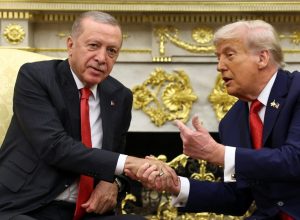
Trump and Erdogan have exchanged compliments in recent weeks, while the White House is preparing steps to support production of the Turkish KAAN fighter using American engines, partly circumventing the sanctions still in force against Ankara. Even so, Athens regards itself as the European capital with the closest relations with Washington, if not a privileged interlocutor, at both the senior level and within the legislature.
Greek diplomts also put emphasis on the emerging closer energy ties between Greece the United States, particularly the Vertical Corridor and the Chevron exploration deal south of Crete. Officials are aware that this aspect of economic diplomacy is of particular interest to Trump and could strengthen relations between Athens and Washington further. The same applies to arms procurement, though according to reliable information the United States is pressing Athens to buy a still larger share of its weapons from American suppliers.
Ankara and the allies
Turkey’s contradictory moves do not appear to give the allies pause. Hours before traveling to Turkey, Rutte described its armed forces as among the most capable in NATO and said its rapidly growing defense industry could contribute substantially to European countries assuming greater responsibility for collective defense. He has termed this “NATO 3.0.”
Athens recognizes that its capacity to counter the expansion of Turkey’s military strength is limited. As Greek officials have noted repeatedly, so long as the threat of war, the casus belli, against an EU member remains in place, Greece will not accept Turkish participation in the European funding programs SAFE II and ReArm. Erdogan set out his position clearly before NATO’s parliamentary assembly, in remarks intended to pressure Athens and Nicosia: excluding Turkey’s defense capabilities on the basis of narrow political interests, he said, benefits no one.
There is also little Athens can do about the bilateral defense agreements Ankara is concluding with Europe’s major powers, among them Germany, Italy, Spain, France and Britain. At the Defense Industry Forum, held alongside the summit with representatives from every member state, Turkey will seek to sign new partnerships and further extend its presence in European security.
Greece’s position is a delicate one. It does not want its partners to view it as an obstacle to strengthening Europe’s military capabilities, yet it risks losing ground to Turkey in the competition for influence over the Aegean and the Eastern Mediterranean. There is also skepticism within Greek diplomatic circles following the visit to Turkey by EU High Representative Kaja Kallas, Enlargement Commissioner Marta Kos and Migration Commissioner Magnus Brunner. The concern is that the EU and Turkey are pursuing a different model of relations, one that separates geopolitical and defense priorities from the accession process and from Turkey’s numerous shortcomings on the rule of law, international law and principles of good neighborliness.
Turkey’s geography, size and role cannot be ignored. But it falls to Greek strategic thinking, in a rapidly changing world, to find a modus vivendi with its neighbor.