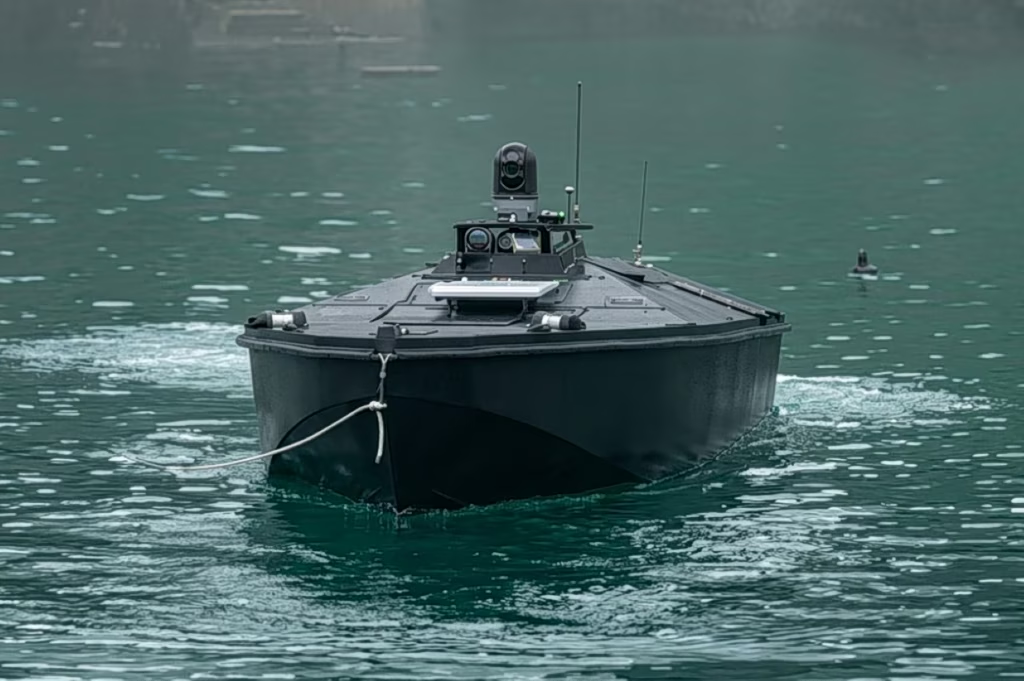
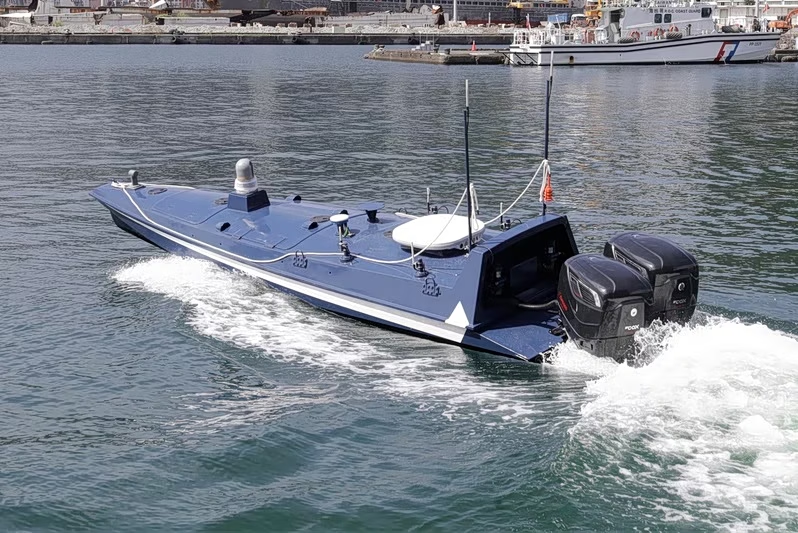
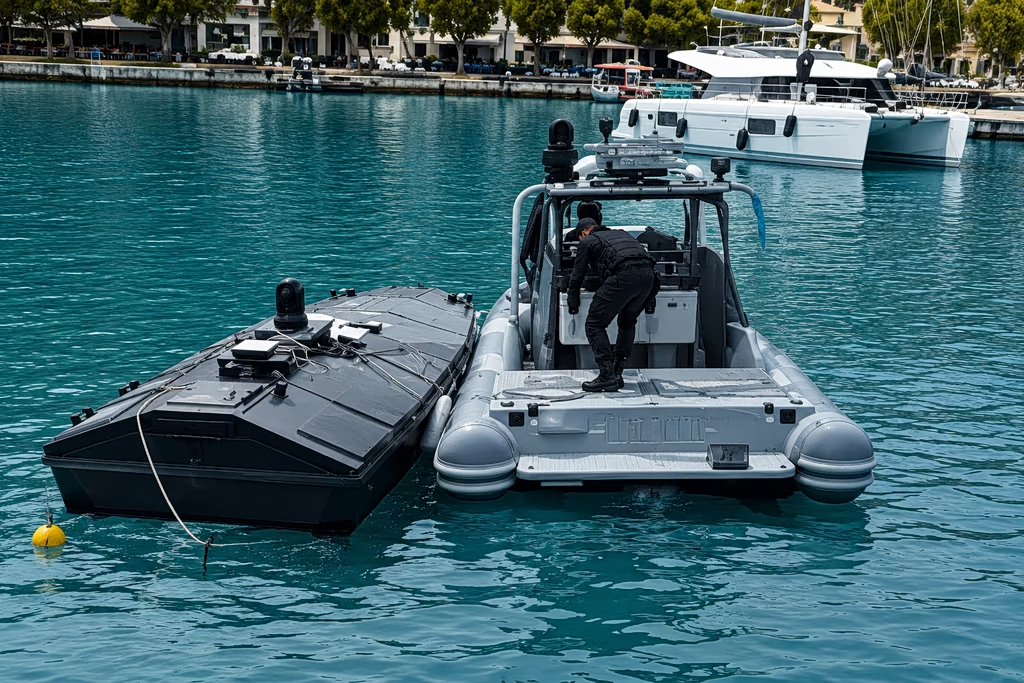
Athens is giving a diplomatic dimension to the incident involving the Ukrainian-built drone found sailing off the coast of Lefkada, with Giorgos Gerapetritis formally briefing the EU Foreign Affairs Council and even announcing specific initiatives so that, as he said, “the Mediterranean does not become a theater of military operations.”
Officials at the Greek Foreign Ministry are awaiting confirmation that the unmanned vessel, which was loaded with dozens of kilograms of explosive material, belongs to Ukraine’s forces, in order to proceed with a démarche to Kyiv — a development considered certain to cool Greek-Ukrainian relations.
“There will be a government response through the necessary démarches,” Gerapetritis said from Brussels, adopting an unusually strict tone. The reaction is considered understandable, given that the vessel was moving uncontrolled within Greek territorial waters without being detected by the competent authorities — something deemed unacceptable, especially for a state that consistently seeks to highlight its national security capabilities.
As defense experts point out, however, this particular target is almost impossible to detect, as it is not visible to any type of naval radar. That fact, combined with the extremely high risk posed by such cargo, makes Athens’s diplomatic mobilization even more necessary, with the aim of eliminating the chances of a similar incident happening again.
Where Did the Drone Come From? The Scenarios
According to the same line of information, the drone’s onboard systems allow Greek authorities, in cooperation with satellite system management companies, to map the vessel’s route and establish where the drone began its journey.
The two most likely scenarios are either that the drone was dropped in the area from a commercial ship, or that it set out from a base reportedly used by Ukrainians in the city of Misrata in western Libya. In both cases, it appears remote control of the craft was lost, causing it to veer off course and end up on the coast of Lefkada.
Concern Over the Safety of the Merchant Fleet
Regardless of which scenario proves correct, concern in Athens is intense. “In the recent past, a Greek-flagged ship was hit in the Black Sea, and now an explosive-laden drone is discovered by chance on a Greek island. This situation cannot continue,” a well-informed source told To Vima, outlining the government’s thinking: Greece’s merchant fleet cannot remain under possible, constant threat, nor can the safety of any island or mainland territory be put at risk.
This is not the first time Athens has been affected by Ukraine’s wartime strategy. In mid-March, a vessel belonging to a Greek company, which was off Novorossiysk preparing to load Russian oil, was hit by a Ukrainian drone, prompting strong reactions first from Shipping Minister Vasilis Kikilias and then from Giorgos Gerapetritis.
At the time, the foreign minister also briefed his counterparts at the Foreign Affairs Council, while according to reports from that period, Athens expressed strong displeasure to Kyiv. Then, as yesterday, European partners showed understanding and expressed support for Greece, although no official reaction has yet been recorded. It remains to be seen whether the issue will also be raised at today’s Council of Defense Ministers in Brussels, attended by Nikos Dendias.
Escalating Tension and the Oil Issue
Naturally, if Athens proceeds with a démarche — a possibility first reported by To Vima in the first hours after the incident became known — it would mark an escalation in the diplomatic dispute.
On the issue of Russian oil exports, Ukraine has strong grievances against Greece, as the Mitsotakis government had played a leading role in the European Commission’s decision to exempt European ships, allowing them to transport cargoes to third countries outside the European Union. At the time, a Ukrainian diplomat serving in Greece caused a stir by saying that “the money of certain shipping companies is stained with blood.”
Longstanding Support and Political Cost
Diplomatic sources in Athens stress that over the past five years Greece has supported Ukraine in multiple ways — financially, diplomatically and militarily — and will continue to do so as an EU member state while also fulfilling its obligations within the Western alliance.
The Mitsotakis government has paid a clear political cost for aligning with Kyiv, while never putting up for negotiation its core principles regarding respect for international law, territorial integrity and the sovereignty of a country that was subjected to an unprovoked invasion by Russia.
The government has also clearly suffered communications damage in recent days, both because of the incident itself and because of certain poorly judged public interventions. It is certain that the issue will remain in the news in the coming period, with the opposition intensifying its criticism inside and outside Parliament.
Awaiting the Démarche
Returning to the substance of the matter, beyond the results of the investigation, the text of the démarche is awaited with particular interest, as it will set out the Greek government’s arguments against Kyiv’s practices.
On the other side, of course, no one forgets that Ukraine has been fighting for nearly five years, with thousands of lives lost, infrastructure destroyed and a significant part of the country under de facto occupation.
For that reason, it seems almost impossible that Ukraine’s leadership would redefine its war strategy, especially now that hybrid warfare is producing results and pressuring both the Russian armed forces and the Russian economy. After all, mistakes happen in the field. That could be a reasonable Ukrainian response.