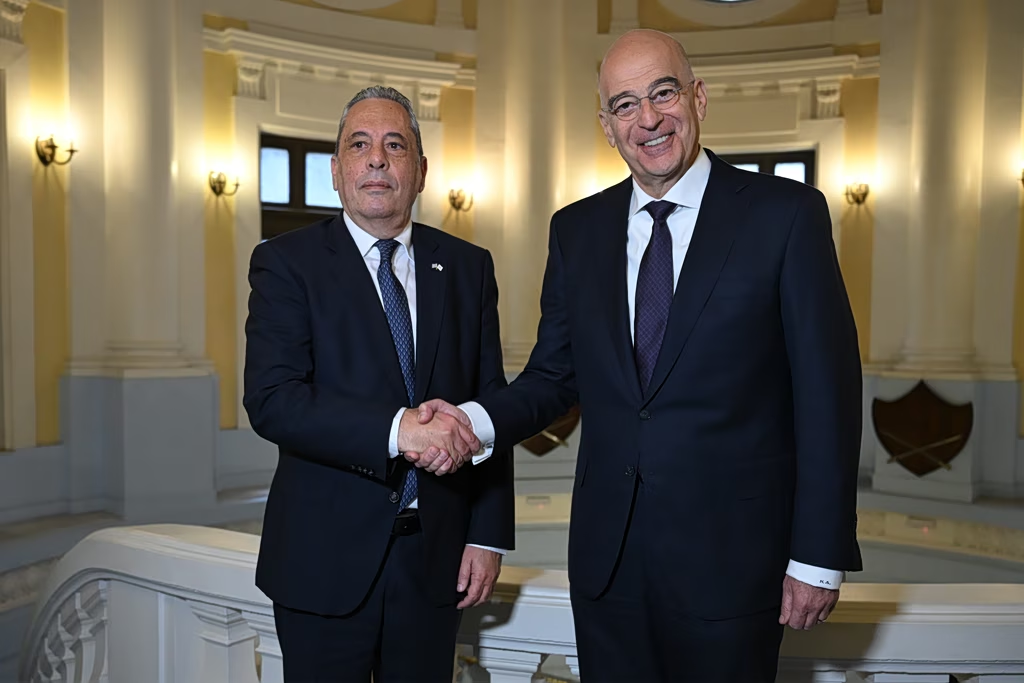
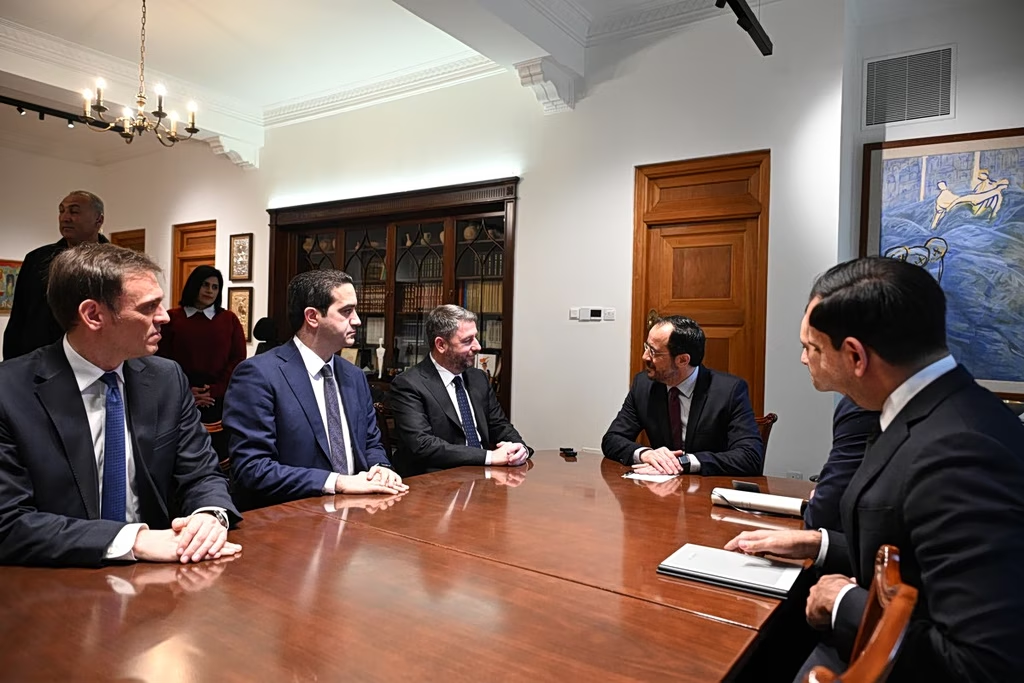
In a meeting marked by symbolism and longstanding political ties, Cyprus President Nikos Christodoulides and Greek opposition leader Nikos Androulakis focused on regional instability, European security cooperation and prospects for restarting negotiations on the Cyprus issue.
At the center of the discussion was Cyprus’ strategic position in an increasingly volatile region. Christodoulides emphasized that despite its geographic proximity to areas of conflict, the island remains “part of the solution, not the crisis.”
He pointed to what he described as a shift in the European Union’s stance, noting that solidarity among member states has, for the first time, been expressed through concrete actions rather than declarations. This development, he said, lays the groundwork for activating Article 42.7 of the EU Treaty, which provides for mutual defense among member states.
The issue is expected to feature prominently at an upcoming informal European Council meeting to be hosted in Cyprus, where security on the island will be framed as an integral part of broader European security.
EU Role Linked to Cyprus Talks
Christodoulides directly linked recent European engagement to the sensitive chapter of security and guarantees in the long-standing Cyprus dispute. He argued that tangible EU support offers the strongest reassurance for the future of a reunified island.
He also described as encouraging his recent meeting with the UN secretary-general in Brussels, reaffirming Nicosia’s political will to resume substantive negotiations based on the existing framework.
Closing his remarks, the Cypriot president expressed hope that ongoing international initiatives would lead to de-escalation in the wider region. He stressed that there are no “frozen conflicts,” warning that prolonged instability negatively affects all of Europe and makes decisive action more urgent than ever.
Androulakis: No EU State Should Enter War
From his side, Androulakis reiterated the long-standing position of PASOK that no European Union member state should be drawn into war. At the same time, he clarified that avoiding military involvement does not mean inaction.
He called for strong diplomatic initiatives from both Cyprus and the EU, warning that the absence of peace in the Middle East will continue to have serious consequences for Europe as a whole.
Androulakis welcomed the visible expression of European solidarity toward Cyprus, particularly through the presence of Greece and other key partners, saying it strengthens the island’s security.
Historical Context and Political Backing
The PASOK leader also highlighted the historical importance of Cyprus’ accession to the European Union, describing it as a major national achievement shaped by earlier governments under Kostas Simitis and Andreas Papandreou.
He stressed that Cyprus’ European path remains the foundation of its security framework today.
Androulakis concluded by reaffirming his full support for a just and viable solution to the Cyprus issue, based on United Nations resolutions. He underscored that preventing any attempt to partition the island remains a core national priority, pledging continued backing for the Republic of Cyprus in its efforts toward reunification.