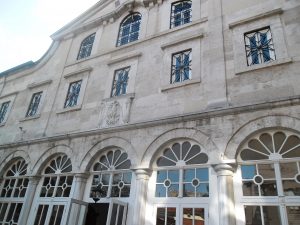
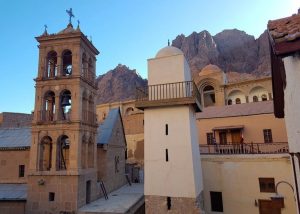
Draft legislation recently tabled in Parliament includes a provision defining the legal status of the historic St. Catherine’s Monastery of the Sinai in Greece, a development that comes after a recent Egyptian appeals court decision threatened the very existence of the supremely significant Christian Orthodox landmark.
In statements on Friday before members of a relevant standing committee on education issues, Education Minister Sofia Zacharaki cited what she called the Greek state’s determination to support the mission and work of the monastery – considered the oldest continuously operating monastery of Christendom.
St. Catherine’s of the God-Trodden Mount Sinai was built in the southern wilderness of the same-name peninsula in the sixth century on the order of Eastern Roman Emperor Justinian. It is considered a holy site by all three Abrahamic religions.
“This is a historic initiative that, for the first time in 15 centuries, provides a clear legal status to a unique religious and cultural institution, with respect of its autonomy and ecclesiastical status. We are preserving a treasure of culture and spirituality that belongs to all of humanity. We are proving, in practice, that Greece is the cradle of Orthodoxy,” Zacharaki said, in answer to a question.

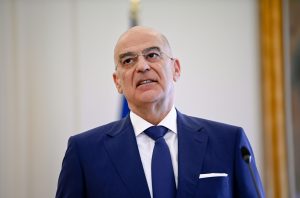
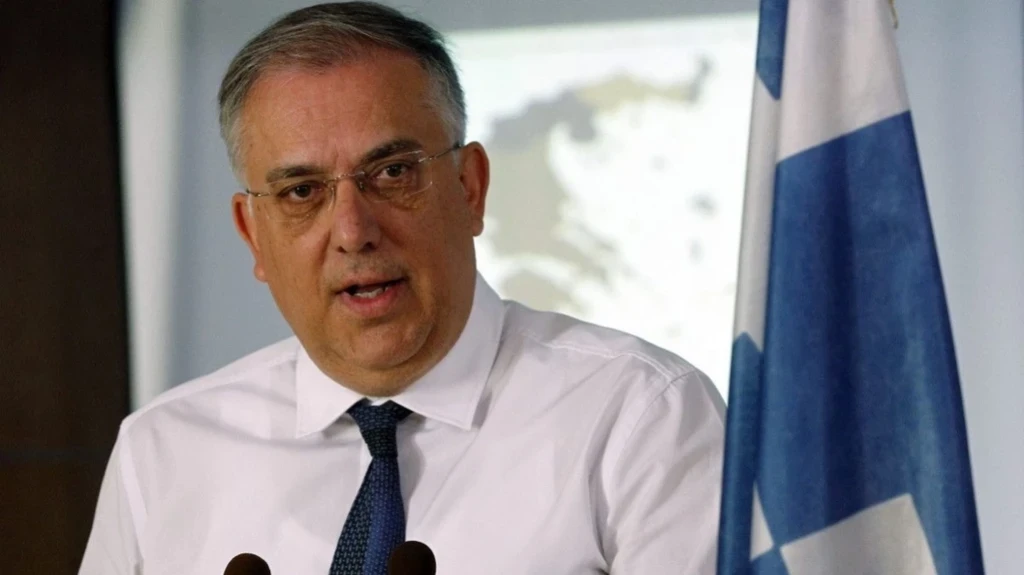
File photo: Education Minister Sofia Zacharaki
The emergence of a serious threat to the monastery’s properties, holdings and even its existence as a spiritual center of Orthodox monasticism sparked a diplomatic flurry in Athens last month, with Greek leadership seeking immediate contacts with the Egyptian government to avoid the potentially disastrous consequences of the legal decision issued by a court in Ismailia.
Support to Patriarchate of Antioch
Another provision in the draft bill allows for another 10 scholarships for Syrian and Lebanese nationals proposed by the Patriarchate of Antioch and All the East for study at secondary ecclesiastical academies in Greece and at university-level theology faculties. Under the proposed legal provisions, the Damascus-based Patriarchate of Antioch will propose scholarship candidates, with a subsequent consensus opinion provided by the Autocephalous Orthodox Church of Greece and final approval by the foreign ministry.
“In this way, the Greek state is decisively helping the Patriarchate of Antioch to improve the level of its clergy, and we are re-establishing a direct channel of communication with the Greek Orthodox faithful in Syria,” Zacharaki emphasized.
Legal Recognition of Bektashi Alevis of Thrace
Turning to complex issue affecting a group within the Muslim minority in the northeast province of Thrace, Zacharaki said the government in 2021 for the first time licensed a prayer house belonging to the small Bektashi sect in the region.
“With Article 49 of this (draft) bill, the religious minority of the Bektashi Alevis of Thrace acquires legal status as a religious entity under Law 4301/2014, with Greece is taking another step in the right direction toward protecting religious freedom,” she said.