
 Μake us preferred on Google
 The European Parliament (EP) adopted a resolution on Wednesday asking for a legal opinion from the European Court of Justice (ECJ) on whether or not the recently signed EU-Mercosur trade agreement conforms with the EU Treaties.
About the Resolution and the Vote
The resolution, originally penned by the Left, narrowly passed with 334 votes in favor, 324 against and 11 abstentions. That being said, support cut across party lines, including from the Left (far-left), Socials and Democrats (left-center), the Greens, Renew Europe (centrist), the European People’s party (center-right), European Conservatives and Reformists (right), Patriots for Europe (right/far-right), Europe of Sovereign Nations (far-right) and Non-Inscrits.
A second resolution, also demanding a legal assessment was rejected with 225 votes for, 402 against and 13 abstentions. It is not uncommon for different political parties to sponsor similar resolutions, and in this case the first resolution, which passed, prevails.
According to an official announcement by the EP, “the legal basis of the EU-Mercosur partnership agreement (EMPA) and the interim trade agreement (iTA) will now be reviewed by the ECJ. The EP will continue its examination of the texts, while awaiting the opinion of the EU Court. Only then, Parliament will be able to vote to grant consent (or not) to the Agreement.”
Reacting to the vote, prominent German MEP Bernd Lange took to X, calling those voting to send the agreement to the ECJ “absolutely irresponsible”, as the move may delay the implementation of the agreement for several years.
Absolutely irresponsible. This is an own goal. Those against #EU #Mercosur should vote against in consent procedure instead of using delaying tactics under the guise of legal review. Very harmful for our economic interests and standing. Team Europe putting itself offside.
— Bernd Lange (@berndlange) January 21, 2026
Speaking with To Vima International at the EP on the condition of anonymity ahead of the vote, several MEPs from the Left explained the “big picture” behind the proposed resolution, expressing that their party has lost trust in EC President Ursula von der Leyen. Over the past few years, the party has growing concerns about transparency in deals, such as with vaccines during Covid, and more recently, with ReArm Europe.
In a post on X after the vote, the Left celebrated their “Victory”, saying that the results are a “blow” to the treaty, which is “destructive to agriculture, the climate and health.”
🔴 VICTORY!
The European Parliament has voted for The Left’s request to refer the Mercosur agreement to the ECJ.
A blow to this treaty, which is destructive to agriculture, the climate, and health.
“A great victory for farmers. A great victory for the Left” – @lukeming pic.twitter.com/cRTDRDf1Bp
— The Left in the European Parliament (@Left_EU) January 21, 2026
European think-tanks have noted the uniqueness of the composition of political resistence against the EU-Mercosur Agreement, as it has managed to unite a broad political spectrum against the deal, including the far left and far right.
In a press conference on Mercosur after the vote, several journalists prodded EPP MEP Jörgen Warborn about the large number of EPP party members that broke ranks and voted for EU-Mercosur to go to the ECJ, asking it reveals growing fragmentation within the party. Warborn explained that there has been division within the EPP, but the position of the party is that the deal should go ahead. Moreover, he will recommend the party sends a strong signal to the European Commission in support of provisional application of the agreement.
Happy Farmers, but a Setback for EC President von der Leyen
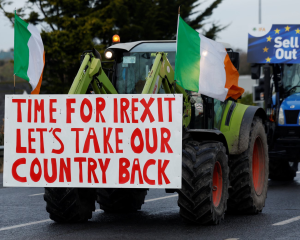
Meanwhile, outside of the EP, thousands of farmers could be heard celebrating upon learning news of the vote, along with explosions as they set off flares. The farmers, mostly French, drove hundreds of tractors to Strasbourg and parked outside of the EP in protest of the EU-Mercosur agreement, effectively grinding public transportation around the EP to a halt on Tuesday and Wednesday.

Farmers from across Europe react after the European Parliament voted on whether to refer the EU-Mercosur trade agreement to the Court of Justice of the European Union (CJEU), in Strasbourg, France, January 21, 2026. REUTERS/Yves Herman
Supporters argue that while some farming sectors would be hit, the agreement’s overall economic gains would outweigh the costs. Certain European exporters, including German car manufacturers, are expected to benefit, while the EC has insisted the deal includes sustainability safeguards and enforcement mechanisms to prevent environmental backsliding. Backers also frame EU-Mercosur as a strategic geopolitical move, helping the EU diversify trade ties and secure access to key markets and raw materials amid rising global tariff tensions with the United States.
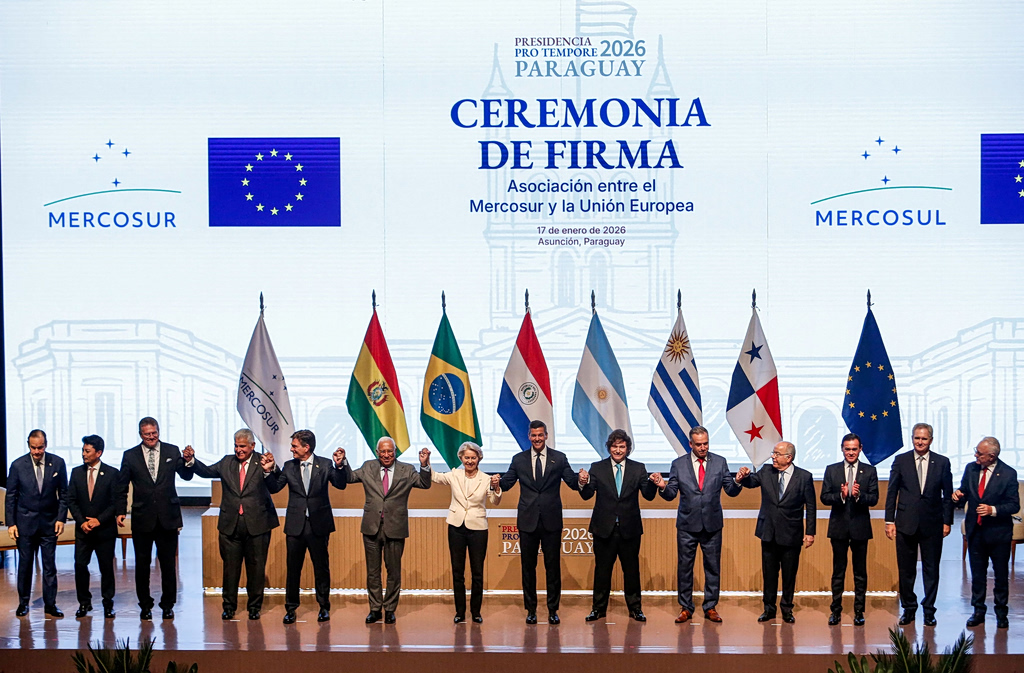
The political stakes are also high for Commission President Ursula von der Leyen, who has argued the agreement ( signed in Paraguay on January 17, 2026) could create one of the world’s largest free trade zones. She has repeatedly said the deal, 25 years in the making between the EU and Argentina, Brazil, Paraguay and Uruguay, sends a signal that the EU chooses “partnership and fair trade over tariffs.”
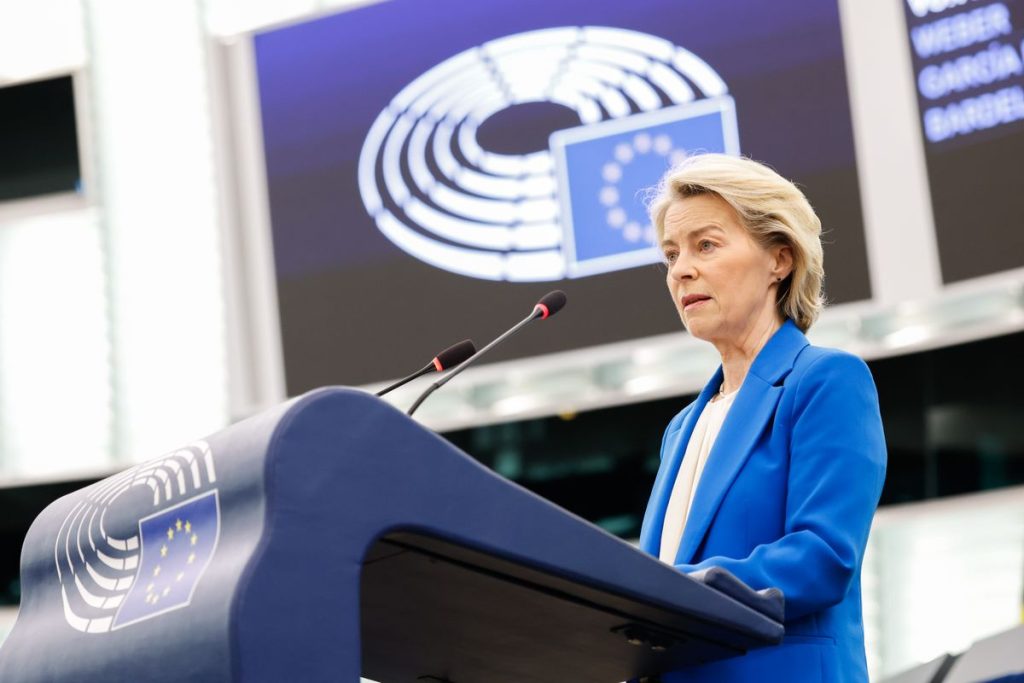
EP Plenary session – Conclusions of the European Council meeting of 18-19 December 2025, ahead of the EU-Mercosur ECJ vote.
The future of the agreement is now uncertain. With Mercosur countries already voicing frustration over repeated delays, the decision to seek an ECJ opinion before Parliament’s formal consent risks prolonging the ratification process. Whether the Commission will opt to wait for the EP’s approval, pursue provisional application, or chart another course remains to be seen.