 Μake us preferred on Google
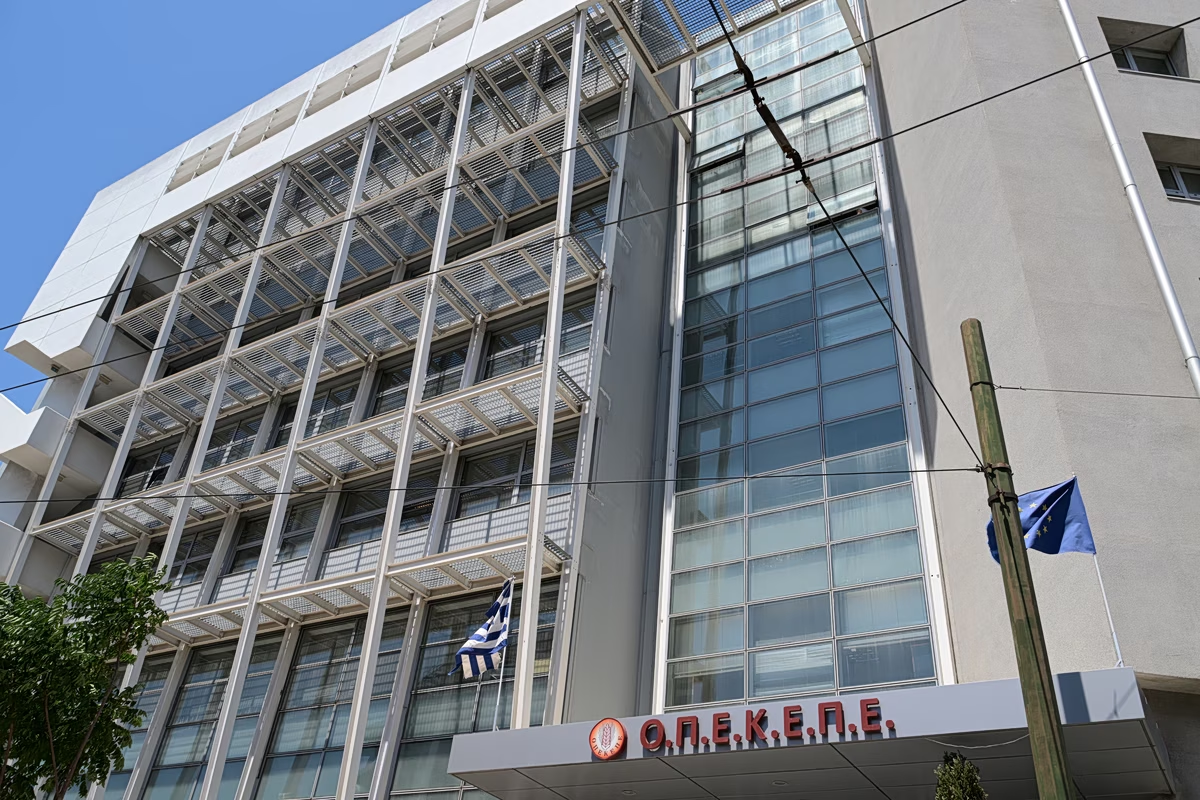
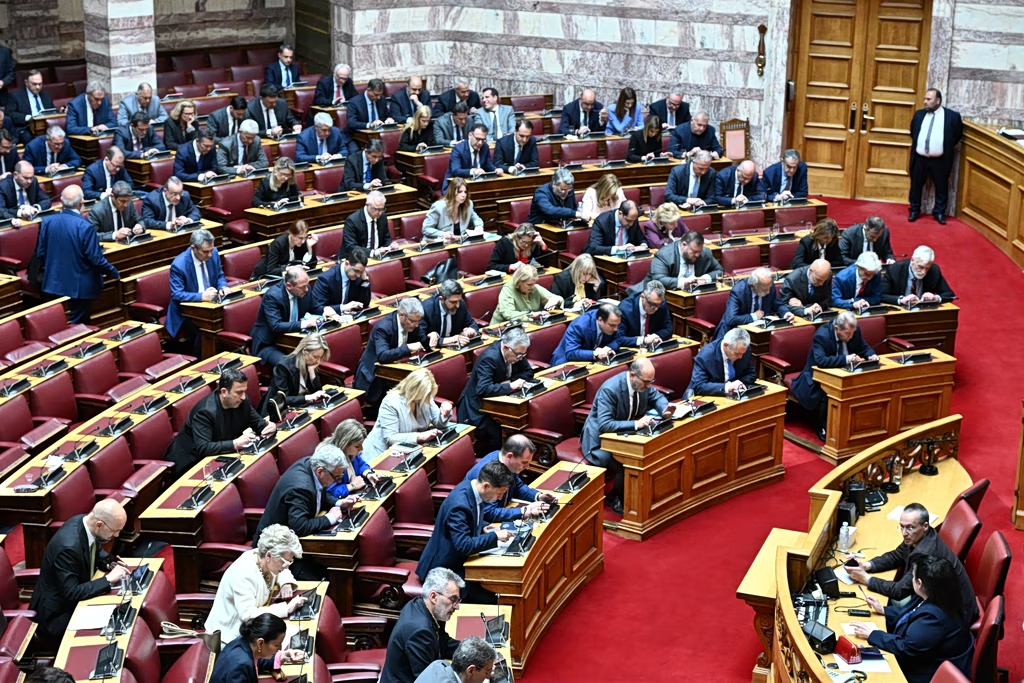
 A widening investigation by the European Public Prosecutor’s Office (EPPO) into alleged irregularities in agricultural subsidies in Greece is expected to be submitted to Parliament in the coming weeks, with new findings reportedly including at least two former ministers.
The case, referred to as “OPEKEPE No. 3,” concerns suspected unlawful payments, political interventions, and possible irregular “clientelist” practices linked to the distribution of EU agricultural funds during the first ten months of 2022. According to the investigation file, which is being handled by Greece’s Financial Police in cooperation with the EPPO office in Athens, the names of at least two former ministers—one from the Agriculture Ministry and one from an economic portfolio—are included.
Reports indicate that the investigation focuses on alleged interventions involving senior officials of the national agricultural payment agency and a former high-ranking government figure with long-standing roles in key ministries. However, speculation about the involvement of a former political party leader or a current minister has not been confirmed.
In total, between five and seven political figures are reportedly under scrutiny, including at least one opposition member. Authorities are examining whether any political pressure or “interventions” led to financial losses affecting EU funds. Some individuals under investigation have already faced scrutiny, with consequences including resignation from government roles or the lifting of parliamentary immunity.
The current file follows a previous EPPO submission to Parliament, which examined alleged irregular subsidies involving 13 MPs and ministers from the ruling party. That earlier case stemmed from a reopened investigation conducted by Greece’s police internal affairs unit between 2021 and 2022.
Origin of the investigation
The initial inquiry began after two anonymous complaints were sent to Greek police, alleging widespread irregularities in agricultural payments. The complaints claimed that legitimate farmers were being denied subsidies while others falsely declared livestock or farmland and received large annual payments, accusing them of “destroying the system through illegal practices.”
At the time, Greece’s Internal Affairs Service—the so-called “anti-corruption police”—launched surveillance on 16 officials of the agricultural payment agency. However, the investigation did not include a detailed audit of financial records or transactions, and the resulting file, spanning 33 pages of findings and 770 pages in total, reached no clear conclusion.
The initial police report also included recordings of conversations involving three members of parliament from the ruling party. Their political roles were not explicitly identified in the document, which was later attributed by police sources to administrative oversight and lack of formal judicial escalation at the time.
Reopening of the case
Interest in the case was renewed after EPPO requested a full re-examination of archived material, including 132 digital audio discs containing recordings from 2021 to 2022. The material was reprocessed, producing an expanded archive of around 14,000 pages.
The review formed part of a broader investigation into suspected political interference in the agricultural payment system. Earlier EPPO findings had already resulted in the removal of two government ministers following related evidence gathered through police wiretaps between 2024 and 2025.
According to investigators, the full analysis of the recordings—completed by Greece’s Financial Police at the end of 2025—identified suspicious communications involving approximately 20 political figures, mostly from the governing party. Around 13–14 of these cases relate to alleged interventions in 2021, while another 5–7 concern activity in 2022.
Some recorded conversations were also linked to requests by politicians seeking assistance for constituents, while others are being examined for potential administrative pressure on agency officials.
Financial impact and ongoing review
Authorities are now focusing on whether these contacts led to unlawful subsidy allocations and whether they resulted in measurable damage to the EU budget. The Financial Police has already seized digital records from the agricultural payment agency and is analyzing them alongside the intercepted communications.
Priority was initially given to reviewing 2021 material due to concerns over legal time limits and potential statute of limitations issues. The second phase of analysis—covering early 2022 through October of the same year—is still ongoing and is now being reviewed jointly with the EPPO.
Investigators are also examining allegations that information about earlier surveillance operations may have been leaked, potentially compromising parts of the investigation. According to the case file, there were claims that officials were alerted to monitoring activities, which may have influenced the closure of the original inquiry phase.
The EPPO is expected to continue evaluating the findings before deciding whether to escalate the case further once the new file is formally submitted to the Greek Parliament.