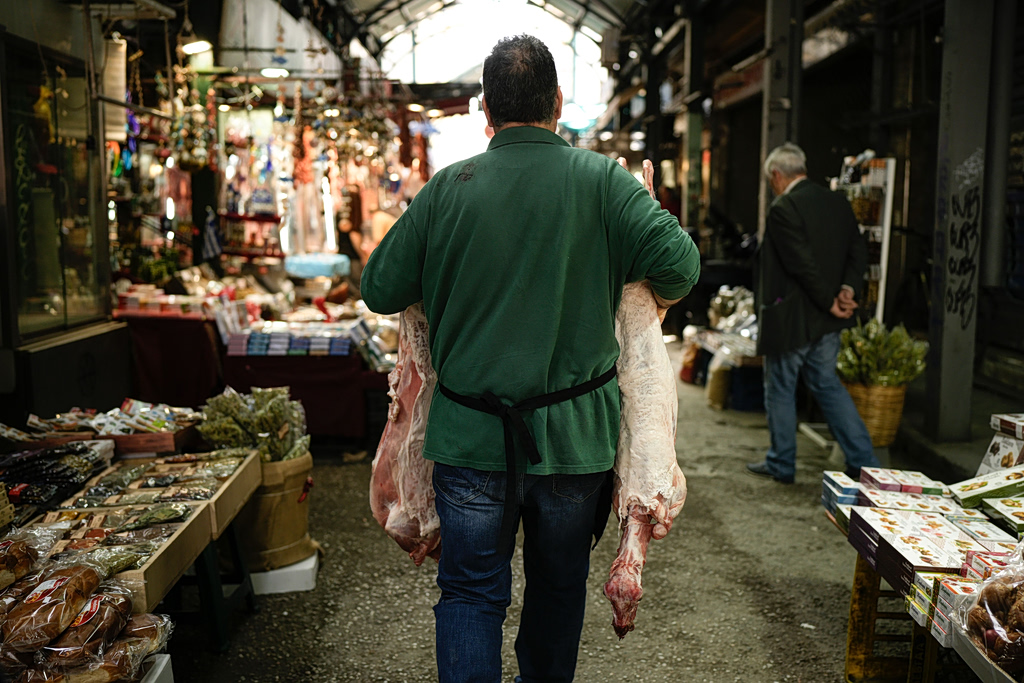
As Greek families prepare for Easter, the government is scrambling to keep a lid on prices, particularly for lamb and goat, the centerpiece of the traditional Easter Sunday feast.
Prime Minister Kyriakos Mitsotakis is scheduled to chair a meeting Monday at Maximos Mansion with his economic team to assess the state of the Easter market. Among those expected to attend are Development Minister Takis Theodorikakos and Despina Tsagari, governor of the Independent Authority for Market Surveillance & Consumer Protection.
Lamb Prices: Cause for Cautious Optimism
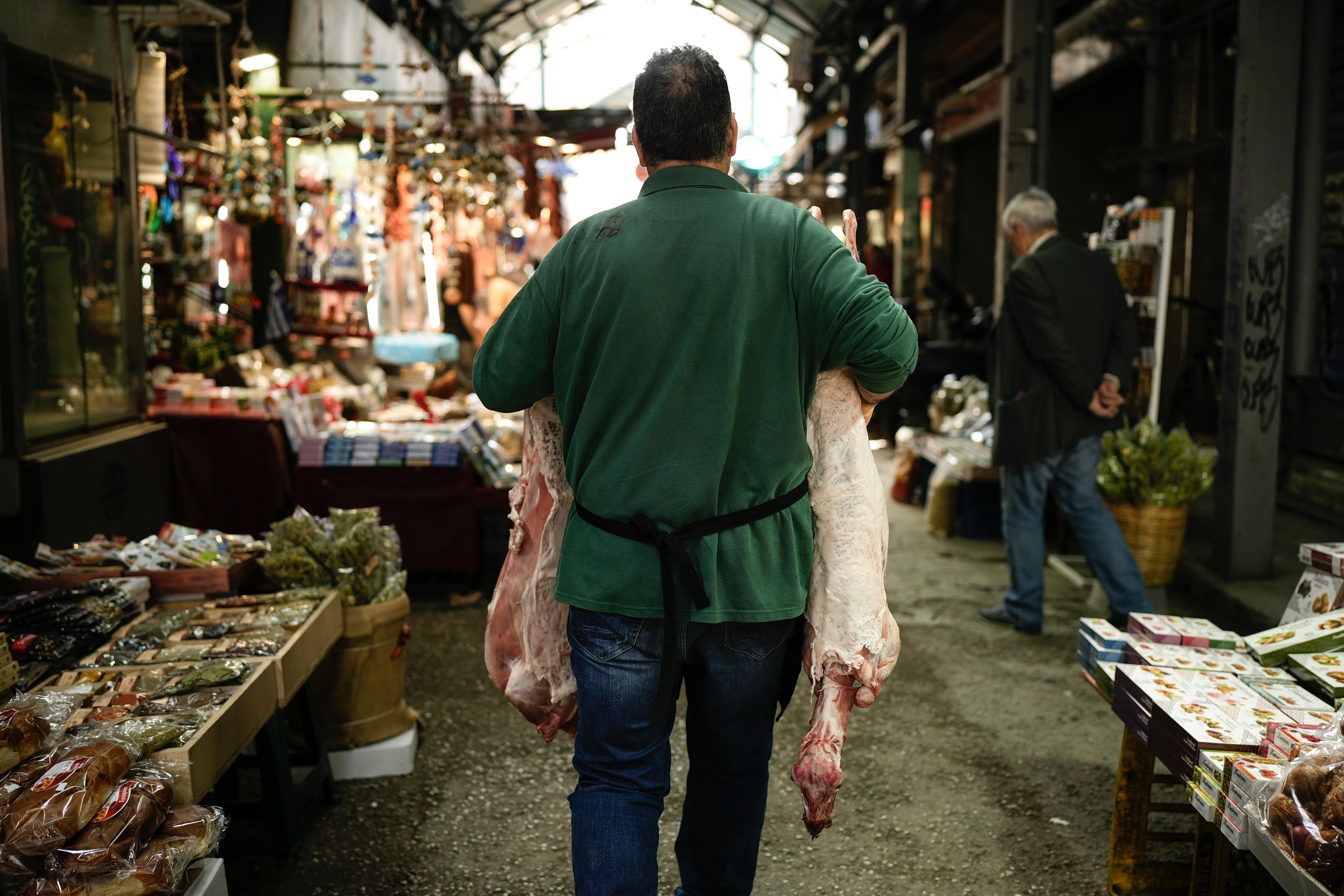
At the core of the discussions is the cost of lamb and goat meat—key components of the traditional Greek Easter meal. Officials say supply levels are sufficient, with imports already secured from Romania, Bulgaria, North Macedonia, and the Netherlands.
That has eased concerns over shortages, but not over prices.
Retail prices are expected to range between €11 and €12 per kilogram, though locally produced meat—available in smaller quantities—is likely to sell at higher prices. The days leading up to Easter, particularly Good Friday and Holy Saturday, are expected to determine final pricing trends.
A senior supermarket executive told local media that at €12.89 per kilogram, retailers are already absorbing losses of around €1 per kilo, with break-even levels closer to €13.89.
Scrutiny on Margins
Tsagari is expected to present Mitsotakis with the results of the authority’s market inspections — part of a broader effort that has included sending detailed questionnaires on gross profit margins to 110 companies, both domestic producers and importers, with responses due Tuesday.
Underlying all of it is a government-imposed cap on gross profit margins, introduced as a temporary emergency measure as the war in the Middle East began pushing up energy and transportation costs. So far, businesses have absorbed much of the pressure without passing it on to consumers. But the cap was always described as a short-term tool, and few in the market believe that description anymore. The prevailing expectation is that it will be extended for at least another quarter.
War-Driven Costs Cloud Outlook
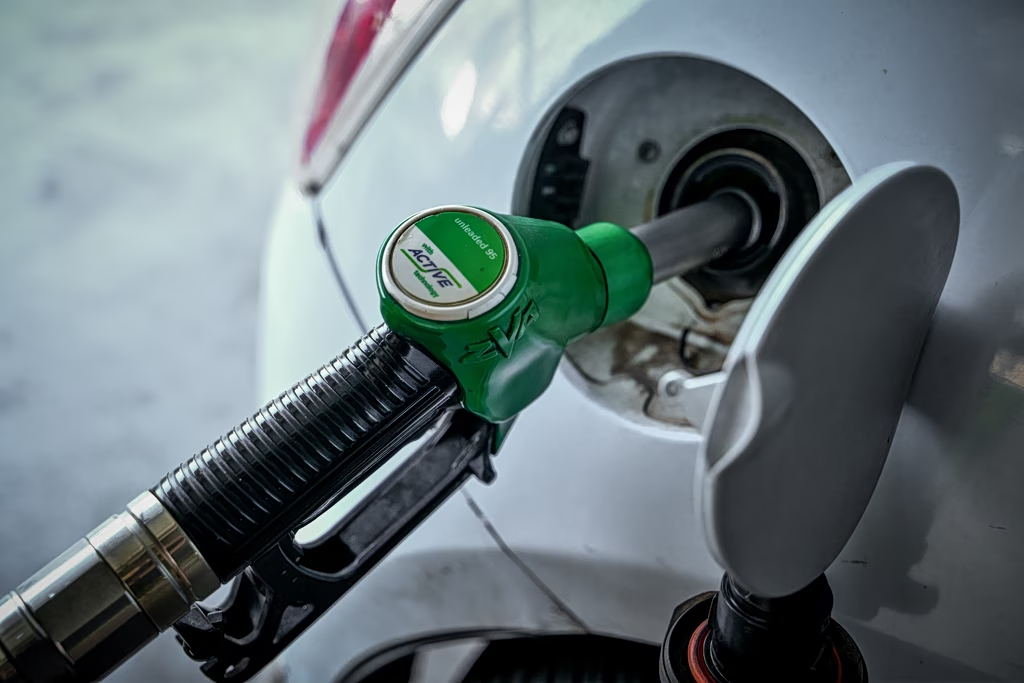
Underlying much of the pricing pressure are rising costs linked to the ongoing conflict in the Middle East, particularly in fuel. Higher transportation and operating expenses have already squeezed businesses, many of which have so far absorbed the impact, especially in supermarket goods. That buffer may not hold for long.
Industry sources warn that the period immediately after Easter will be critical, with the risk that accumulated cost pressures could begin feeding through into broader consumer prices.
The timing
The timing of the meeting is not lost on political observers. Speculation about a snap election has dogged the government for weeks, but it intensified sharply after Friday’s developments , when the EPPO case files landed in parliament implicating eight New Democracy lawmakers and two former ministers in an alleged organized scheme to illegally distribute EU agricultural subsidies. When word got out Sunday that Mitsotakis was preparing a public statement, the question being asked openly in Athens was whether he was about to pull the trigger on early elections. The government wasted little time dispelling that notion — and pointedly chose to do so by announcing a meeting on consumer prices, attempting to cast the prime minister as focused on Greeks’ grocery bills rather than his own political survival.