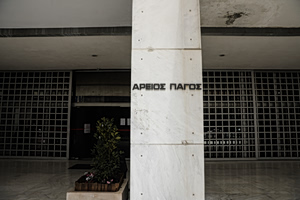
Greece’s Supreme Court prosecutor will refuse to appear before a parliamentary oversight committee on Wednesday, deepening a clash over parliament’s ability to scrutinize judicial decisions in the country’s long-running Predator spyware scandal.
Konstantinos Tzavellas, prosecutor of the Supreme Court, is expected to send a written response to the Parliament’s Institutions and Transparency Committee declining its summons. In his letter, Tzavellas is set to invoke constitutional principles and established Supreme Court jurisprudence, arguing that a prosecutor of his office cannot be required to appear before parliament to answer for judicial decisions.
The committee had called Tzavellas to discuss what it described as matters “pertaining to his functional responsibilities.” Opposition parties were widely expected to use the hearing to press him on his April 27 decision not to retrieve the Predator spyware case from the prosecutorial archive for re-examination, ruling that evidence cited by an Athens criminal court did not meet the legal threshold required under the Greek Code of Criminal Procedure to justify reopening it.
Tzavellas’s refusal follows a well-established pattern. The same constitutional argument was deployed in August 2024, when the Supreme Court rejected a parliamentary request to summon his predecessor, then-prosecutor Georgia Adeilini, and deputy prosecutor Achilleas Zisis, both of whom had handled key aspects of the surveillance investigation. A similar request in early 2024, seeking information on disciplinary proceedings against the then-prosecutor of the National Intelligence Service, Vasiliki Vlachou, met the same fate, as did attempts to summon then-deputy court president Eleni Fragkaki and deputy prosecutor Evdokia Poulou, who had conducted the related inquiry.
The constitutional argument at the heart of these refusals holds that parliamentary proceedings cannot be used as an informal mechanism for reviewing judicial decisions, a principle grounded in the separation of powers enshrined in the Greek constitution.
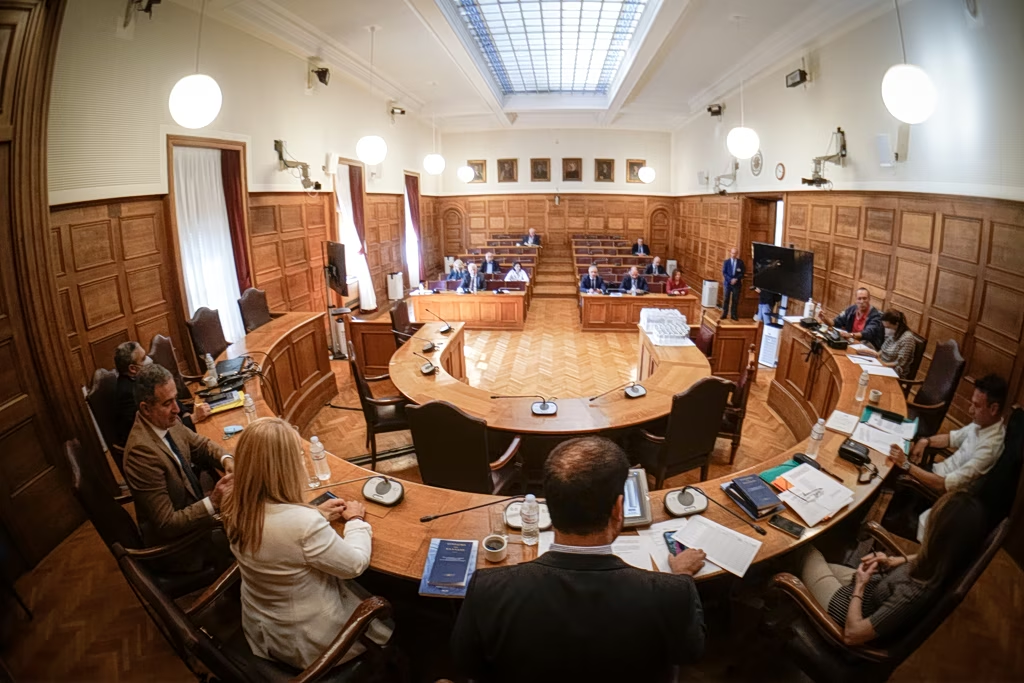
Wednesday’s session was already set to be politically charged. Themistoklis Demiris, director of the National Intelligence Service, and Minister of State Akis Skertsos are scheduled to appear before the committee earlier in the day. The hearing, called for jointly by opposition parties including PASOK, SYRIZA, Nea Aristera, Niki, the Communist Party of Greece and Plefsi Eleftherias, will be closed to the public on national security grounds.
Tzavellas’s refusal is expected to intensify opposition criticism, with rival parties anticipated to characterize the move as a smokescreen. The judiciary, for its part, is likely to hold firm on what it describes as strict adherence to constitutional limits.