 Μake us preferred on Google
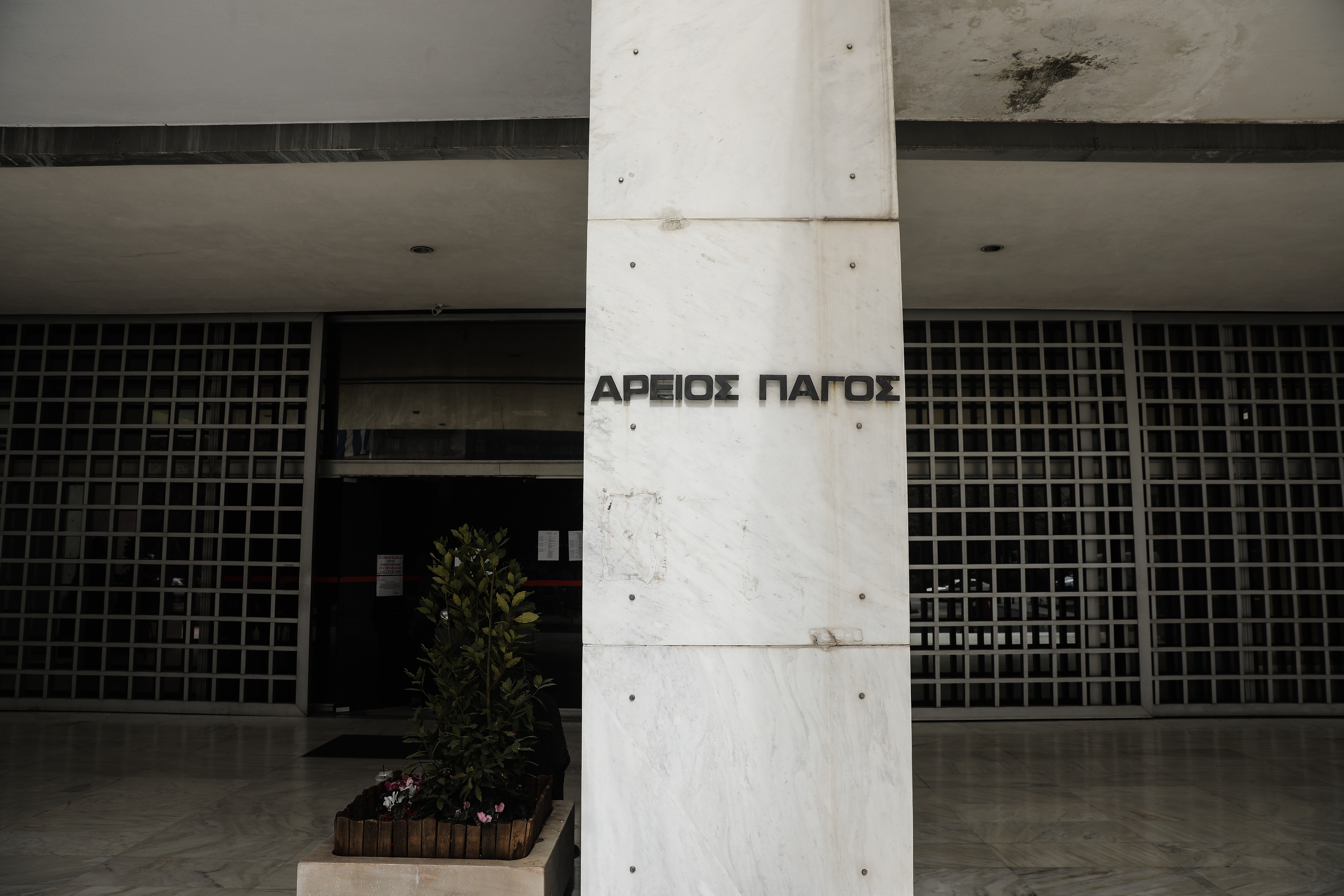
 Greece’s Supreme Court prosecutor has decided not to reopen one of the most explosive political scandals in the country’s recent history. Lawyers closely tracking the case say the decision is not only wrong, but built on the flawed and incomplete investigation of the prosecutor who handled the case before him, Deputy Supreme Court Prosecutor Achilleas Zisis.
The scandal centers on the illegal use of the Predator software to wiretap politicians, journalists, military officials, and public figures in Greece. The case has shaken Greek politics for years, drawing comparisons to Watergate and prompting a parliamentary inquiry.
In an analysis published by TA NEA, Supreme Court Prosecutor Konstantinos Tzavellas is accused of ruling against reopening the case despite significant new evidence that emerged during a recent Athens trial. His ruling, lawyers argue, rests almost entirely on the earlier work of Zisis. “What was never properly investigated gets recorded as ‘not proven’ — and that becomes the justification for not investigating further,” one legal source told TA NEA.
Zacharias Kesses, an Athens attorney and legal representative of several of the confirmed Predator surveillance targets, has been central to the push for a review. Together with other lawyers monitoring the case, he has identified 10 specific blind spots in Tzavellas’s ruling.
The 10 Blind Spots
- Espionage was ruled out without ever being investigated. Tzavellas rejected the espionage angle on the grounds that no state secret had been proven to have leaked. But lawyers point out that Zisis never called in for questioning the dozens of political and military figures targeted by Predator to establish what data had been harvested from their phones — and whether any of it was classified.
- The logic used to rule out espionage does not hold. Tzavellas argued that because the Predator software was also used to target non-state actors, there was no espionage. Lawyers reject that reasoning: the targeting of journalists, businesspeople, and artists alongside ministers and senior military officers does not rule out that state secrets were accessed through the latter’s phones.
- A key piece of evidence was dismissed without explanation. The investigation previously downplayed the role of a supermarket employee identified as Emilios K., whose bank card was used to pay for the infected SMS messages deployed to install Predator on targets’ phones. Zisis accepted his claim that the card had been lost. Evidence presented at the recent trial, however, showed that the supposedly lost card was used to send the trap messages almost immediately after it was obtained and activated. Tzavellas did not factor this into his ruling.
- The employee’s own testimony points to an intelligence connection and was not followed up. At the same trial, Emilios K. identified a mobile phone store employee as his link to the intelligence services. That individual denies any involvement. Under the current ruling, neither claim will be further investigated.
- Key Intellexa personnel and foreign nationals escape scrutiny. Three employees of Intellexa — the Athens-based company that produced Predator — identified as Dimitris X., Ioannis T., and Ioannis B., had access to the company’s servers, which were hosted by a firm called Hostmein. Those servers were removed on Dec. 16, 2021, the very day an international investigation publicly exposed the spyware’s existence. Their role in that removal will not be examined. Neither will the involvement of Israeli and other foreign nationals in Predator’s production and deployment.
- A key suspect’s ties to Greek intelligence go unexamined. Tzavellas’s ruling offers no justification for why the role of Sotiris D. — a close associate of Giannis Lavranos, a businessman already convicted in connection with Predator — should not be further investigated. His car was photographed inside the grounds of Greece’s national intelligence headquarters in Agia Paraskevi, a site alleged to have served both as a data-processing hub for the illegal software and as a meeting point between Predator operatives and intelligence officials. Lawyers argue that investigating his role could confirm direct links between those who operated Predator and the Greek state intelligence services.
- A tampered document bearing Intellexa fingerprints was not taken into account. During the trial it emerged that a memorandum of cooperation between the EYP and the intelligence service of North Macedonia had been altered, with electronic traces linking senior Intellexa executives in Athens to the document — which they also held in their possession. The Zisis report had noted only that a foreign Intellexa employee made the edits, attributing it to possible work as a private consultant. The fuller picture that emerged at trial was not considered by Tzavellas.
- Witness testimony alleging political protection was disregarded. Employees of Greek companies with direct ties to the Predator software testified at trial that the defendants had reassured them by invoking political cover. According to testimony, they were told: “As long as New Democracy is in power, you have nothing to fear.” Witnesses also testified that ahead of their appearance before a parliamentary investigative committee, ruling-party lawmakers provided them with the questions in advance.
- Intellexa’s own marketing materials, presented at trial, were also overlooked. Brochures produced by Intellexa, presented at trial alongside later statements by the company’s Israeli founder Tal Dilian, stated explicitly that the company supplies its surveillance products only to government authorities and law enforcement agencies, and that its primary base of operations is Athens. These documents were referenced in a report by Greece’s Data Protection Authority but were never included in the case file — a court order was required to obtain them. Tzavellas did not factor them into his ruling.
- A state funding scheme and alleged judicial interference were not considered. Reporting by TO BHMA and TA NEA revealed a plan to channel state funds to Intellexa through the Security Studies Center of the Ministry of Citizen Protection, by engineering the company’s inclusion in a subsidized innovation consortium, allegedly on orders from above. Trial testimony also revealed that a forensic report incorporated into the Zisis findings — which used statistical methods to disconnect the Predator target list from the EYP’s own surveillance list, despite at least 30 names appearing on both — was drafted following directions from a judicial official.
Source: TA NEA