 Μake us preferred on Google
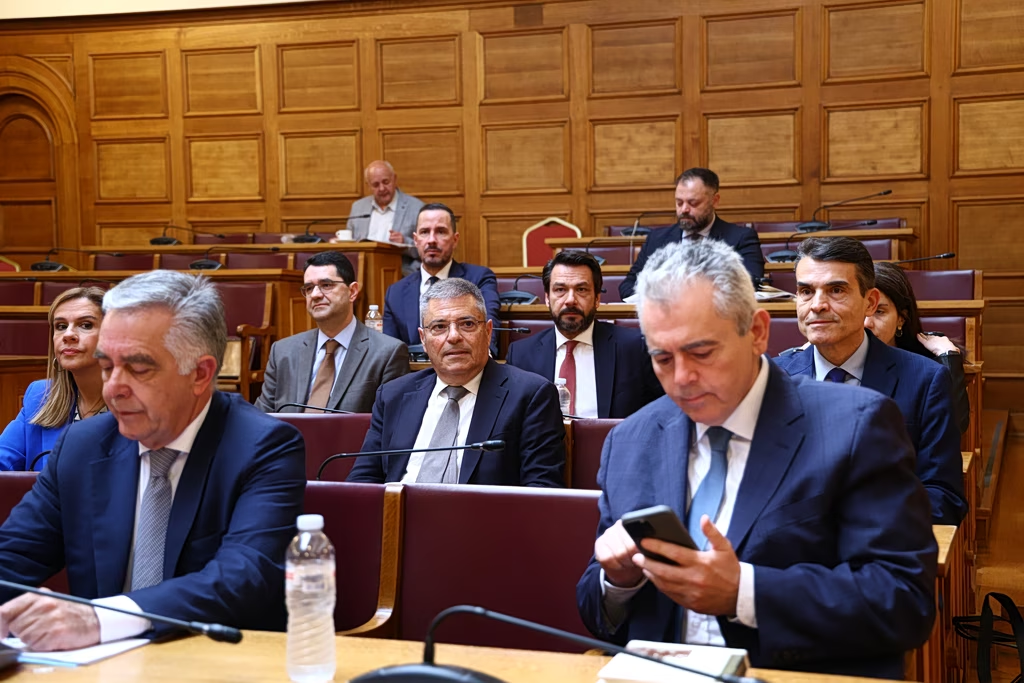
 Prime Minister Kyriakos Mitsotakis moved to calm tensions within New Democracy just hours after five of the party’s MPs published an open letter criticizing the government’s “executive state” model — a governing approach that concentrates strategic decision-making in a tight circle around the prime minister. The letter was the latest flare-up in a dispute that has been simmering for weeks, rooted in the handling of the OPEKEPE agricultural subsidies scandal and the PM’s proposals to bar ministers from simultaneously holding parliamentary seats.
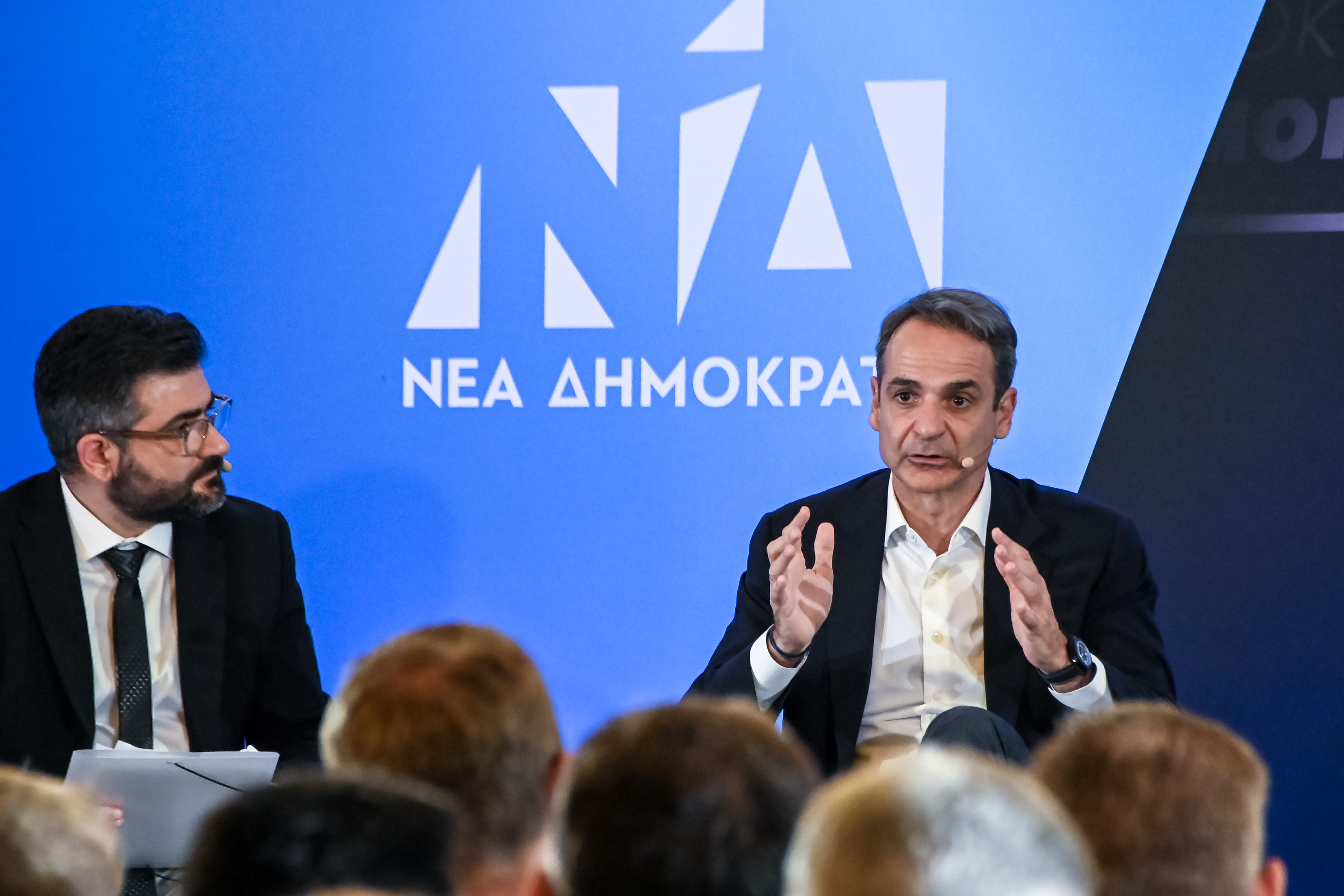
Speaking at a pre-congress party event in Nafplio, Mitsotakis was measured and direct. He pushed back against what he described as a false tension between elected politicians and appointed technocrats. “Those who keep trying to find dividing lines between so-called technocrats who are appointed and politicians who are elected do not understand that in New Democracy we are one team,” he said. “We are an open, democratic, parliamentary party. We discuss things openly, we are a family, and that is why we ultimately move forward.”
On the executive state itself, he was equally firm. “It means making the complex exercise of governing a country simpler,” he said. “No one intervenes to overshadow anyone. There is no country that does not have a strong governance center with civil servants who implement highly complex projects,” he said citing the EU recovery fund as one example.
Skertsos holds the line
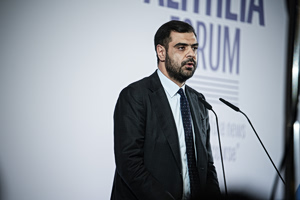
Also speaking at the Nafplio event was Akis Skertsos, the minister of state who has been at the center of much of the criticism. His response to the five MPs was equally calm. “Our opponent is the problems [we face],” he told those present at the event . “The problems are our real adversary; not each other. Let’s unite and move forward together. The enemy is outside, not within.” Like Mitsotakis, he framed the executive state as a governing method: a way of being consistent and accountable to citizens, rather than a concentration of personal power.
Mitsotakis gave Skertsos his full public backing, as he has done before. The minister has been a particular target of dissatisfied lawmakers, in part due to a social media post in which he referenced the “clientelist state” — widely read within the party as a dig at elected politicians.
What the MPs are actually saying
The MPs voicing criticism — and there are more of them than the five who signed the letter — are not questioning the need for coordinated government. They are questioning whose priorities it serves.
Their grievances center on two things: decisions that feel disconnected from what their constituents are dealing with, and a sense that when they do flag problems, nobody at the center is listening. OPEKEPE is the sharpest example. Multiple lawmakers say the issues at the agricultural payments agency were known well ahead of time, by Skertsos as well, and that the ensuing crisis was avoidable. They also point to a broader pattern: credit flows to the top, while the political cost of mistakes falls on elected members.
The same-sex partnerships bill gets mentioned often in these conversations. As the first major legislation of New Democracy’s second term, many regional lawmakers read it as a statement of the inner circle’s priorities — not theirs, and not their voters’. Agricultural policy draws similar frustration, with rural MPs pointing to what they describe as piecemeal measures that have done little for a sector that is visibly struggling.
What comes next
A Cabinet meeting — the first since the dispute became public — was called for Wednesday April 29, with ministers also said to be under pressure to be more accessible to their own colleagues. The parliamentary group is scheduled to meet on May 7, and a full party congress is to follow within the month. Both will offer a clearer read on whether the conciliatory tone from Nafplio has had any effect — or whether the conversation is just getting started.