 Μake us preferred on Google
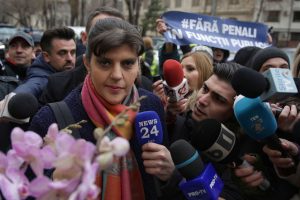
 She has been called a CIA spy. She has been accused of political bias, institutional overreach, and worse. Laura Kövesi, the chief prosecutor of the European Public Prosecutor’s Office, has heard it all and she is not bothered by any of the attacks.
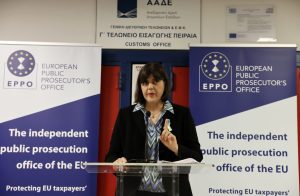
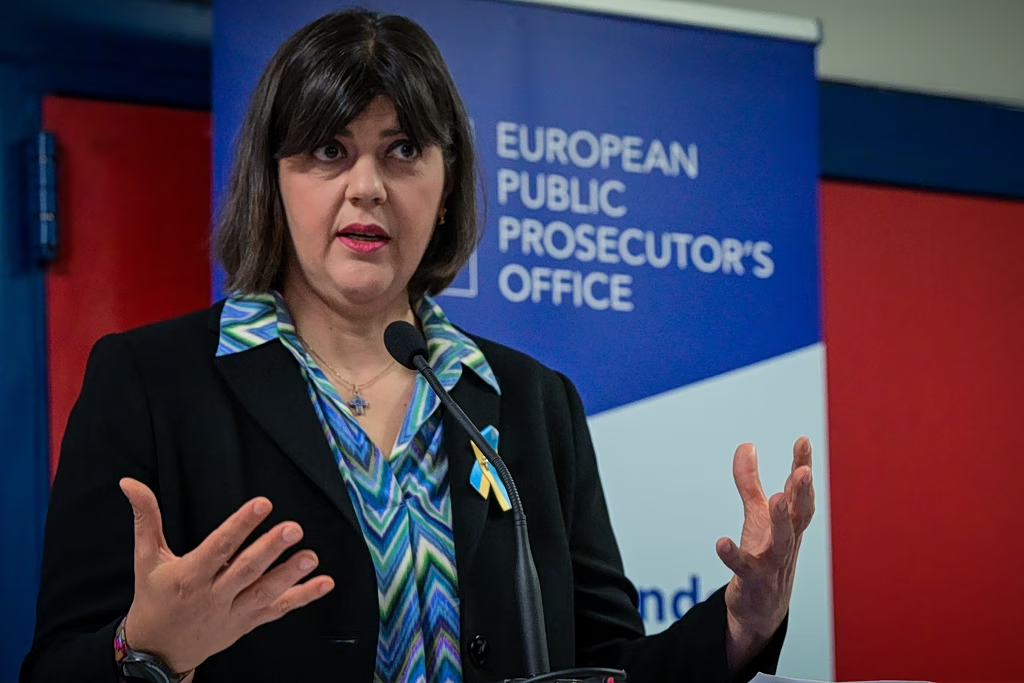
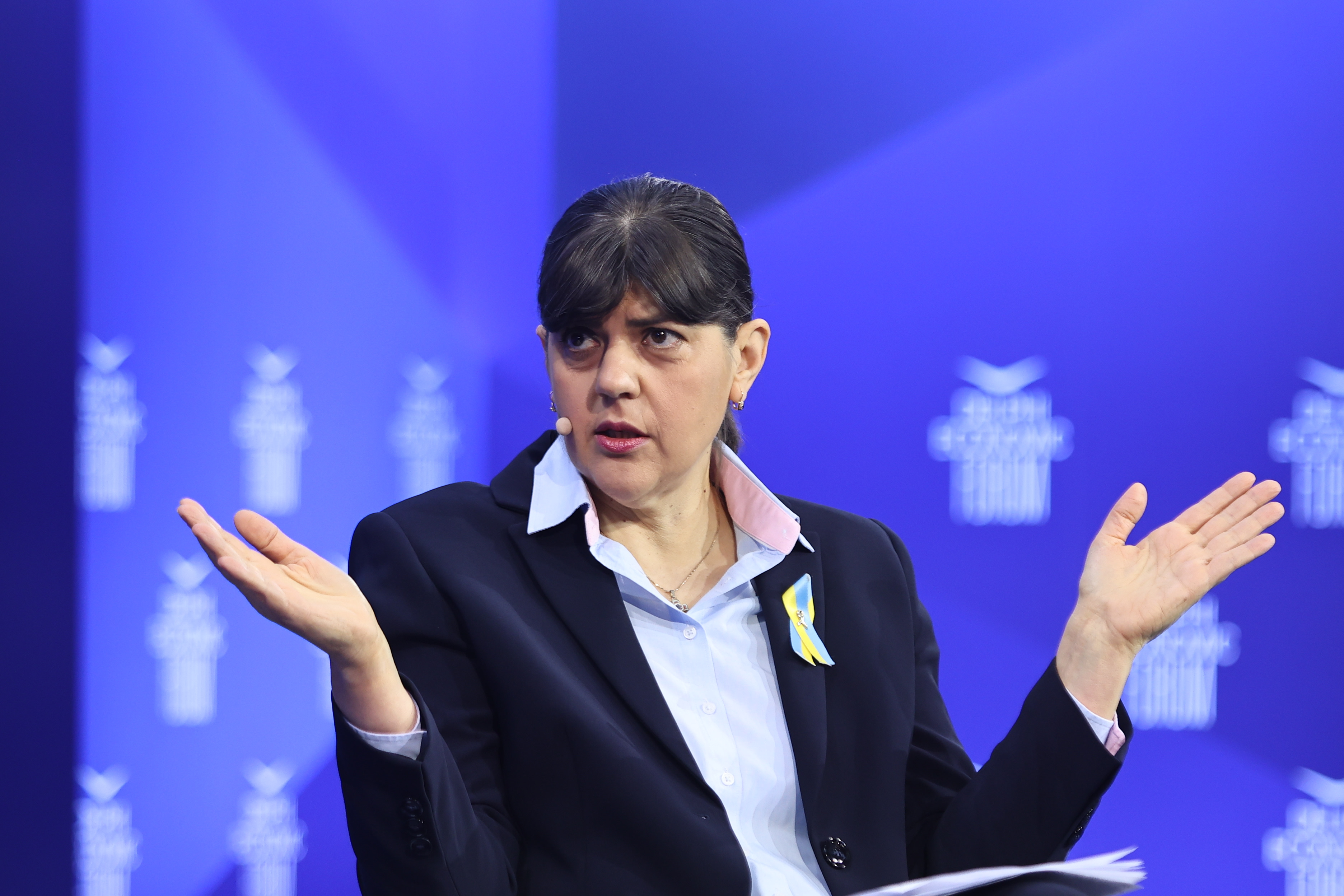
Speaking Thursday at the Delphi Economic Forum, Kövesi delivered what amounted to a masterclass in institutional confidence: measured, methodical, funny and at times disarmingly direct. In a wide-ranging on-stage conversation followed by a press Q&A, she addressed the OPEKEPE investigation at length, defended her office’s record, and made a pointed case for why Europe’s fight against fraud is only just getting started and why it needs a bigger budget.
The OPEKEPE Scandal: Greece’s Farm Subsidy Crisis, Explained
Kövesi was unapologetic. “OPEKEPE,” she said flatly, “is an acronym for corruption, nepotism, and clientelism.”
She was equally blunt on why her office requested the lifting of lawmakers’ immunity in multiple stages rather than all at once — a decision that drew criticism from government ministers and MPs. The criticism, she suggested, was misplaced. “This request doesn’t mean it’s an indictment,” she explained. “It’s a mandatory step for us to follow. We cannot interrogate a member of parliament without lifting the immunity. It is a normal step.”
Kövesi was explicit that Prime Minister Kyriakos Mitsotakis is right to push for speed. “We have to finish this investigation very fast because there is high public expectation to clarify what happened,” she said, before laying out the constraints the Greek EPPO office has faced. “We are humans, with limited resources. Only one police officer works with our prosecutors on this case, and that person has to listen to hundreds of hours of wiretapping and assess thousands of documents. It’s not easy.”
Following her meetings in Athens on Wednesday with government officials, she said she received assurances that more staff would be provided. Her office also discussed potential legal reforms, including the possibility of streamlining Greece’s dual-court structure, which currently requires EPPO to duplicate its work across both first-instance and appellate courts.
She was careful, however, to draw a firm line. Asked about a constitutional provision — Article 86 — that shields serving ministers from prosecution and limits her office’s reach into one dimension of the investigation, she was measured but clear. “I never asked to do anything in Greece. I explain how we work. We cannot find out the truth on that side of the investigation.” Whether Greece changes that provision, she added, “is not up to me.”
She was equally direct on the question of the Athens-based EPPO prosecutors, whose mandate renewal has become a point of contention — with some government ministers suggesting the most recent chapter in the OPEKEPE investigation is politically motivated. Kövesi did not take the bait. She said she trusted the system and she trusted the Greek prosecutors working alongside her office, and turned the question around on her critics: “These two colleagues who worked on this did an outstanding job. What is the reason to not renew their mandate? Who has an interest to take out these prosecutors from the cases, from EPPO, while they did an outstanding job?” Any formal disagreement over the renewal, she added, could be resolved at the European Court of Justice in Luxembourg.
A Shift in Greek Mentality?
When asked by To BHMA International Edition whether she had witnessed any change in mentality in Greece during her tenure, Kövesi did not hesitate. “In general, yes,” she said. “I saw changes, especially in Greece.” She pointed to a growing number of Greek citizens willing to speak up, to file complaints, to reject the familiar fatalism of “this is the way we do things here” — a phrase she said she is, tired of hearing.
“There is at least one Greek citizen who says: ‘ Ms. Kövesi, you are right. This is not the way to do things,'” she said. “Then yes, I am confident that some things are changing. And its not jus one. There are hundreds, even thousands of Greek citizens who believe corruption is not a way of life here in Greece.”
The numbers back her up, at least in part. This year, EPPO registered double the number of new cases in Greece compared to previous years, driven by an increase in citizens submitting complaints directly to her office. “This is a good sign. They trust in what we are doing.”
Is Exposing Corruption Bad for Europe’s Image?
Kövesi also took direct aim at one of the more insidious arguments made against aggressive anti-corruption enforcement: that publicizing fraud and scandal erodes public trust in European institutions.
Her response was simple and devastating. If she were to go before cameras tomorrow and announce that everything was fine — no OPEKEPE scandal, no fraud, no wrongdoing — nobody would believe her. And that, she said, is precisely what would damage trust. “You cannot be credible if you don’t tell the truth.”
There is no list, she added, of the top corrupt countries in Europe. EPPO does not rank member states. Corruption, she said without equivocation, exists everywhere: in customs offices, VAT systems, procurement processes, from the largest economies to the smallest. “There is no clean country.”
What differs is whether institutions are willing to look.
Budget, Independence, and a Parting Shot
Kövesi, whose seven-year term as chief prosecutor expires this year, did not leave Delphi without pressing her most persistent institutional concern: money. EPPO, she argued, remains chronically underfunded relative to the scope of its mandate — a mandate that covers the protection of the EU budget across all member states. She called EPPO one of the most significant achievements of the European Union in recent years, and said her only real regret is that the European Commission has not given the institution the budget it needs to fully do its job.
Asked repeatedly to respond to statements made by individual Greek ministers about the OPEKEPE investigation, she declined — with a smile. If she had to respond to every accusation thrown at her and her office, she said, she would be doing nothing else for 23 hours a day.